
The Pipeline Is What Keeps Game Visuals Consistent
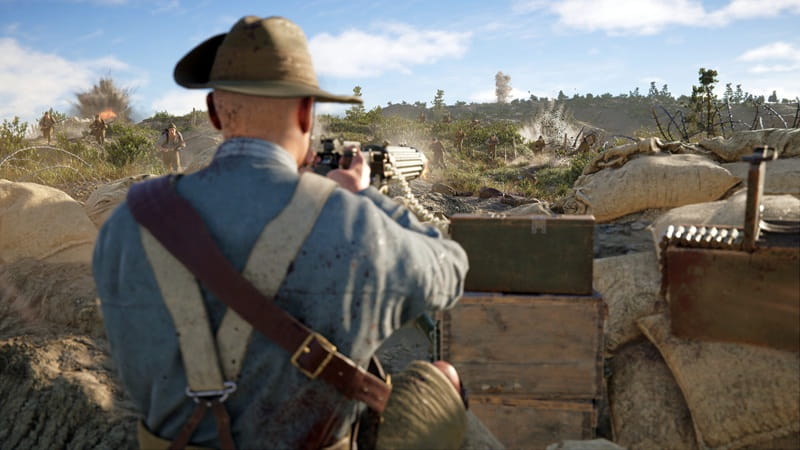
Players usually notice the result: a readable character, a memorable location, a boss arena that feels threatening before the fight starts. Production teams see the less visible part: concept exploration, approvals, asset breakdowns, modeling, texturing, rigging, animation, implementation, and revision loops.
That pipeline decides whether a game’s visuals feel coherent or assembled from unrelated pieces. It also decides how quickly a team can scale production without losing control of style.
For larger console projects, the practical lesson is clear: polished art direction is not enough on its own. The team needs a process that turns ideas into engine-ready assets while protecting readability, performance, and visual consistency.
Concept Art Sets the Rules
Nothing should move into full production before the visual rules are clear. Concept art is where the team answers the big questions:
- What kind of world is this?
- What shapes, colors, materials, and proportions define it?
- How realistic or stylized should the assets be?
- Which details matter in gameplay, and which are only decorative?
- What should stay consistent across characters, environments, props, UI, and effects?
This stage is not just a creative warm-up. It prevents expensive rework later. If a character’s role is unclear in concept, it will not magically become clear after modeling and animation. If an environment style is too broad, different artists will interpret it differently.
This is also the stage where many teams decide whether to build every asset internally or bring in a game art outsourcing studio. A good outsourcing partner does not replace art direction. It works from it. RocketBrush, for example, positions its work around game art outsourcing, including concept art, 2D art, 3D art/modeling, animation, UI/UX, VFX, and pixel art. For a production team, that kind of support is useful when the internal team has clear direction but needs more hands to execute it consistently.
From Concept to 3D Assets

Once a concept is approved, it has to survive translation into production. This is where many attractive ideas meet technical limits.
A character may look strong in a front-facing illustration but fail once viewed from behind, rigged for combat, or placed in a darker scene. A large environment painting may communicate mood well, but the actual game needs modular assets, collision rules, texture budgets, and predictable performance.
The handoff from concept to 3D should clarify:
- scale and proportions;
- topology and rigging needs;
- texture resolution and material rules;
- camera distance and gameplay readability;
- engine constraints;
- reusable asset parts;
- where detail should be concentrated.
This is why “beautiful” and “game-ready” are not the same thing. Game-ready art has to work inside the player experience, not only in a presentation deck.
Animation Exposes Design Problems
Animation often reveals issues that static art hides. A weapon may look balanced until it is swung. A creature may look powerful until its legs need to support a believable run cycle. A hero costume may look distinctive until cloth, armor, and accessories start clipping through each other.
Good art pipelines account for movement early. Character sheets, turnarounds, and model notes should give animators enough information to understand weight, range of motion, personality, and gameplay purpose.
For production planning, this matters because animation rework is expensive. If the model is not built with movement in mind, every later department pays for it: rigging, animation, VFX, implementation, and QA.
Why Outsourcing Became a Normal Part of Production
Outsourcing is no longer a sign that a studio cannot handle its own art. It is a normal production choice, especially when the asset workload rises faster than the internal team can grow.
A studio may need dozens of environment props, character variations, UI icons, or animation loops within a fixed milestone. Hiring permanently for a temporary production spike is not always practical. Working with an external art team can help the project scale without turning one milestone into a long-term staffing problem.
The key is management. Outsourced art works best when:
- the style guide is specific;
- references are approved before production starts;
- feedback is timely and concrete;
- file formats and naming rules are clear;
- reviews happen in context, ideally in-engine;
- the external team is treated as part of the production flow, not as a distant vendor.
When those conditions are missing, quality problems are often blamed on outsourcing itself. In reality, the issue is usually the pipeline.
What Players Feel but Do Not See
Players do not think about asset breakdowns, revision notes, or texture budgets. They feel the result. A game looks coherent when the process behind it is coherent.
From sketch to screen, every stage has a job. Concept art defines the visual promise. 3D production makes it buildable. Animation makes it believable in motion. Implementation tests whether it works for the player. A strong pipeline connects those stages without losing the original intent.
That is the quiet work behind modern game visuals. When it is done well, players never need to notice the process. They simply believe the world.