Most SMBs don’t have a visibility problem anymore — they have an engagement problem. People visit, browse, and even sign up, but many never take the next meaningful action. They don’t finish onboarding, they don’t explore key features, and they rarely come back consistently. The gap isn’t always about price or product quality. Often, it’s because the experience gives users no sense of progress or payoff for participating.
Gamification helps fix that by adding simple motivation layers to normal user actions. When people can see progress, earn small rewards, unlock benefits, or complete short challenges, they’re more likely to stay involved. This is guiding behavior with structure and incentives that feel clear and worthwhile, especially for resource-constrained SMB teams that need measurable results.
In this blog, we’ll cover steps SMBs can use to leverage gamification to drive real engagement in 2026.
#1. Define a Clear Engagement Goal Before Adding Any Gamification
Gamification delivers results only when it supports a clear business goal. Without a defined target, points, badges, and streaks turn into decoration instead of drivers of action. Before adding any game elements, decide which user behavior actually moves your business forward. That might be more completed signups, more qualified leads, more repeat purchases, or more feature usage — but it needs to be defined before design begins.
Interactive elements only move the needle when they guide users toward a real decision point. If someone finishes a progress flow but doesn’t reach the contact or evaluation step, the engagement looks good on paper but produces no outcome,” adds Casey Meraz, Founder & CEO of Juris Digital.
For most SMBs, the winning target is practical and measurable — finishing onboarding, making a second purchase, activating a core feature, submitting a lead form, or returning within a set number of days. Choose one behavior first and put a number around it. Then build the gamified experience around that outcome instead of adding game elements and hoping they help. When the target is narrow, design choices become clearer and easier to test.
Many small businesses copy visible tactics they see elsewhere — leaderboards, streaks, random rewards — but skip the planning behind them. The interface looks engaging, yet the numbers barely move. When the goal is clearly defined, the system becomes easier to build and easier to evaluate. You know which action earns credit, when a reward should trigger, and what success actually looks like in reports, not guesses.
Kenny Philliips, Founder & CEO of Inbound Suits, said, “Quizzes, scorecards, and milestone trackers can boost interaction, but they only translate into pipeline when the final step is clearly mapped. When the path to booking or inquiry is built into the flow, completion rates actually mean something.”
Performance research shows that setting challenging but achievable goals can lead to up to 90% better performance compared to loose or undefined targets.
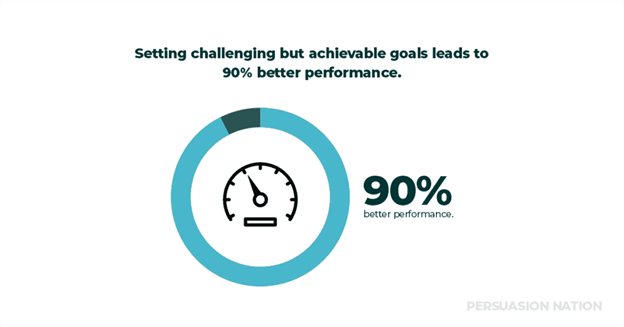
Image Source: Persuasion Nation
The same principle applies when designing engagement systems. Clear targets produce clearer action because users understand what they are working toward and why it matters.
State the engagement goal in simple, everyday language and attach a number and timeframe to it — such as completing a profile within two days, making a second purchase within 30 days, or using a key feature three times in the first week. That keeps gamification tied to business value instead of surface activity.
Rameez Ghayas Usmani, Award-Winning HARO Link Builder & CEO of HARO Link Building, said, “Tracking progress works best when milestones reflect real wins, like published features or secured placements. When the scoreboard matches actual outcomes, teams stay focused and follow-through improves.”
When the target is specific, every progress signal and reward supports movement toward something that truly matters.
#2. Choose One Simple Game Mechanic and Attach It to a Key Action
Start small and direct. One mechanic tied to one important behavior produces better results than a complex system with too many moving parts. SMB teams usually work with limited time and technical resources, so simplicity wins in practice. The most reliable starting mechanics are progress tracking, milestone rewards, and completion badges. They are easy to understand and easy to plug into websites, apps, and even email journeys without heavy builds.
Dorian Menard, Founder and Business Manager of Search Scope, explains, “Simple progress mechanics outperform complex funnels because users understand them instantly. When people see a clear completion path tied to one action, they follow it. When there are too many layers, they hesitate and drop.”
Match the mechanic to the action you want repeated. If the goal is setup completion, use a visible progress meter. If the goal is repeat usage, use streak tracking. If the goal is feature discovery, use unlockable checkpoints. Each mechanic should answer one simple user question: what do I get for finishing this step? When that answer is obvious, participation rises.
Clarity matters more than creativity here. Users should understand the rule in seconds. Confusing rules reduce participation, while obvious rules increase it. Clear triggers and clear rewards also build trust because users know the system is fair and predictable. Instead of vague lines like “earn more,” show exact thresholds — complete three actions and unlock a defined benefit. Specific numbers motivate more than open-ended promises.
According to LJ Tabango, Founder & CEO of Leak Experts USA, “In service workflows, small milestone checkpoints keep both teams and customers moving. When each completed step is visible and acknowledged, follow-through improves and fewer jobs stall midway.”
Keep reward timing tight at the beginning. Early wins increase continuation. Small achievements in the first session often decide whether a user returns. Micro-rewards — such as bonus credits, unlocked features, or small perks — work better early than distant grand prizes because they reinforce action quickly.
Avoid stacking multiple mechanics at launch. Too many layers create friction and split attention. Start with one, measure behavior, then expand if needed.
Htet Aung Shine, Co-Founder of NextClinic, adds, “In patient-facing booking and intake flows, fewer guided steps with clear completion signals lead to higher form finish rates than feature-heavy journeys. Simplicity keeps people moving.”
#3. Make Progress Visible and Immediate
Progress needs to be seen, not assumed. When users can clearly see how far they’ve come and how close they are to finishing, they are more likely to continue. When progress stays hidden, motivation drops. People don’t push toward goals they cannot see. Visible progress gives direction and creates forward momentum because most people prefer finishing a started task rather than leaving it incomplete.
Alfred Christ, Digital Marketing Manager at Robotime, shares, “Customers stay more engaged when they can track their progress step by step instead of guessing what’s left. In hands-on product journeys like model kits and builds, visible completion stages keep people moving to the finish instead of dropping off midway.”
Stats shows that when customers feel connected and can track value with a brand, engagement actions increase across the board — 60% are willing to recommend brands they feel loyal to, 52.3% will join a loyalty or VIP program, and 39.4% are willing to spend more even when cheaper options exist.
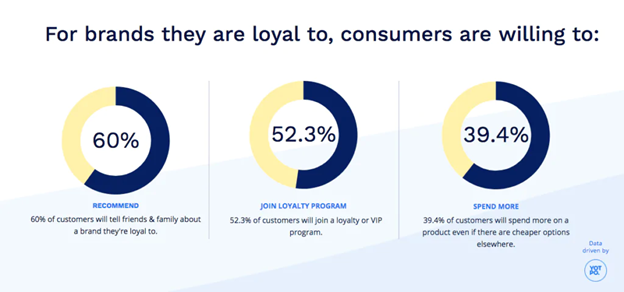
Image Source: P2P marketing
Visible status and progress strengthen that sense of connection and forward movement. When users can see that their actions are adding up to something real, they stay involved longer and return more often.
That’s why visual progress cues work across products — onboarding checklists, learning apps, fitness trackers, and loyalty systems. Simple signals such as completion bars, step counters, level markers, and “1 step left” prompts reduce uncertainty and make the next action obvious. The closer users feel to the payoff, the more effort they give.
Desmond Dorsey, Chief Marketing Officer at Bayside Home Builder, mentions, “When buyers can see exactly where they are in a multi-step process, they’re more comfortable continuing. Clear stage markers in longer purchase and application flows reduce hesitation and increase completion.”
Speed matters just as much as visibility. Progress should update immediately after an action. Instant feedback strengthens the link between effort and reward. Even a small visual change — a bar moving, a number increasing, a checkmark appearing — reinforces participation.
Place progress indicators where users already look: onboarding flows, dashboards, account pages, and confirmation screens. Keep them simple and readable. Steps and percentages are easier to process than abstract visuals.
According to Kyle R Smith, Director of Boost Promotional Products, “When customers can see how close they are to unlocking the next reward or quantity tier, order momentum improves. Visible thresholds often push buyers to complete the next step instead of stopping short.”
#4. Connect Rewards to Something Users Actually Care About
Rewards drive behavior only when they feel useful. If users earn points that sit idle or badges that change nothing, interest fades quickly. The reward has to connect to real value — something that improves their experience, saves money, saves time, or unlocks access. For SMBs, this is good news because useful rewards don’t have to be expensive. They just need to be relevant and clearly tied to action.
Alison Lancaster, CEO of Pressat.co.uk, highlights, “When the reward gives people something they can actually use — like added visibility, distribution reach, or priority placement — response rates are noticeably stronger. Practical benefit always beats symbolic recognition.”
Think in practical terms. A small discount on the next order, free shipping, bonus credits, feature upgrades, early access to new tools, exclusive templates, or priority support can all work. These rewards stay inside your business model and reinforce continued usage instead of one-time participation. The closer the reward sits to your core offer, the stronger the engagement loop becomes.
Reward timing also matters. Early rewards build momentum. If users must wait too long before earning anything, many drop off. A simple structure works well: quick win first, milestone reward next, loyalty reward later. That gives users a reason to start and a reason to continue.
Bill Sanders, from QuickPeopleLookup, shares, “When users unlock extra report details or deeper record access right after completing a step, usage goes up. Immediate value after the action keeps people engaged longer.”
Clarity beats creativity here. Tell users exactly what they get and when they get it. Direct language increases action. “Complete setup and get a $15 credit” works better than vague lines about earning benefits. Remove guesswork and spell out the trigger and the reward in one line.
Also make redemption simple. Automatic rewards perform better than claim-based rewards. When users receive what they earned without extra steps, trust grows and repeat participation becomes more likely.
Nibin Varghese, Creative Director at Bless Web Designs, says, “Reward flows perform better when they’re built directly into the page journey. When users see the benefit unlock without extra navigation, completion and satisfaction both improve.”
#5. Turn Large Tasks Into Small, Finishable Challenges
Big tasks feel heavy. Small tasks feel doable. When users face a long setup process or a complex action, hesitation increases. Breaking that journey into short, finishable challenges makes progress feel lighter and keeps people moving. Instead of asking users to “complete onboarding,” guide them through a short sequence of clear actions they can finish quickly. Short steps reduce mental load and make starting easier.
Dan Rogers, Creative Director at Rebus Puzzles, shares, “People engage longer when the path is broken into small wins instead of one big objective. That’s why puzzle formats work — each solved piece pulls you toward the next. The same pattern keeps users moving through digital flows.”
Each challenge should be specific and fast. Add one product. Upload one image. Connect one account. Invite one teammate. Complete one tutorial step. Each completed action should trigger a visible confirmation. That small sense of completion builds momentum and lowers resistance toward the next step. Users don’t need motivation speeches — they need quick proof that progress is happening.
Instructions should stay simple and direct. Avoid clever phrasing or layered explanations. Tell users what to do and what happens after they do it. Clear cause and effect increases participation because there’s no guesswork. Pair early micro-challenges with small rewards or visible progress updates to strengthen the loop and build early momentum.
In an interview, Jason Lewis, Owner at Sell My House Fast Utah, said, “When forms and property submission steps are split into short sections instead of one long page, far more sellers finish. Quick checkpoints keep people going who would otherwise stop halfway.”
Time-bound micro-challenges also work well. Short windows — such as completing three actions in 24 hours — create urgency without pressure. This approach is especially effective for activation and early habit building because it gives users a near-term finish line. Users feel a gentle push to act now rather than delay.
Another benefit of short challenges is cleaner measurement. When each step is defined, it’s easier to see exactly where users slow down or exit. That makes testing and improvement much simpler. Instead of guessing why completion is low, you can pinpoint the exact step that needs simplification.
Rishin Shah, MD & CEO of GoLean Health, says, “Short guided actions work better than long setup demands when people are trying a new health or nutrition tool. When each step feels quick and complete, adherence goes up.”
#6. Add Light Social Competition and Shared Wins
Engagement increases when progress is not only personal but also visible in a shared context. When users can compare results, see rankings, or take part in short challenges with others, participation usually rises. Social comparison and friendly competition create a natural push to act now instead of later because people like knowing where they stand.
Bill Sanders, from True People Search, mentions, “When users can see activity levels or contribution progress compared to others, they interact more instead of browsing passively. Visibility turns a one-time lookup into repeat usage because there’s a sense of movement and standing.”
For SMBs, this does not require complex community platforms. Simple mechanics — short-term leaderboards, referral challenges, and shared milestone campaigns — are often enough to lift activity. The goal is not to build a full social network, but to add just enough shared progress to create momentum.
A study even found that about 89% of employees say adding game elements to a task makes them feel more driven and more motivated to finish it.
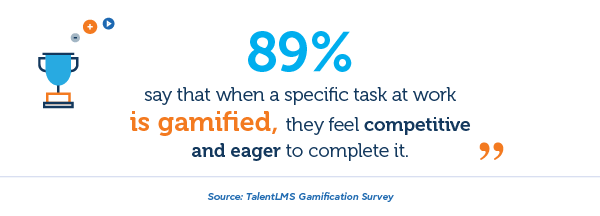
Image Source: TalentLMS
That motivation effect is exactly what SMB engagement systems need — a reason for users to take the next step instead of postponing it. When progress is visible and compared, effort increases because the action feels active, not isolated.
The key is to keep competition structured and approachable. Short-cycle leaderboards — weekly or monthly — work better than all-time rankings because new participants still feel they have a fair chance. Resetting the board regularly keeps energy high and prevents early winners from discouraging everyone else. When users believe they can realistically place or win, they participate more actively.
Maxim Rotaru, Founder & CEO of Webamboos, said, “Leaderboard features perform best when they’re simple and time-bound. When users know the scoreboard resets and the rules are clear, they engage without feeling overwhelmed.”
Referral and invite challenges work especially well because they combine social proof with direct growth. A visible counter and a clear reward target — such as unlocking a feature after three successful invites — gives users a simple, shared objective. Add light recognition for top participants through dashboards or emails, and the effect strengthens further.
Rachel Sinclair, Acquisitions Director at US Gold and Coin, says, “Invite campaigns and tiered reward challenges tend to bring in more serious prospects when progress is visible. People act faster when they can see how close they are to the next threshold.”
#7. Use Timely Nudges to Keep the Momentum Going
Most users don’t disengage because they lose interest completely. They disengage because they get distracted, postpone the next step, or forget to return. Momentum breaks quietly. That’s why timely nudges matter. A well-timed reminder tied to progress or rewards can bring users back into the flow and help them finish what they already started.
Raj Dosanjh, CEO of RentRound, adds, “When someone drops off midway through a pricing or valuation flow and gets a quick reminder tied to what they already entered, completion rates improve. Context-based nudges bring people back because the effort they made still feels active.”
Nudges work best when they are triggered by behavior, not sent on a fixed schedule. If someone is halfway through a challenge, close to a reward, or about to lose a streak, that is the moment to send a reminder. The message feels relevant because it connects to what the user just did — not what you want them to do. Behavioral timing increases response.
This kind of timing also respects user context. Instead of interrupting randomly, behavior-based nudges show up when there is already intent. That makes the message feel like guidance, not marketing. Users are far more likely to act when the reminder matches their last action.
Keep nudges short and specific. Remind users of their progress and the next clear step. Messages like “You’re one step away from your reward” or “Complete your last task to unlock your bonus” perform better than generic reminders. Specific progress references reconnect users with their unfinished action.
Ákos Doleschall, Managing Director at Hustler Marketing, explains, “Behavior-triggered emails tied to cart value or milestone progress consistently outperform scheduled blasts. When the message reflects the shopper’s last action, engagement numbers move.”
Channel choice depends on your product and audience — in-app prompts, email reminders, SMS, or push notifications can all work. What matters more than the channel is timing and clarity. Send fewer, more relevant nudges instead of many generic ones.
Also set limits. Too many reminders create fatigue and reduce trust. The goal is to restore momentum, not create pressure. Frequency caps and smart triggers prevent message overload while keeping guidance available when it counts.
Smit Shah, E-commerce Manager at Apollo Tile, mentions, “Reminders that reference the exact product type or items viewed bring more shoppers back than broad promo messages. Specific context converts better than general nudges.”
When nudges are tied to real progress and real rewards, they feel helpful rather than intrusive — and that keeps engagement moving forward.
Wrapping Up
Gamification works when it supports real user actions, not when it adds decoration. For SMBs, make important steps easier to follow and more rewarding to complete. Visible progress, small challenges, useful rewards, social motivation, and timely nudges help users stay involved instead of dropping off.
You don’t need complex systems or big budgets to make this work — just clear goals and simple mechanics tied to behavior that matters. Keep it practical, keep it measurable, and keep it user-focused. Done right, gamification becomes a steady engagement driver, not a gimmick.