
Mini-games were all the rage just over a decade ago, with social media-based games and, further back, the free pre-installed PC games being very popular. Millions of people would jump on these, particularly in the 00s, as their primary form of gaming because laptops and computers were more commonplace than the likes of many mainstream consoles, and smartphones weren’t overly smart.
Games like solitaire and blackjack are long-standing, pre-installed classics of PC mini-gaming, with the traditional casino games being among the first games that people would play when they find the selection of free games. Nowadays, you’ll find games like blackjack on dedicated online platforms, and popular social media mini-games have completely moved on or gone extinct.
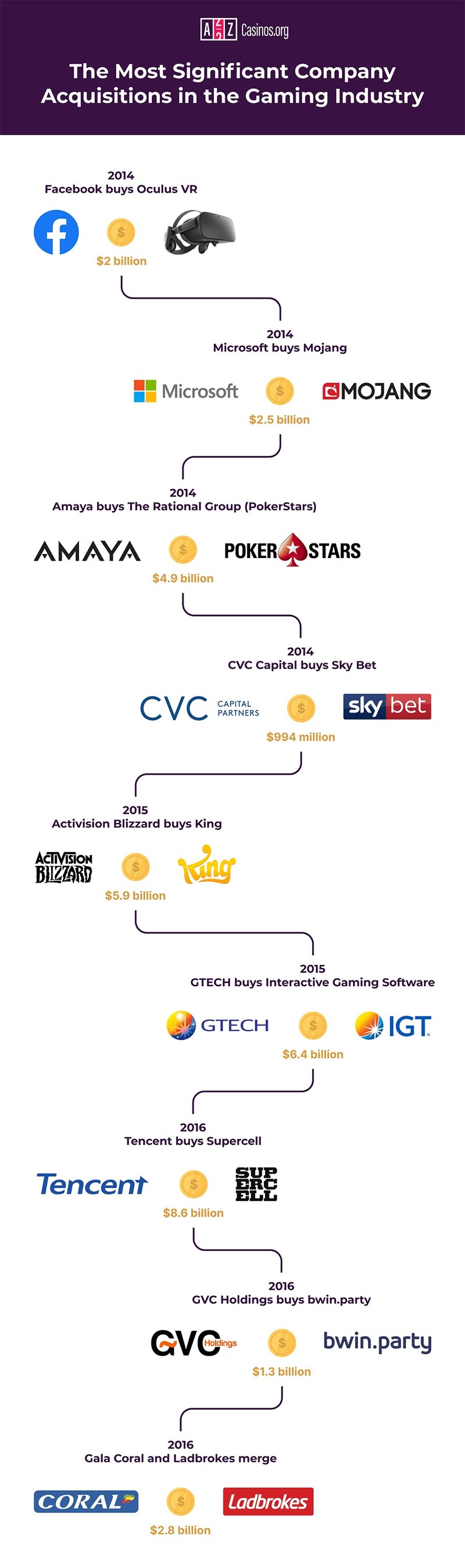
This has come as a result of both individual gaming formats splitting off to establish themselves in their own genre-specific platforms, but also massive business mergers pulling gaming companies under one roof. These huge mergers, which you can see below, show that colossal companies want to explore all regions of gaming, expanding into further fields to, in turn, develop the industry.
The disappearance of mini-game gaming
Mini-game gaming has been around for decades, but it was tremendously significant to the growth of social media platforms. When everyone would log on via a computer, social media-based games would keep people on the platforms for hours, playing sociable but incredibly simple games. The prime examples of these games were FarmVille and Words with Friends.
These two games being hosted on the social media platform skyrocketed parent company, Zynga, into becoming a gaming powerhouse. However, particularly in the case of FarmVille, its gameplay – or rather, its level of convenience – couldn’t stand the test of time. When mobiles became the dominant force, these browser-based games became incompatible with the Facebook experience, as shown by Softonic.com, with more convenient competition popping up all over app stores as dedicated ways to game.

Source: Pixabay
A very similar case has been seen in the evolution of iGaming. What were popularised in mini-gaming had to evolve with the changing trends. Pre-installed blackjack morphed to the instantly popular online casino platforms, and then it became a part of mobile casino apps. Further capitalising on the power of new technology, casino games have introduced live gaming, in which players game with live-streamed human dealers in real-time.
Merging entertainment with social media companies
Social media platforms are no longer the place for games, but that doesn’t mean that such companies don’t want a piece of the ever-growing gaming pie. In 2014, Facebook made waves by acquiring Oculus VR for $2 billion, per Investopedia.com, hoping that virtual reality gaming would take off with the Oculus headset as the flagship. This way, Facebook would still be involved in gaming despite the scene moving on from what made the platform so famous in the industry beforehand.

Source: UnSplash
Having emphatically lost the current generation of the console war to the PlayStation 4, Microsoft has been hard at work trying to acquire game studios that will allow the Xbox Series X to compete with the PlayStation 5.
Over the course of this generation, which began in 2013, Microsoft has acquired Compulsion Games, Double Fine, inXile Entertainment, Mojang, Ninja Theory, Obsidian Entertainment, Playground Games, and Undead Labs. The talent that comes with merging these development teams into Microsoft – which come from a vast range of often smaller-scale games like Minecraft, State of Decay, and Hellblade: Senua’s Sacrifice – makes the company stronger in the gaming industry.
The same can be said of Sony, who pulled off a significant coup in adding Insomniac Games to their collection of top-class exclusive game developers, costing the PlayStation creators $229 million according to Cnet.com. Not only did Insomniac create the smash-hit Marvel’s Spider-Man game, but they were also one of the few teams to create an Xbox One launch exclusive, making the superb-yet-underrated Sunset Overdrive.
As shown by mergers taking place across gaming and non-gaming companies bringing game companies under their umbrella, the industry is slowly concentrating. As such, platforms don’t feature mini-game gaming, with the emphasis being placed on the mainstream methods of gaming: console, dedicated PC gaming platforms, and mobile.