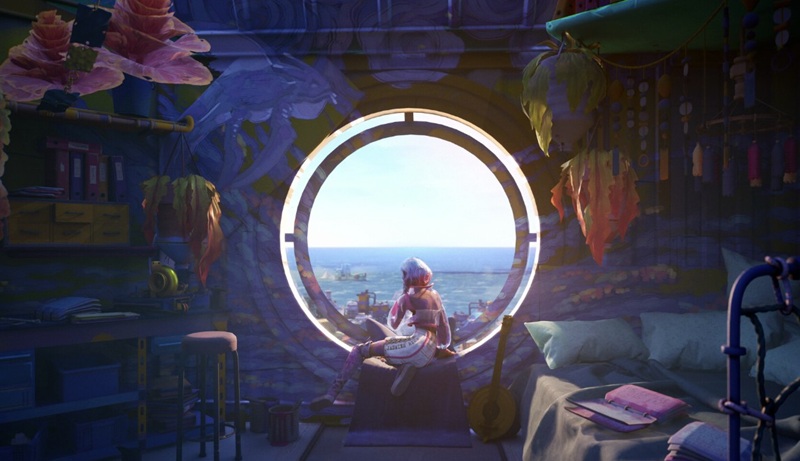
Tides Of Tomorrow Review (PS5) – Tides of Tomorrow is the bold new game from the creators of Road 96. Developer: DigixArt and publisher: THQ Nordic. Together, embarking on a journey into the asynchronous multiplayer space, attempting to create something fresh and brave with their new first-person narrative focused title.
I think it’s fair to say they have dreamt quite big with Tides of Tomorrow, and it certainly dares to be innovative, but is DigixArt’s bravery rewarded?
Tides Of Tomorrow Review (PS5) –
Follow The Leader
Life In Plastic, Not So Fantastic
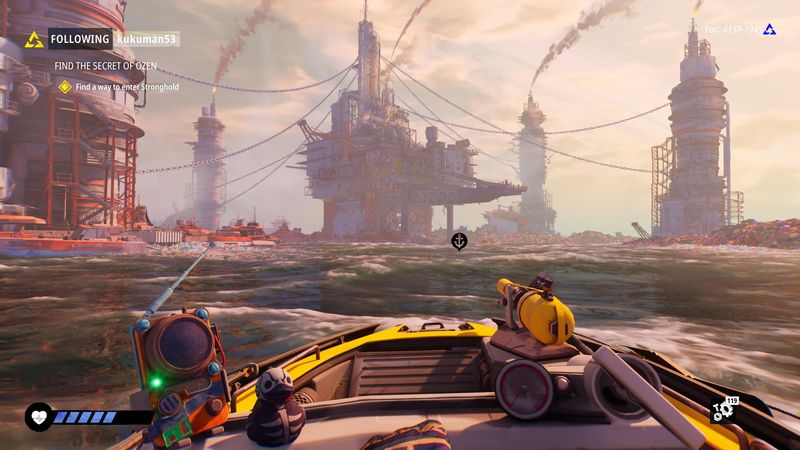
First-person, narrative focused, asynchronous multiplayer might sound convoluted, but that is exactly the sub-genres that Tides of Tomorrow inhabits. Assuming control of the Tidewalker, an amnesic and vocally silent protagonist that we choose conversational options for, we set out into this seafaring world and attempt to cure ours and the world’s affliction — plastemia.
Plastemia is exactly as it sounds. It is a condition that gradually turns people into plastic. As the player, we’re traveling to various communities and trying to provide respite and aid to its sufferers, while taking our own condition into account, and possibly discovering a more permanent solution.
Tides of Tomorrow’s oceans that we travel are filled with plastic and litter, not unlike the great pacific garbage patch that exists between California and Hawaii. Narratively, is all rather on the nose, but I don’t think wearing its commentary on its sleeve is such a bad thing. Such commentary is too easily ignored, so I think really hammering it home is fair game.
This subject simply serves as a basis for the plot, and it never feels overly preachy. It is set on a planet named Elynd, but it may as well be a potential future for own planet, given the similarities to its downfall, that it often handles in comedic fashion, which is an aspect that I certainly enjoyed.
In particular, I found the mystic religious faction swearing fealty to a more rudimentary, entry version of an AI assistant that often advertise their upgrade packages, to be quite entertaining. I don’t think its comedy always lands, but it certainly did a few occasions.
In recent history there have been a fair few games taking on the subject of environmental commentary, the state of our world, and how we are going to leave it. The genius in this game is the asynchronous multiplayer component, imploring the player to consider how you are going to leave this world, for the other players following you.
Decisions Decisions
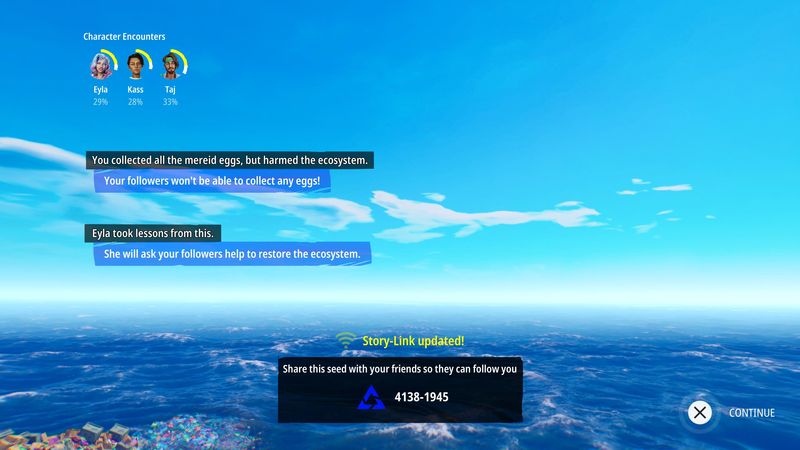
Tides of Tomorrow’s asynchronous multiplayer, named Story Link, is ultimately its standout feature. While the game itself feels mostly on rails within the levels themselves, with a fairly bare-bones stealth offering, it is more dynamic with its choice based narrative, at least on the face of it.
The mission structure is largely sneaking around cones of vision to reach the climatic narrative moment of each level. Unfortunately the stealth mechanics are quite unsatisfying, and far too easy. The same goes for the boat missions, which have you essentially pressing square to win. You can upgrade your boats health, but it really isn’t necessary.
On top of that, the objectives feel contrived. Sneaking around the henchman of the character I’m doing a job for, while straightforward, felt really quite forced, especially when justified with something as generic as “It’s too late to call them off”.
Throughout the roughly 15 hour campaign, you will have to make decisions, big and small. It could be whether or not give an NPC a health item, or as grand as whether or not a species of fish should live or perish, given that their eggs might be imperative to solutions for plastemia.
At the very beginning, you will have to choose another player to follow. In doing so, you will literally be following in their footsteps and interacting with the world that has been directly impacted by their choices, and in turn, you will be affecting the world in the same ways, for those who follow you. This can, however, lead to the game feeling inconsequential and disjointed.
As mentioned above, the best part of this is how it forces you take those who come after you into consideration. However, it feels the most pivotal moments are mostly just forks in the road, where certain missions can only really play out in a rather limited capacity regardless.
Being able to press a button and see how they got through certain conversations and how successful they were is certainly a neat idea, but it also makes it feel somewhat redundant. I didn’t have to search the world for the password, I just held the trigger, and saw the Tidewalker who came before me, simply say it, and then I repeated it.
Moreover, the game has you revisit these locations, perhaps one too many times. The story itself, while on the nose, is serviceable if not predictable. Additionally, some characters motivations feel flimsy and somewhat contradictory. The whole experience could have been elevated by a shorter but more dynamic campaign.
Sea Of Colour
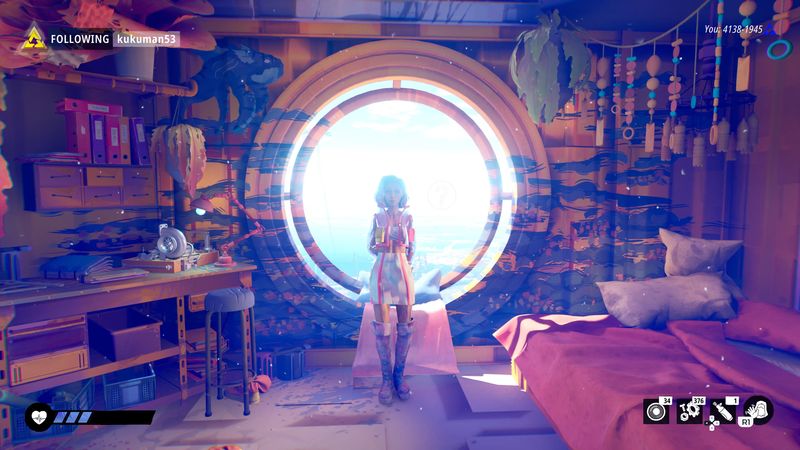
Tides of Tomorrow’s art is vibrant. Even in the plastic and garbage littering its oceans, it’s energetic, bright and has a real pop. Its characters look similar to the characters you would find in Dishonered, and Bioshock, and the world to some extent seems influenced by such games.
The platform based ocean communities are one of the highlights of the game. The shanty-type floating structures do make for an excellent backdrop, with party type atmospheres, or empty streets littered with plastic corpses. There are really cool fundamental idea to the entire game. Perhaps leaning more into subtle environmental storytelling (beyond its commentary), would have allowed it to really shine.
Its soundtrack is certainly an eclectic mix. In naval combat it sounds like Doom, on the platforms its reggae house music, and other times quite serene. It grew on me, I have to admit, but the same tracks repeat themselves often, and while the mix is diverse, it can feel inconsistent, and lacking in a distinct theme beyond perhaps spirited and lively.
Simultaneously, the VO is equally inconsistent. Some characters like Eyla, are excellently performed and realised. While others, especially some background characters feel wooden, or bored in the delivery of their lines.
Overall, “inconsistent” is the cornerstone of the game. It has its moments, but they can feel drowned out by its less appealing aspects. The core ideas are awesome, but they don’t often shine through, especially given the nature of how predictable it becomes.
It seems as though they’ve kept the breadth of the game as narrow as possible, while trying to appear as though it offers many eventualities, when the various deviations do not feel that significant, and amounts to little more than a typical pick-a-door finale.
Tides of Tomorrow feels like a game that needed to be smaller in scope to fully realise a more dynamic asynchronous multiplayer narrative. Overall there is just so much potential here, that it simply hasn’t reached, but they’re definitely onto something interesting.
Review Code Kindly Provided By Publisher
Tides Of Tomorrow releases April 22, 2026, on PS5, Xbox Series X/S and PC