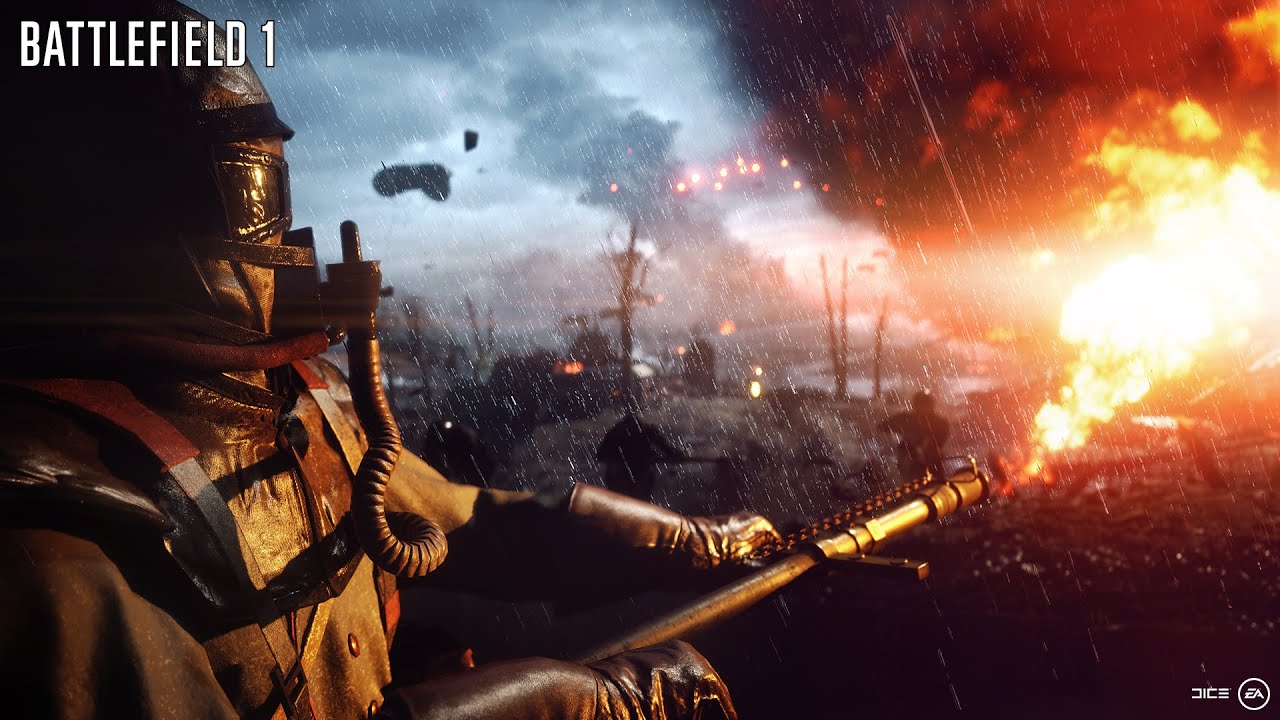
Battlefield is back and the rumours were in fact true—we’re heading back to a World War, Surprisingly though it turned out to be the first World War, and I’m all for it.
I’m intrigued by Battlefield taking the step back to become a bit closer to its origins. Not just because of nostalgia for Wake Island skirmishes in Battlefield 1942, certainly not because I think a shooter about actual WWI is an easy thing to pull off (this is a far more sadistic war than WWII, EA do have to be careful how they handle it), but because there’s a faint glimmer of hope that EA and DICE may have made a positive step towards restoring Battlefield to what it once was, rather than forcing it into the Call of Duty mold so a larger audience could be chased.

As much as we’d like to believe that all games are made with fun being the driving force behind them, we know that it is a mix of factors, one overriding factor being profit. Games are a business, a very profitable one at that. So, when it comes to a new installment of a hit franchise, you may not agree with the intentions, but you at least understand that companies will want to deliver that to a wider audience the second/third/twentieth time round. Many call this ‘casualization,’ a word coated with venomous bile for anything that dares step away from those ‘loyal few’ who made the IP a success to begin with. Battlefield 1 seems like the closest thing to a proper compromise that might work for everyone. Battlefield may be a big name in modern shooters now, but it hasn’t been at its best for a while now. Popularity doesn’t always mean quality.
Let’s get one thing straight here, a new game in a series being ‘too easy’ or inclusive is not really the problem at hand. If it doesn’t prevent you from playing how you’re used to playing then who cares if they put training wheels on for anyone who wants them? The real issue is in companies enticing an audience to a game that doesn’t fundamentally work well with it. Mainly because they want a piece of another, more successful games audience, they pollute it, make it toxic, or worse, boring. Those games become either a mutated aberration of the original product or it ultimately kills them off when the new audience decide to go back to what they like. The best example of this in the modern era would be Battlefield 3 and the Modern Warfare effect.
Battlefield: Bad Company 2’s arrival at the start of 2010 saw a wholly refreshing alternative to the Call of Duty circus for console users. Where CoD became home of the selfish, egotistical ‘lookit me!’ cancer that has permeated gaming ever since, Bad Company 2 offered vehicular combat, teamwork and special ‘moments’ that could be had by anyone, not just those with a thousands of hours of play, greased-lightning trigger finger and a penchant for hyperactivity disorders. It was a friendlier environment, even the insults felt more like banter, as opposed to the braindead gibberings about everything being ‘gay’ in Call of Duty servers. When Battlefield 3 was first announced, it felt like we might have the chance for two completely different online shooters to be successful.
Apparently, EA felt a little too confident in the Battlefield brand, because rather than do their own thing and be a success that way, it chose to try and beat Call of Duty outright. That meant going after their now rivals audience with aggressive advertising and cheap shots in order to become number one. History tells us that EA was successful in making Battlefield a more recognisable brand name, but it certainly didn’t ‘beat’ Call of Duty. Instead, it invited a sizeable portion of that crowd into Battlefield with the misheard promise of ‘this is like Call of Duty, but better!’ So, almost instantly, Battlefield became more about trickshots and personal victories than it did about working as a team. As each iteration has arrived, the further it gets from the original message of Battlefield. Progression systems became more and more like its now rival, and the usual array of season passes and microtransactions followed. It, like Dead Space and like Criterion, became a new gaunt beast, tilling away on a scorched field.

You could perhaps call Battlefield 1 less of a reboot, and more of a restyling, and a welcome one at that. It will of course retain some of the modern trappings glued to its framework in the wake of Battlefield 3, it seems almost unavoidable. The thing is, while hardly becoming a church, EA has seemingly been taking more positive steps with their games recently. Mirror’s Edge: Catalyst doesn’t feel like a disaster, Unravel was a well promoted game from a relatively small team, and Plants vs Zombies: Garden Warfare 2 is surprisingly good because it goes back to some of the basics instead of being frontloaded for additional content. Of course, the warning signs are still there; Star Wars: Battlefront, while a fun shooter, felt suspiciously hollow. If we have that situation all over again, I suspect players are going to be less forgiving without a coat of Star Wars paint to distract from the shortcomings. And already there is talk of future content and pre-order schemes, but that would have been something of a pipe dream to expect it to suddenly drop from a major games company’s business strategy.
Like I mentioned before, I don’t expect all of the more cynical things to disappear just because Battlefield is doing something different, if a little familiar, this year. I just think there’s evidence there to suggest that it might give the series a fresh outlook after several years of CoD-chasing polluted the Battlefield ecosystem. The futuristic shooter is the ‘in thing’ at the moment, so for Battlefield to go back in time instead, and to a time not often explored in games (Verdun, being the notable exception), is a blessed relief. It means there is a genuine alternative in the stale blockbuster shooter market. For the first time in half a decade, I’m genuinely happy to see Battlefield again.