When the first Assassin’s Creed game launched all the way back in 2007, players and critics immediately loved the stealth gameplay paired with the realistic historical setting. It was also one of those moments in history, where millions of people collectively had the same thought while playing a game.
“This would be really cool if it was set in Japan.” I was one of those people who thought as much, and for nearly two decades I’ve not been alone in wondering when Ubisoft would get around to bringing the series to Feudal Japan.
It took long enough that you’d be forgiven for thinking that Ubisoft was avoiding the setting, but we’re finally here with Assassin’s Creed Shadows.
After spending 44hrs+ with Shadows for my review, I had plenty of thoughts about the game, and you can read them all here. But that’s not where my journey with Shadows ended. A day after my review went live, I jumped on a plane to head over to the Ubisoft Quebec City studio, which led development on Shadows, and get a closer look at the development of Shadows.
Unlike my trip to Ubisoft Toronto last year for Star Wars: Outlaws, it wasn’t a huge event. At least for the first day of this two-day press event, which hosted English-speaking press on one day, and French-speaking on the next. The latter was the much bigger day, as it would be for a Quebec-based event.
This event was no less interesting though, as we got to walk around the Quebec City office, and hear directly from some leading members of the development team how Assassin’s Creed Shadows came together, and then speak to them directly in interviews, which you can check out here.
Follow The Blade – A Behind-The-Scenes Look At Assassin’s Creed Shadows At Ubisoft Quebec City
Ubisoft Quebec City, The Beacon
For a long time in video games, a new release from Ubisoft loomed over the rest of the industry in the same way a new Call of Duty game did, where everyone knew that whatever the new game was, it was going to capture the attention and dollars of players.
That shadow has definitely waned since the studio began to burn out its own player base with the same formula for an open-world game again and again, but the industry-level impact those big growth years had, has largely remained just as strong.
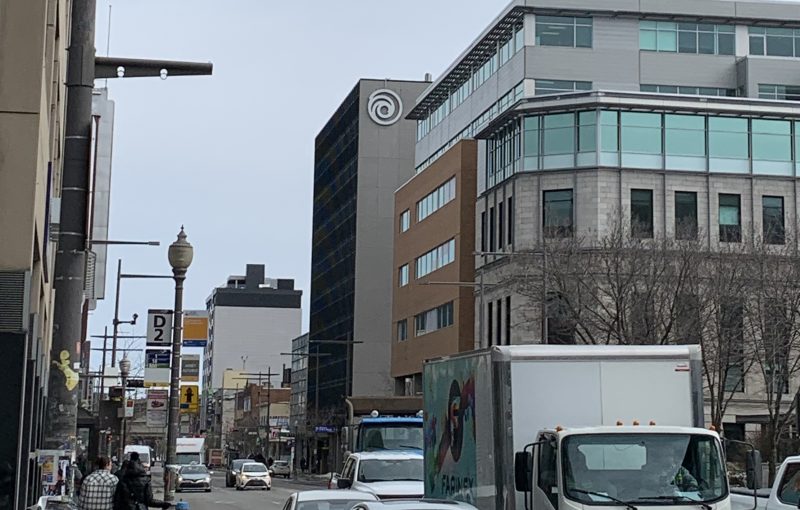
Since getting out of the Uber right in front of our hotel, that started to become clear when I looked down the street, and saw a giant Ubisoft logo on one of the tallest buildings in the city.
It was even clearer as we were walking to the studio for the event after grabbing lunch at a local spot. The opening of the Ubisoft Quebec studio was a huge part of what helped bring other studios to the area. Scores of talented developers have been through the Ubisoft Quebec studio, and there’s now a sizable hub of studios all near the Ubisoft Quebec building.
Beenox is a few doors over from Ubisoft. Sabotage is a block north, and there’s a Gearbox Software office a block south, and newer studios like Yellow Brick Games have popped up in recent years. As Ubisoft Quebec gets ready to celebrate its 20th anniversary on June 27, 2025, all this talent in such a small area is a reminder of how much of an impact Ubisoft has had on the games industry in Canada.
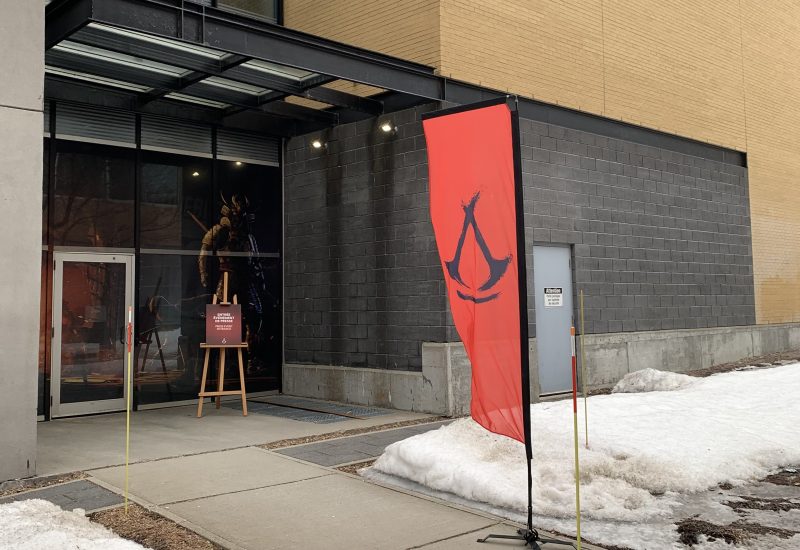
Montreal would not have become the hub it is without Ubisoft, and the same goes for Quebec City. It made the precarious spot Ubisoft is in right now feel all the more worrisome, especially as we didn’t yet know how the launch of Assassin’s Creed Shadows would go. All of the press there had reviewed or at least played the game for a significant period of time, and came away positive. We’d also all published our reviews before jumping on a plane to the studio.
But positive critical reception doesn’t keep a studio open, sales do. Seeing the brick and motor building, walking through the studio and meeting members of the team, while knowing we were at the center of a corner of the industry that would be worse off should it lose this center, was a reminder of the weight this team carried by being the lead studio on Shadows.
Not that the studios around Ubisoft Quebec rely on the success of Ubisoft, but it’s a good thing for all those studios, if there’s one or two big company’s that draw talent closer to them. That matters a bit less in a world of hybrid remote working, but it doesn’t count for nothing. And I couldn’t help but think of this while getting to the studio, and the next day when I was walking through the city, able to see the Ubisoft Quebec building more often than not, like a large beacon.
Protecting The Animals, Dynamic Weather, And Spaghetti Westerns
Our afternoon at Ubisoft Quebec would consist of two major components. A studio tour that took us to a few rooms for short presentations, after which we had some time to speak to a few members of the development team for Shadows. Along with that split, there was some time for us to play more of the game if we wanted to, in-between our interviews.
The presentations began in a small theatre room, where game director Charles Benoit, assistant game director Simon Lemay-Comtois and associate narrative director Brooke Davies took us through some of the differences between Naoe and Yasuke.
They also provided a few more details about the game’s development, like how the core development of Shadows had happened over the last four years, shortly after the release of the studio’s previous game, Immortals: Fenyx Rising.
Benoit also provided some insight on one of Shadows most charming details, which is the fact that you can’t damage or hunt any of the animals in the game. You can pet most of them, and draw a sumi-e photo, but you can’t harm them in any way.
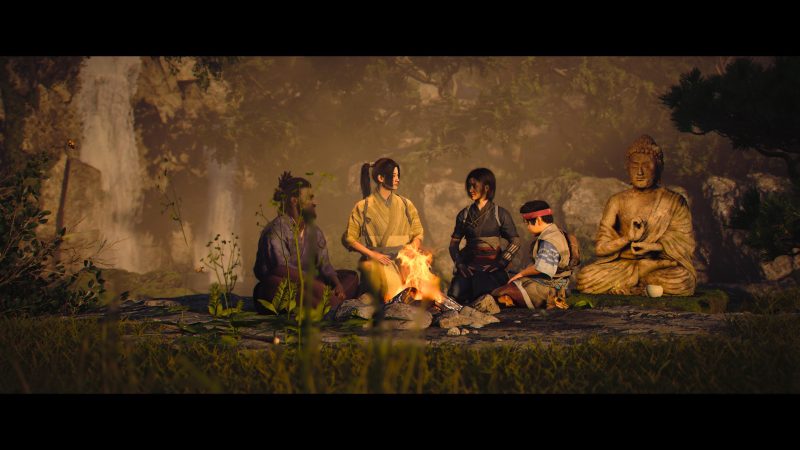
A decision that came largely from the game’s setting. It was illegal to consume meat and kill animals at multiple points in Japan’s history, including during its medieval period. So, the Quebec team took a different approach to the wildlife, which also played a key role elsewhere in the game.
Benoit said the studio was going for a “BBC-like quality” with how they would provide you the chance to admire the animals in their habitat. It was an extremely fitting choice in the end, as the sumi-e drawings are just one of many times where Shadows encourages you to stop and take a look at the world around you.
Which also led perfectly into our next presentation, from art director Thierry Dansereau and the history and world director, Stéphanie-Anne Ruatta, which focused more on the architecture of the game, the work that went into making sure everything was as accurate as possible, and the dynamic weather system.
The team developed 30 architecture kits to create the many towns and cities that populate the map in Assassin’s Creed Shadows, and while taking us on a digital tour of Sakai, Dansereau pointed out the detail changes that occur when the game changes from one season to the next.
Like how the crops in farm towns change, and if you pay attention, you’ll see them go through an entire growth cycle. You’ll also notice that the crops you see in each region are historically accurate to what would have really been grown there during that time period.
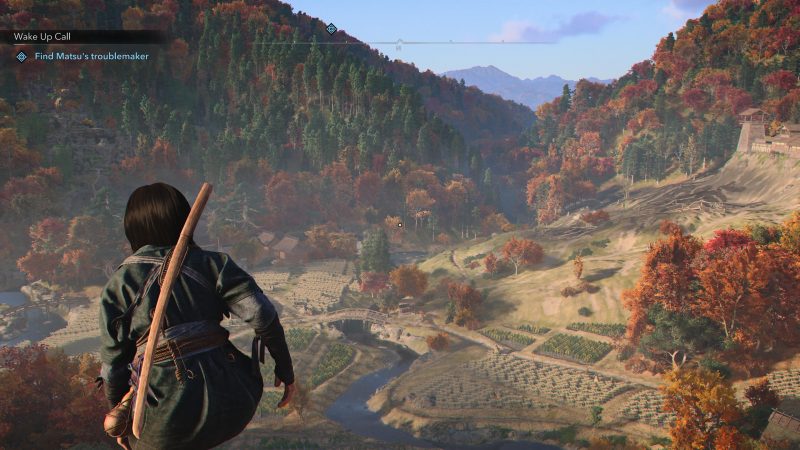
Not everything about an Assassin’s Creed game is historically accurate, and it’s not supposed to be, but getting details like that to be accurate is part of what makes these games so immersive, and like you’re actually stepping into a bit of history.
The animals, along with the plants, also changed with the seasons, as a keen eye will be able to spot the wildlife going through their own life cycles, like being able to watch a deer grow over the course of a year with each change.
Our final presentation focused on the game’s audio, with audio director Greg Newby and associate audio director Arnaud Libeyre talking about how the team used music and audio to enhance key narrative bits of the story, and the spaghetti western influences that went into certain scenes.
Newby and Libeyre specifically showed off the prologue scene where we’re introduced to the game’s main antagonists, the Shinbakufu, and how they worked with the band Teke::Teke to create original music for scenes key to Naoe’s story, while turning to Tiggs Da Author for scenes key to Yasuke’s story. Leading everything though, was the band The Flight, who have previously composed scores for Ubisoft games.
Collaborating with multiple artists in this structure, so each of the game’s protagonists had their own musical flavour while one captain at the helm kept everything together was one that the studio was excited to navigate, but one that was also quite unique in its challenges.
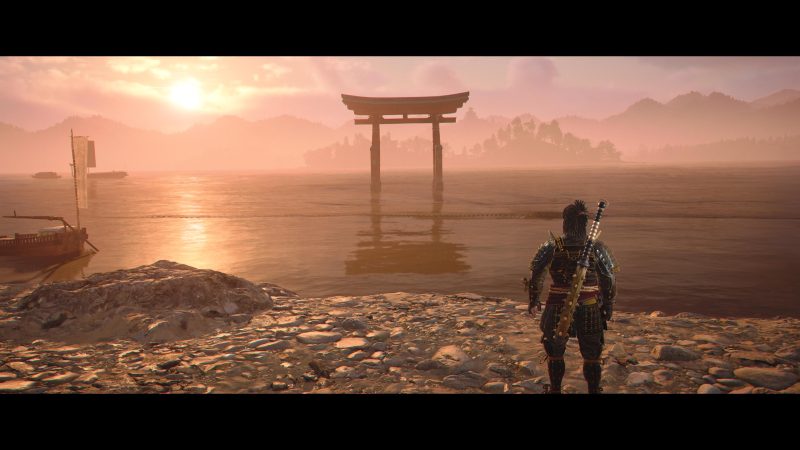
In the end though, it all worked out wonderfully, as all of us in that room knew by then. Especially the parts where Ubisoft used the original music from Tiggs Da Author and Teke::Teke. Though the songs featured lyrics, something Newby explained they would usually avoid in order to not pull the player too far out of the moment, the places they were used came up sparingly enough that they made the strongest impact possible.
Newby commented, that while he could have never seen that they would land where they did, now that it’s all done, he “couldn’t imagine it being anything else.”
We got to hear their work in the studio’s main mixing room (out of eight total rooms in like it in the studio), so you can imagine how amazing it sounded in a room purpose-built for the best audio experience possible.
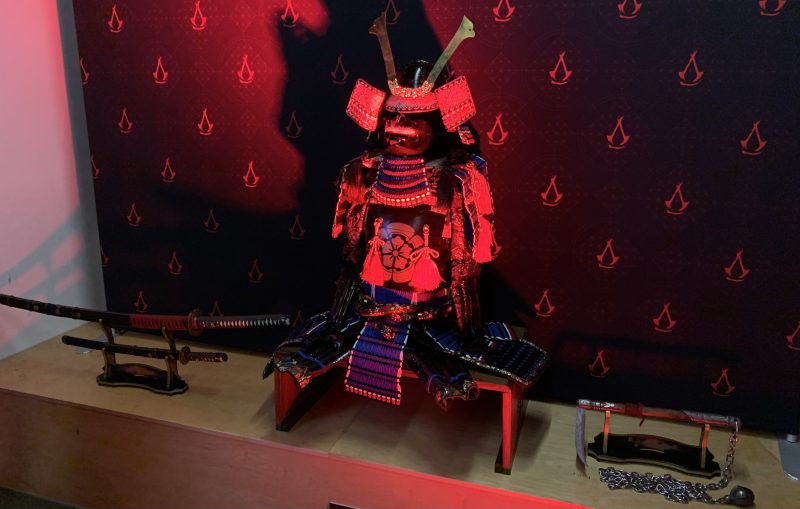
After that, our tour was over. We took photos of the various displays the studio had setup, including full statues of Naoe and Yasuke, along with weapons and armour the studio commissioned a local artist to create to be replicas of the weapons Naoe and Yasuke use in the game. The armour set was a replica of the armour worn by Oda Nobunaga in an early scene in the game’s story.
There’s Always More To See
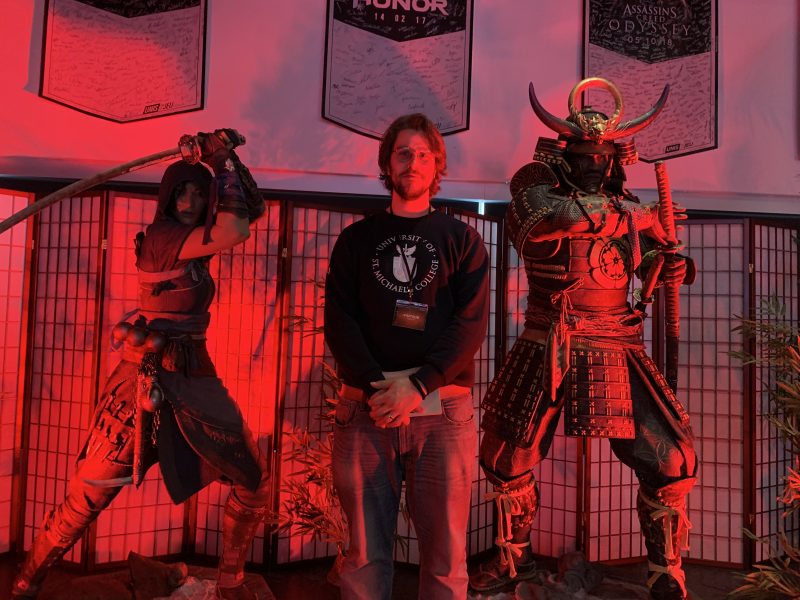
As we left the studio to go back to the hotel, ahead of our group getting dinner together later that night, I was once again impressed by how much we saw of the studio. While simultaneously being very aware that it would be great if these kinds of events happened more often.
There’s an opaqueness to the games industry that isn’t found in other entertainment and arts industries. I’m not saying every studio needs to be ready to open its doors to curious fans and players for constant tours, but at the same time, it would help if more people got to see where the games we all love to play are made.
Where you’re constantly walking by people that each have their role to play in delivering a fun, functioning game, that you spend hours playing, it humanizes the industry better than any developer blog, or behind-the-scenes YouTube video ever could. Tours alone aren’t going to solve the many transparency issues the games industry has, but for now I recognize the great opportunity it is to visit studios like Ubisoft Quebec.
Thank you to Ubisoft for inviting and hosting us at the studio, and to those who organized the event.