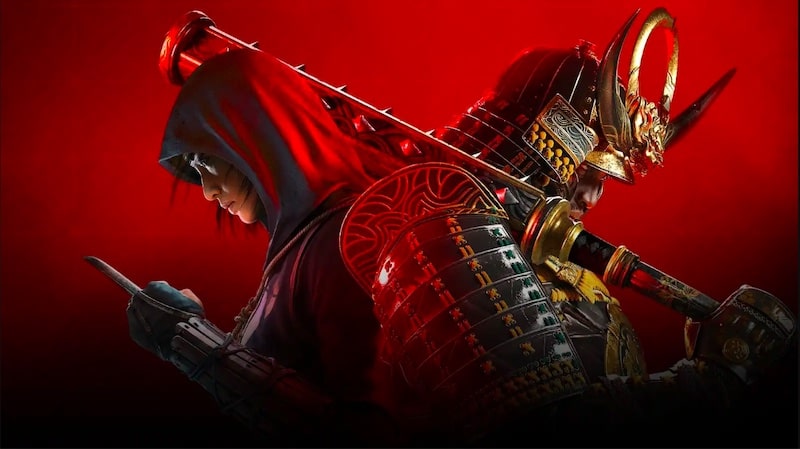
A day after publishing my review for Assassin’s Creed Shadows, I hopped on a plane to from my hometown Toronto, to head to another one of Canada’s great cities, Quebec City.
I was there to visit the studio and get a behind-the-scenes look as to some of the detailed work that went into the development of Shadows, and to also speak to members of the development team and of Ubisoft who each worked on this game.
Once again, just like with my interviews at the Ubisoft Toronto studio last year, the allotted time for each interview only allowed for a few questions. Which is why I’ve bundled them here.
Starting with Shadows game director Charles Benoit, and the studio head at Ubisoft Quebec, Nathalie Bouchard on what the chance to work on Shadows meant for the studio.
Following that you’ll hear a bit about the game’s art direction from art director Thierry Dansereau. Lastly, but certainly not least(ly), the head of the Assassin’s Creed brand, Marc-Alexis Côté shares a bit about the future of the series, and where we are going from here.
For more on Assassin’s Creed Shadows, you can check out our whole breakdown of the day we spent at Ubisoft Quebec, here.
Follow The Blade – The Ubisoft Quebec Team Talk What Went Into Assassin’s Creed Shadows, The Future Of The Animus And More
Interview with Charles Benoit and Nathalie Bouchard
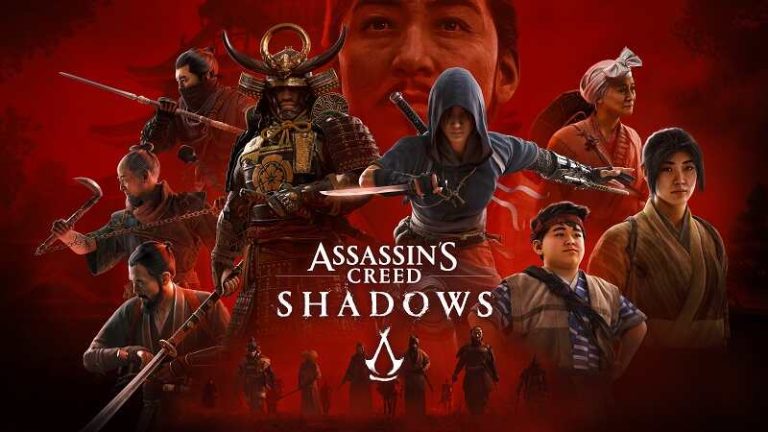
PSU: Firstly, thank you both for taking the time to speak with me today. For both of you, but perhaps more for you, Nathalie, what did it mean for Ubisoft Quebec to lead such an important game in the Assassin’s Creed franchise? A trip to Japan is what fans had been wanting for a long time, so did you feel the weight of that, working on Assassin’s Creed Shadows?
Nathalie Bouchard: I don’t know if you know, but we’re starting our celebration for the 20th anniversary of the studio. So you can imagine, what a gift, for us starting with the launch of Shadows. I guess that you know, this is also not our first big game. We were behind Syndicate in 2015, and then Odyssey in 2018 and Immortals: Fenyx Rising in 2020.
So five years later, I felt that we were there. We were very happy, [and] excited, and this edition of the Assassin’s Creed franchise is a really, kind of ambitious game, and the team was ready for it.
It’s the seniority of the team, being able to work with 15 different studios, because this is Ubisoft, as well. So very happy and very proud to be able to deliver such a game. Also one that was really wanted by the fans, so it’s a great opportunity and we’re very proud of it.
Charles Benoit: It was even something that I personally wanted to do. I remember, 10 years ago I wrote a small pitch about going to Japan, so finally it’s a chance for me to work on that.
PSU: With the dual protagonists, Naoe and Yasuke, how did you find the balance between what you wanted players to experience with each of them?
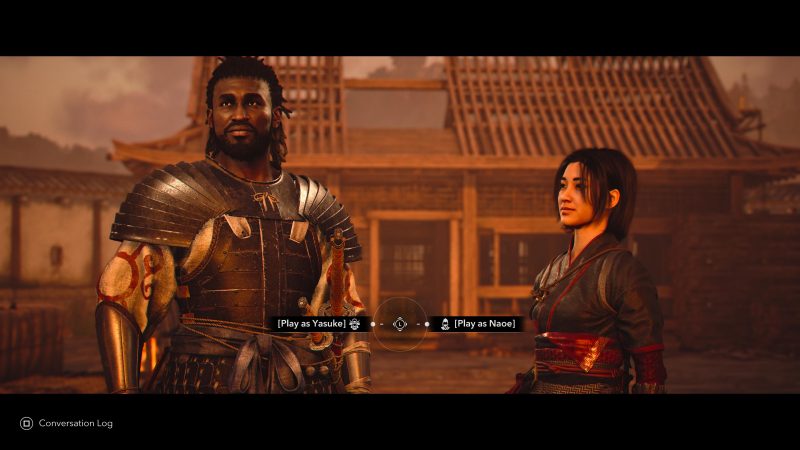
CB: At first, we wanted to have a clear split between our two pillars, the stealth and the combat. So it was perfect, also for gameplay, not only for narrative. We even explored different ways to split stealth and combat at the beginning with one character.
But we found that it was a lot more interesting with two characters, from two different social classes, with different perspectives on the story we wanted to tell. Especially the fact that it’s around Oda Nobunaga, and Yasuke sees the perspective from the conqueror, while Naoe’s whole village is destroyed. It’s two different perspectives, and with gameplay also reinforcing that, it was a good choice in the end.
PSU: Was it ever the case that Yasuke would be more of a climber, more of a classic Assassin? Or was it always that he would be so entirely different from how Naoe plays?
CB: It was always the thing where, we drew a bar, where Naoe will be stealth and combat here, and Yasuke there. We left the center spot to not have anything there. So, each of them have real differences because if they overlap too much, it feels like you can just take one, and the other doesn’t matter.
It was always the case that Yasuke and Noae were really, really different.
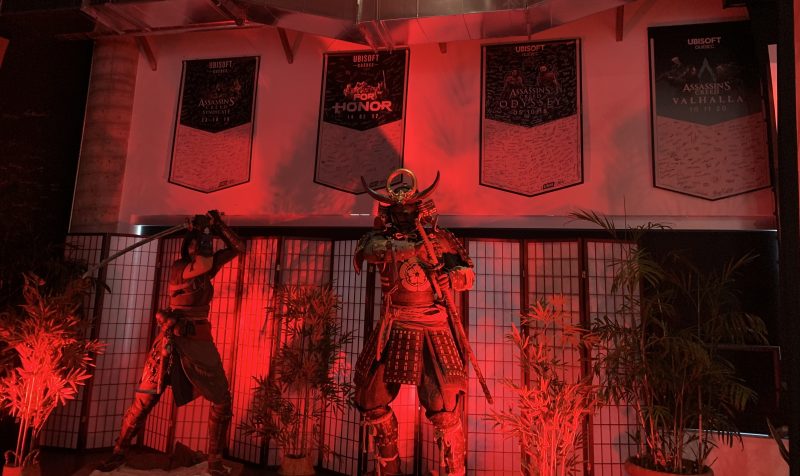
PSU: Nathalie, you talked about how it’s a gift, to be celebrating the 20th anniversary of this studio, and to make such an important game, but it’s also an important game because there’s a lot happening, with Ubisoft right now. The way I read it, I don’t know if Ubisoft will look the same, by the end of this year, and I think there’s a lot of question marks around what’s going to happen, with the future of the company. Was any of that, part of the pressure here? Were those pressures both of you felt?
NB: You know, when you work with passionate and engaged, people, you don’t need extra pressure. They put pressure on themselves, and that’s exactly what happened.
When you create a game like this, you create your own bubble, and we don’t have a choice. If we want to focus on what is important for us, delivering that game, so, this is exactly what we have done. No need for extra pressure, we’re good at it, very good at it. [laughs]
CB: I think Nathalie summed it up, we have a lot of pressure already with a game like this. The amount of work we need to do, and think about. The playtests, deadline; we focus on the game and make sure it’s the best that we can do, and that’s it.
Interview with Thierry Dansereau
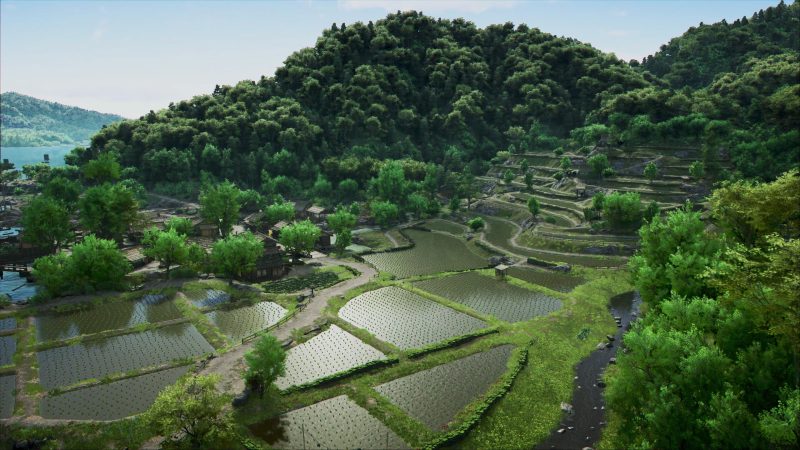
PSU: Thank you Thierry, for taking the time to talk with me today. What were some of the influences that you and the team pulled from, to create the art of Assassin’s Creed Shadows?
Thierry Dansereau: When we started this project, right after making Immortals: Fenyx Rising, we knew that this [Shadows] would be new-gen only, it was a long-awaited setting, and we really wanted to do something special for this game.
We thought about the ideas I presented earlier, with the dynamism, dynamic seasons. And we asked ourselves, ‘how can we make a game where the world and the visual could have an impact and increase the replayability of the game.
We started there, and you know, Assassin’s Creed always aims for a photo-realistic look, so that was the obvious target for us. So it was, ‘how can we push photo-realism to another level?’.
Working on our shaders, we developed stuff to improve the rendering, and we were lucky enough to work with the rendering team from Anvil, who did an amazing job with this game.
So, when you think about the inclusion of RTGI, occlusions, and calibrating a lot of materials, we did a lot of back and forth, and we expanded the dynamic range in the game. So, there are lots of different topics that have been touched, that have an impact on the overall perception of the game.
Then, think of movement. The fluid animations, it all contributes, because when you think about an image in video games, it’s not only the image, it’s the movement on screen.
Also, it’s something we didn’t talk about [earlier], but we also reworked the clouds, through what we call Atmosis. It’s mostly a meteorologic simulator, because clouds are created through a heat map, a humidity map. Which allowed us to have clouds transform, a bit like a real cloud. So I think it’s a sum of many things, that make the game end up looking good.
But, it’s a lot of people involved, a lot of back and forth, lots of iteration. So it doesn’t come like this [snaps fingers], but we’re obviously super proud of the results.
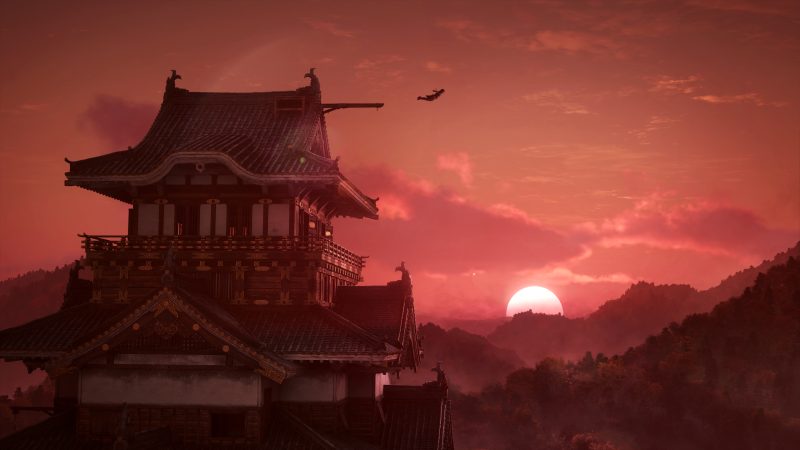
PSU: On that note, can you speak to some of the challenges you faced making Shadows?
TD: You know, making video games is a complex adventure, because there are so many people involved, so many departments. What I’ve learned, being here for quite a while, you need to be very close to technical people. Programmers and technical artists, if you want to be able to achieve what you envision.
So I spent a lot of time, you know, with our rendering team for our weather formula, that’s an example where we did a lot of iterations, almost on a daily basis. Trying to make sure that it works well, so everything is a challenge, in a way.
In terms of characters, the complexity of the Japanese armour. Hair strands, which is a new tech for us that we introduced in Shadows, making sure hair strands behave like we wanted depending on the wind strength. Clothing, also. And being able to slice down all the doors, that was a new challenge, because, quick note, before this game we used to work in big GI, so we had some level of thickness for our walls. Now, with the walls being paper thin, we had to rethink the way we were working.
So, on many, many topics, we need to be up to date and stay very sharp. Obviously you surround yourself with known technical people, making sure all those topics are covered, and I think that’s the strength of Ubisoft. We have so many studios worldwide, so we have lots of very talented people who are scattered, which is a communication challenge, I would say.
Because you’re speaking with people who are on many different time zones, so I think that the biggest challenge, if I am to finally answer your question, was probably the communication challenge.
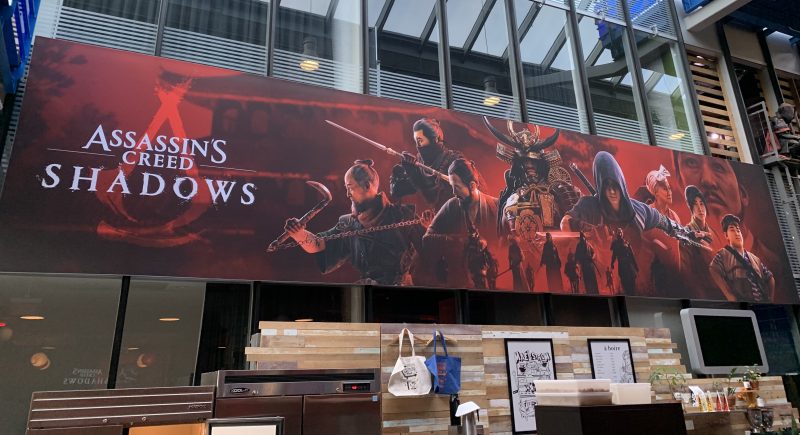
PSU: Lastly, because I think I’m already running out of time, could you talk about what your proudest of in Assassin’s Creed Shadows?
TD: I’m proud of that, as a team, that we’ve managed to deliver this game, because it was quite a journey. And you know, making video games is not about the end result, it’s about the whole process of making a game.
And, you know that there was a lot of things that were discussed during the making of this project. But because we don’t have any control over what’s being said outside, in our heads we stayed focused, and we knew that what we can control is making a good video game. And we stayed focused on that, our ambition and vision, and this is what makes me most proud, as a team.
Interview with Marc-Alexis Côté
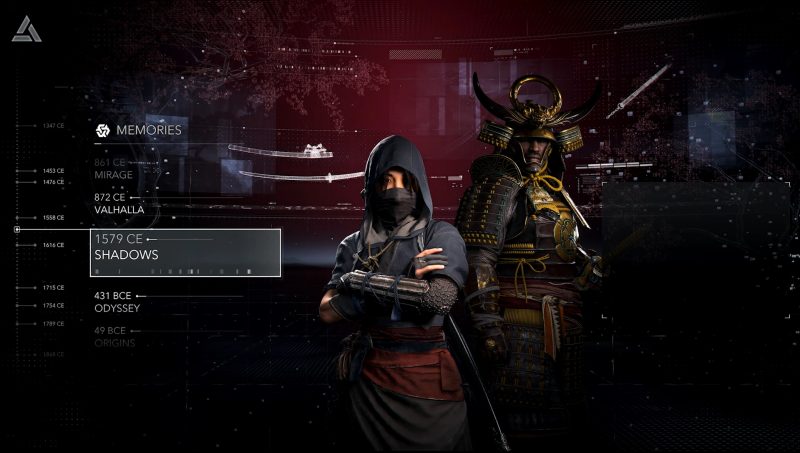
PSU: Firstly, thank you for taking the time with me today, Marc-Alexis. Also, how should I say your name? Marc, Marc-Alexis?
Marc-Alexis Côté: Mac, actually. Everybody here calls me Mac, it’s just simpler in English and in French, and nobody asks questions.
PSU: I guess you’re an Apple person, then?
MAC: I am, actually. If you do want to talk about Apple, I’m the go-to person here. I really pushed hard for this to be, one of the first titles in the industry to sim-ship on MacOS. I’m a big Mac user. Some people accuse me of making this a personal thing, but actually it’s because I see that as a huge, untapped market.
Most people that I know, have a Mac, and they don’t have games to play. So, my feeling, and again, it’s just an observation, as you grow older, and a lot of young people today, if you go to a university, everybody has a Mac laptop.
So I want to make sure they have a game to play, and I’d love for that to be Shadows.
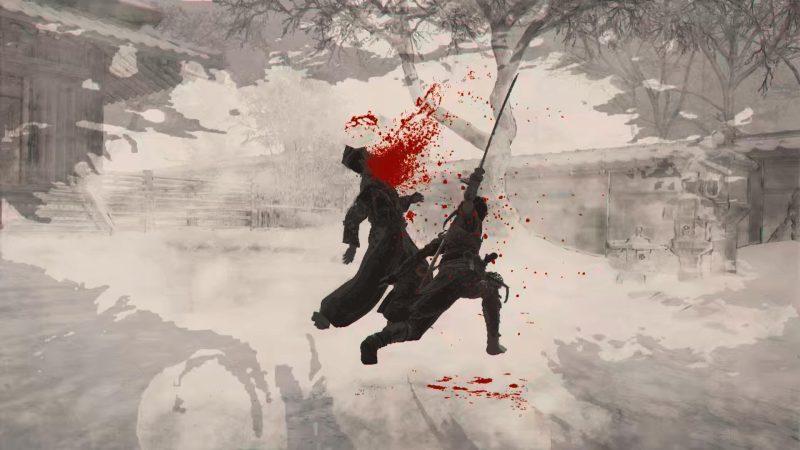
PSU: You’ve been leading the Assassin’s Creed brand the last two years, and obviously Shadows was in the works before you stepped into that role. But you’ve been with the franchise for a long time now, well over a decade. Tell me how you feel about coming to Japan now, which is a huge thing that people have been wanting for a long time.
MAC: I’ve been at the studio [Ubisoft] for 20 years, this year, and I started on Assassin’s Creed in 2009. So, I’ve been around for a while now. I’ve had the chance to participate, to review, to be involved in the conception phase for most of our projects, since then.
And every time the topic of Japan comes up, ever since we shipped Assassin’s Creed 1, actually. The beauty of Assassin’s Creed is that we can take players, anywhere, anytime, that we want. I keep saying this, it’s humanity’s history that is our playground, we just have to choose which one becomes your playground, afterwards. So, we do ask our fans, where they want us to take them, and Japan has always been in the top three, after each Assassin’s Creed game.
And, we’ve quite often put it on the list and asked, ‘is this where we’re going, or not,’ and this was the first time we moved past the pre-conception phase, with Japan, and we felt that we had something really solid, and that we had built the skill set to be able to deliver on our promises.
So, quite honestly, and as you’ve seen, and as we’ve seen, doing a game, in this time period, in Japan, is quite a daunting task. It’s not easy, I feel we’ve always known it, and waited to have honed our skills enough to be able to accomplish this. And we felt the time was right.
The other aspect of why Japan, why now, is that we were working on big technological breakthroughs that would allow us to capture Japan in a way that was different than what had been done, and what the competition had done. So, we felt that we had something to say, that we weren’t just doing Japan like many others have done, and that we could do it in our own way by technologically innovating and by telling a story that was important for Assassin’s Creed.
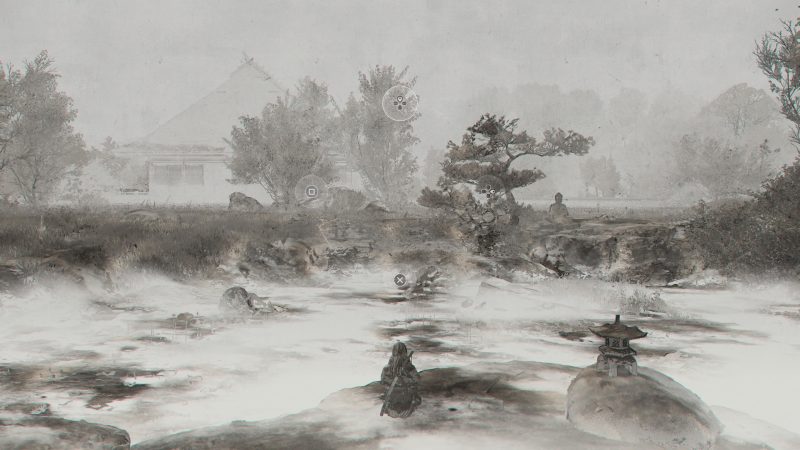
PSU: I wanted to talk a little bit about the Animus, because the Animus Hub is a huge, new aspect to Shadows, and is part of ushering in a third phase of the franchise. In terms of the narrative, though, the Animus has taken a backseat. Even more so, I feel, in Shadows.
MAC: For now.
PSU: So, this is my question then. Is it going to continue this way, is the modern and historical connection going to be broken, and just do a full historical focus?
MAC: No. We will not only have games set in the past, because I think this connection between the past and present, is what defines Assassin’s Creed. We’ve just decided to approach it in a different way.
I’ll try to explain this as best as I can. People who love the modern day [story] will get more of it in our post-launch of Shadows, and our upcoming games, as we use the Hub as a platform to link our different experiences together. This is something that we’ve started to hint to in Shadows.
But, one of the things that most, not all, of our fans have asked us, is for our focus to be on the past, at least when we launch the game. That’s the thing; if you look at what’s on the box, or in the trailer, it’s always about ‘this’ period. So, when people get into this experience, again, the majority of our fans, they want to experience this. But for me, the connection to our present is extremely important. And what we want people to feel in Assassin’s Creed, is what we call the vertigo of history. And it’s tough to have vertigo if you’re only in the past. This vertigo is between past, and present.
So, one of the things people will see has changed, in Shadows, is that it’s not the past that has taken the backseat. For me, it’s more what we call the first-civ mythology around the game.
There is a new, and I don’t want to spoil this for your readers, but the way we construct this, is that, often in our past games, the goal was to find an object in the past, that was important in the present, for the Templars or the Assassin’s to dominate the world. If you think about it, it gave a certain repetitive structure to many of our games. This is something that we have been criticized for in the past, and we tried to listen to this criticism, and change the way the interaction between past and present works.
So that you are no longer looking for a specific object in the present that will allow the Templars or the Assassin’s to win the war, and then it just resets at the next game. So, we’re trying to have this present-day story that will be told continuously between our games, and in-between, our games, as well. So, you get a first glimpse of that, in Shadows, but you’ll get much more in the coming months.
Where what you’re doing in the animus, who you are, all of this will be revealed, and it will help us grow the offer of Shadows with free expansions that will be coming.
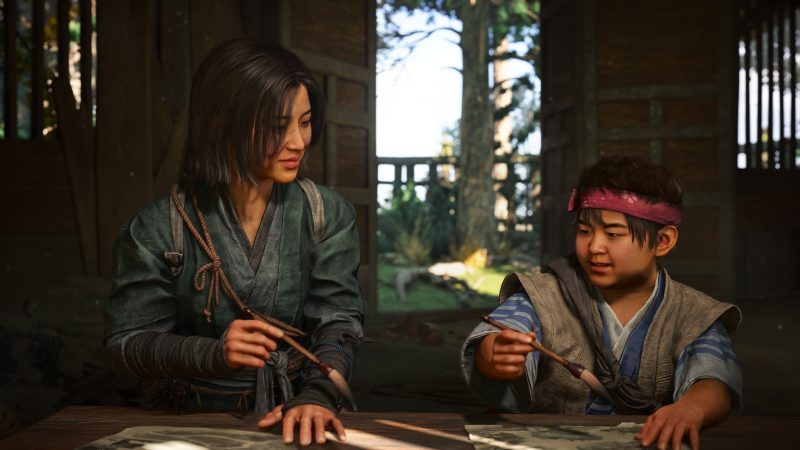
PSU: Lastly, I just wanted to ask you, as someone who’s been with Assassin’s Creed for so long, to now be the person leading the entire Assassin’s Creed brand, I want to know how it feels for you personally, to be here for Shadows, which is not just a pivotal moment for Assassin’s Creed, but for Ubisoft overall.
MAC: You know, our fans, are demanding, and I love this. To me, it pushes us to always try to do better, and to try to surprise them. With Shadows, we tried to create a game that would please both our old-time fans. Especially with the character of Naoe, that brings back a lot of stealth and fulfills fantasy’s that I think people have had since the very first Assassin’s Creed.
The very first Assassin’s Creed’s were a lot about stealth, but more social stealth. And people, back in the day were always complaining, asking to do more physical stealth as well, and I think we fulfill that with Naoe, while still bridging to the more modern RPG-era that fans also love, and that’s really embodied for me with Yasuke.
So that was our, design goal from the start, to bridge these two eras of Assassin’s Creed into a single game, that would be breathtaking technologically, and I hope we fulfilled that, and that we can keep surprising our players, our fans, in the future.
Thank you to Nathalie Bouchard, Charles Benoit, Thierry Dansereau, and Marc-Alexis Côté for taking the time to speak to me, and to those working behind the scenes to make these interviews possible.
These interviews have been edited for clarity.