Bethesda’s Oblivion changed open-world RPGs back in 2006. But with tech evolving and expectations rising, even legends need refinement. A full remake offers more than visual polish—it’s a chance to fix broken systems, build stronger narratives, and add features the original never had. From smarter AI to tavern dice games, the possibilities are no longer bound by 2000s hardware.
Expanded Gameplay Systems: Gambling, Mini-Games, and Missed Features
In Oblivion, betting was limited to the Arena. Players picked a side, placed gold, and watched. No real mechanics, no player agency. It was a placeholder, not a system. Compare that with online casinos, where interactive wagering includes layered rules, user choices, and tactical decisions. A 200% bonus means more when paired with gameplay that rewards skill or timing—not just luck.
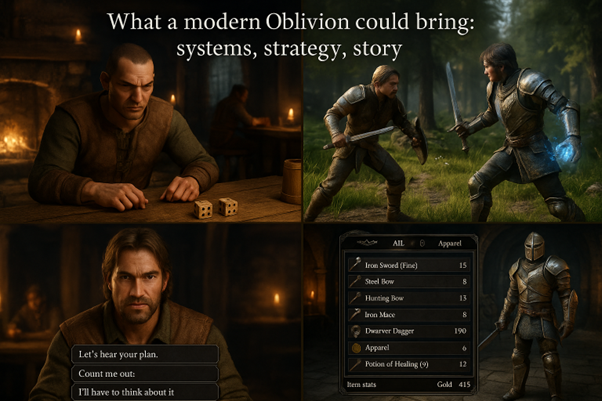
A remake could rethink gambling entirely. Dice games in taverns could use bluffing or sleight-of-hand. Regional cards might reflect cultural lore, with rule variants by province. Betting on illegal fights or races could tie into local crime rings or moral decisions. This would echo what Red Dead Redemption 2 did with poker—personalised, reactive, and risky.
Beyond gambling, Oblivion left other mechanics underused. Pickpocketing lacked depth. Trade had no regional variation. Imagine a smuggling system based on supply chains and guard patrols. Or bartering mini-games tied to speechcraft and item rarity. The Witcher 3 used Gwent to explain its setting. A rebuilt Oblivion could do the same—turning passive actions into active choices with real outcomes. When side mechanics connect to the world’s structure, even a simple wager feels meaningful.
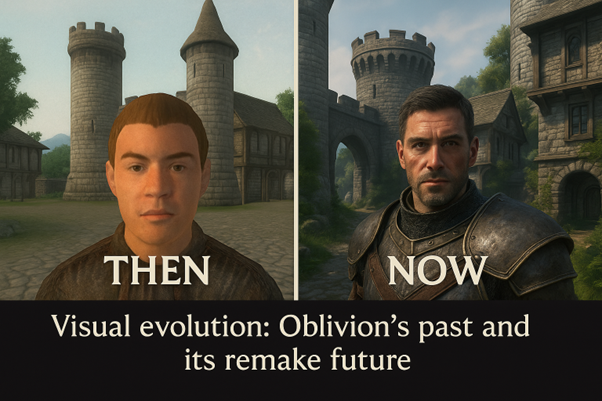
Visuals, Combat, and AI: Core Systems That Need Overhaul
Oblivion was ambitious in 2006, but its age shows. A remake must rebuild three key areas: visuals, combat, and AI.
First, graphics. The original relied on flat textures, basic lighting, and rigid animations. Modern engines like Unreal Engine 5 or Creation Engine 2 can now handle real-time shadows, dynamic weather, and detailed skin shaders. Better foliage rendering and global illumination would replace the dull green-and-grey terrain with depth and contrast. Facial animations, long a Bethesda weakness, should also match modern standards—lip sync, eye tracking, and subtle emotion.
Combat in Oblivion often felt disconnected. Melee lacked weight. Magic looked flat. Archery relied on simple aim-and-fire loops. A remake can borrow from Dark Souls, Kingdom Come: Deliverance, or Elden Ring to make each hit count. Melee should depend on stamina, movement, and parry timing. Magic could use area control, chain effects, and spell crafting. Archery needs proper draw strength, arrow drop, and AI reaction to missed shots.
Then there’s Radiant AI. Bethesda’s early attempt at simulating routines was novel—but flawed. NPCs often repeated lines or acted erratically. A modern system should give them realistic schedules, memory of past interactions, and branching dialogue tied to reputation or region. If a player steals from a shop, the owner should remember. If a guard sees a crime, their response should match context and faction law.
These upgrades are not luxury—they’re baseline. The original broke ground. The remake must build something solid on top of it.
Quests, Dialogue, and Worldbuilding
The original Oblivion offered scale, but not always quality. Many quests felt like filler—fetch tasks or combat loops with little consequence. A remake could trim this fat. Stronger pacing, moral stakes, and multi-part narratives would lift the game’s reputation for better Oblivion quest design.
Dialogue also needs an overhaul. The old persuasion mini-game was clunky, and NPC responses often lacked context. A modern dialogue system should offer branching paths, tied to faction, race, or player background. Games like Disco Elysium and Mass Effect have shown how emotional tone and layered response trees can shape entire arcs. With proper dialogue improvement Elder Scrolls mechanics, conversations could finally feel reactive, not robotic.
Lore integration should also be tighter. The Elder Scrolls world is deep—but Oblivion often separated narrative from setting. City quests rarely touched on Daedric politics or regional history. A remake could stitch together minor stories and grand themes. A shrine quest might echo events from Morrowind or hint at Skyrim. Let moral choices matter. Factions should remember past actions and respond accordingly.
For players who value narrative depth RPG titles, remake story upgrades must go beyond graphics and sound. This is the chance to turn a loose structure into a layered world—one where every line, quest, and choice feels deliberate.
Interface and Mod Support
Oblivion’s original interface was built with consoles in mind, making it awkward on PC. Inventory sorting was clumsy, quest tracking unclear, and HUD elements bulky. A remake should provide flexible UI scaling, sortable inventories, and filterable quest logs. Games like Skyrim Special Edition and Cyberpunk 2077 offer good templates—clean layouts, quick tabs, and colour-coded information.
HUD design should follow suit. Let players adjust transparency, toggle elements, or use presets. Tooltips could include lore or stat comparisons. Fast access to spells and gear would cut down on menu time and improve flow. These aren’t cosmetic tweaks—they make the game easier to manage.
On the community side, official mod support is vital. Direct integration with services like Steam Workshop or Bethesda.net would streamline downloads, reduce install errors, and improve updates. Modders built Oblivion’s long life. A remake should respect that effort with tools that support scripting, animation, and asset import.The original game was playable. The remake should be flexible. Players expect control—and mods are part of that control.
Preserving Legacy While Moving Forward
The Oblivion remake has the chance to go beyond nostalgia. With stronger visuals, sharper combat, and smarter AI, it can fix systems that once felt outdated. Expanding underused features like tavern betting, mini-games, and regional trading could add texture that was missing in the original.
But ambition alone isn’t enough. Fans hold deep memories of the original release—its cities, factions, and quests. That weight matters. The remake needs to respect that history, not replace it. Thoughtful updates to quests, dialogue, and mechanics can meet Oblivion remake expectations without losing what gave the game its identity.
This isn’t just about graphics—it’s about balance. A refined combat system, cleaner interface, and proper mod support show what’s possible. The Elder Scrolls remake potential lies in blending past and present. With careful work, Bethesda can deliver a Bethesda RPG remake that feels familiar, yet built for today.