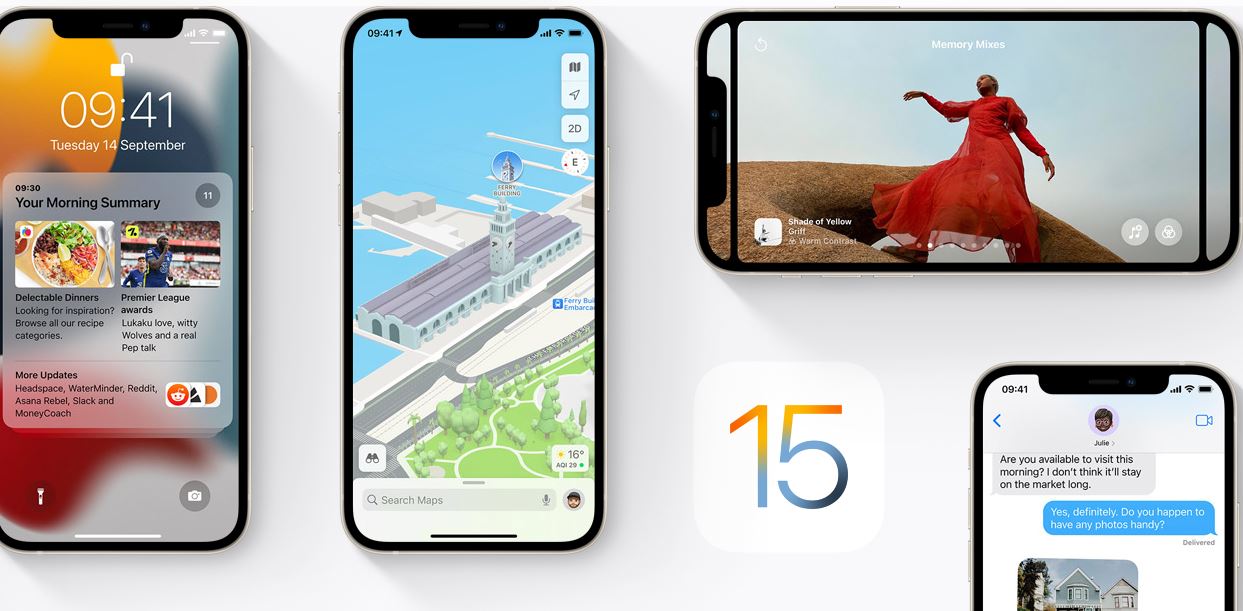
Apple has officially unveiled the latest version of the software iOS 15. But what are the actual innovations compared to the predecessor? What really changes for the user and what are the new practical features?
3D audio for FaceTime
Users who have iOS 15 installed on their device will be able to use 3-D audio for FaceTime calls. It appears as if the voice sounds from all directions during the call. Yet the user sees that the other person is sitting at the screen. With the help of this three-dimensional audio technology, the background noises are supposed to be brought out better. This should make talking on the phone more pleasant.
Sharing series, films and music
During the FaceTime call, it is possible to share films and series as well as music via SharePlay. Gaming and leisure activities in particular are at the forefront of iOS 15, with more and more people using their smartphone and tablet to also gamble on the net, for example, on a gaming platform, to take advantage of the offers of digital bookies and casino free spins on njXgambling.com. Not least because of the State Treaty on Gambling, online gambling has become more transparent and safer. With the development of the software for the end devices, an important step has been taken for the flexibility and security of the customers.
At this point, it becomes clear that with iOS 15, phoning via FaceTime becomes more real. The two users are indeed at a physical distance from each other. But they can enjoy many advantages that they would otherwise only have with a face-to-face conversation.
Set Do Not Disturb mode
With iOS 15, it is now possible to set a do not disturb mode and gain a little more distance from the digital medium again. This makes it possible, especially in the home office, to focus on the essentials and not always be disturbed by overlays on the laptop or smartphone.
In this focus mode, only the essential and important apps and videos are displayed. Users can define these settings for themselves.
On-device intelligence: recognise and send contacts in photos
Allcontacts who send messages now appear larger on the smartphone. At the same time, the software collects non-critical messages and messages to filter them out for the user and display the essentials. So you get the feeling that smartphone use is becoming even more individual and flexible.
Through on-device intelligence, the operating system recognises texts in photos and can copy and mark them. It is possible to photograph telephone numbers or then tap on the telephone number in the pictures to call the person. At the same time, the user benefits from another function with visual look up. For example, those who photograph sights can use this feature to learn more about a flower, a building, a work of art or a monument as well as a plant.
Optimisation of Spotlight search and a map app
The operating system has improved Spotlight in search. It is now much easier to recognise and search for people, places or other objects in photos. This improves, for example, the search behaviour via the smartphone. Apple has also revised the Safari browser. This is perhaps one of the biggest updates.
You can now switch between tabs more easily with your hand, because the bar slides from the edge of the screen from top to bottom. At the same time, it is possible to set categorical tab groups on the smartphone. Synchronisation again takes place via the end devices.
On iOS, there is a practical map app that is supposed to make it possible to call up detailed information on streets and city districts. The labels are now supposed to work more clearly and concretely, which is why it is then possible for the smartphone to recognise points of interest with the app.
Basically, it remains to be said that iOS wants to make the smartphone more individual and flexible. It can no longer be denied that digital end devices have become an immediate part of everyday life. The new features are intended to facilitate use and lead to human user behaviour.