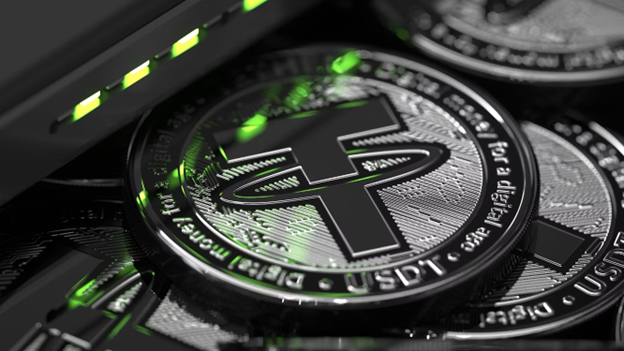
The economy of play is shifting rapidly. While the days of one-time game purchases are far from over, the underlying business model for consoles such as the PlayStation family is evolving in dramatic fashion. Virtual currencies, once a mere convenience for microtransactions, are approaching a crossroads: will they remain siloed tokens in individual titles, or become the backbone of a unified PlayStation economy?
The Current State of PlayStation’s Virtual Currency Ecosystem
Virtual currencies on PlayStation have established themselves as a core component of modern game monetisation. From cosmetic skins in large-scale live services to in-game unlocks for single-player titles, these systems enable developers and Sony to capture recurring revenue beyond day-one sales. Payments infrastructure for video games now routinely handles conversion of fiat into in-game currency bundles before players make smaller-dollar transactions.
PlayStation’s own ecosystem (including the PlayStation Store, PlayStation Network wallet, and digital storefronts) is largely aligned with this model. Users buy wallet credits, digital game editions, downloadable content (DLC), and in-game currency packs, and in many titles, the virtual currency acts as the medium of exchange. The same principles of user-managed digital funds appear in platforms like a casino without gamstop, where decentralised payment systems and crypto-based deposits are reshaping how players interact with digital value.
These platforms operate outside traditional self-exclusion frameworks, granting users greater control over spending while highlighting broader discussions about financial autonomy and regulation in online entertainment.
Much like PlayStation’s evolving ecosystem, they illustrate a wider trend toward self-contained economies where the boundaries between gaming, commerce, and digital finance continue to blur. In effect, what players regard as “coins” or “tokens” are fungible units denominated by a publisher but anchored in the PlayStation ecosystem.
This model extends beyond the console itself: PlayStation’s shift toward digital sales has seen digital software revenue rise dramatically. As a community post put it, “The digital ratio for full-game software sales on PlayStation platforms reached 70% for the full year.” With this backdrop, leveraging virtual currencies becomes not just a game developer tactic but a central PlayStation strategy.
Virtual Currencies: Mechanics, Roles and Behavioural Drivers
Mechanics Behind Virtual Currency Systems
At their simplest, virtual currencies serve as an intermediary: fiat money is converted into an in-game token, which then purchases items, upgrades, passes, or cosmetics. Games have long used premium and standard currencies to segment value and control spending behaviour.
On PlayStation, many titles offer bundles of virtual currency for sale (e.g., 1000 “coins” for $9.99,) which are then used for micro-purchases in-game. This structure allows the platform and publisher to capture revenue before expenditures happen. More importantly, it deregulates the user’s thinking about “how much real money did I just spend?” and anchors value in abstract units. This abstraction is by design: loose enough to encourage engagement, but controlled enough to maintain pricing integrity.
Behavioural and Economic Drivers
Players engage because virtual currencies tap into established reward loops: scarcity, exclusivity, customisation, and status. Games like Fortnite have shown how only a fraction of players purchase items, but their spending is substantial and helps subsidise the broader game experience.
The economic logic is straightforward: recurring revenues beat one-time purchases. The payments industry research underscores that game companies now manage a complex infrastructure spanning many payment methods and currencies because the microtransaction model is central.
Risks and Economic Design Challenges
Virtual currency systems are not without risk. If the currency conversion is opaque, players may feel misled. Inflation within virtual economies, unchecked currency sinks (ways to remove tokens), or absurd pricing of items can alienate, rather than engage, players. Here, the design must strike a balance. Research on game economics shows that failure to manage sink and faucet mechanics can degrade value perception.
Regulation is also creeping in. The intersection of in-game purchases, real-world value, and chance (loot boxes) brings scrutiny akin to gambling. Because in-game currency conversion behaves much like any other payment system, issues such as fraud, money laundering, and consumer-protection concerns are becoming increasingly relevant for developers and platform holders alike.
What the Future Might Hold for PlayStation’s Economy
Integrating Cross-Platform and Cross-Title Virtual Currencies
One logical evolution for PlayStation is the introduction of a platform-wide virtual currency. Rather than separate tokens for separate games, imagine a single PlayStation token usable across first-party titles, possibly third-party ones, enabling unified value across the ecosystem.
This shift would enhance retention and simplify user behaviour: tokens saved in one game can be spent in another, encouraging movement between titles rather than churn.
Such cross-title interoperability promotes platform loyalty, as players are less likely to migrate to another ecosystem if their currency store has value. The challenge, of course, lies in economics and revenue attribution: how do publishers split value, and how is player spend distributed?
Real-World Value, Secondary Markets, and Interoperability
Another frontier lies in real-world value. Currently, most virtual currencies are closed systems: they go in, but rarely come out. The education piece from the virtual economy space emphasises how closed systems frustrate secondary markets and raise risk.
For PlayStation, the possibility exists: virtual currency or items could be tradable, transferable, or even resellable, creating a metaeconomy that blurs game and asset. If executed well, this could open new revenue streams (transaction fees, marketplace commissions) and deepen engagement (players become investors in their virtual holdings). On the flip side, it brings regulatory scrutiny (items with real-world value become financial instruments), complicates moderation and introduces risk of fraud/abuse.
Emerging Technologies and Economy evolution
Blockchain, tokenisation, and digital-asset models are also beckoning. While mainstream game publishers have been cautious, the underlying economic infrastructure is shifting. As the article on Web3 and gaming puts it: “Tokens later, game first.”
For PlayStation, an eventual move to hybrid virtual assets – e.g., blockchain-backed tokens that represent in-game currency or items – could provide portability across platforms, longer-term value, and even tie-ins to creator economies. That said, the risk remains: gamer scepticism, regulatory backlash, and monetisation models that feel exploitative. The bar is high and execution must prioritise fun first, economy second.
Strategic Business Implications for Sony & PlayStation
For Sony Interactive Entertainment, the evolution of virtual currencies is more than a monetisation tactic. It touches on subscription strategy (e.g., PlayStation Plus), digital storefront strategy (PlayStation Store), and platform ecosystems (hardware, accessories, services). If PlayStation transitions to a token-based economy, the device, service, and content pillars become more tightly connected through currency flows.
Competition is also a factor. Console rivals and even PC or mobile ecosystems are already deep into live services and virtual economies. To maintain leadership, PlayStation must not only keep evolving its virtual currency mechanics — it must also ensure the player-facing experience remains transparent, engaging, and aligned with gamer expectations.
Implications for Players and the Community
For players, the rise of virtual currencies offers both opportunity and complexity. On the upside, unified or platform-wide tokens may deliver better value, flexibility, and cross-title rewards. Players who invest time and money in one game may see value carry over. On the flip side, they may face more complex spending decisions, potential exposure to secondary markets or asset value risks, and less clarity about what their purchases truly represent.
For the community and creator ecosystem, a richer currency model can fuel trading, content creation, user-generated economy, modding marketplaces, and secondary transaction ecosystems. But such dynamics also raise ethical questions: will the game become more about investment than enjoyment? Will microtransactions feel more like financial instruments than fun extras? Researchers warn of the danger when game economies begin to mimic speculative markets.
Transparency, trust, and consumer protection will matter more than ever. As virtual economies gain sophistication, the relationship between player, platform, and publisher must remain clear: what is owned, what is rented, what is tradable, what is locked.
The Currency of Play
Virtual currencies are no longer peripheral to PlayStation’s business—they are foundational. From simple wallet reloads and in-game bundles to potentially unified platform tokens, tradable assets, and cross-title economies, the future of PlayStation’s economy is being written now. But with opportunity comes responsibility. Sony must balance innovation with fairness, clear value to players with sustainable economic,s and fun gameplay with evolving business models.
Whether PlayStation’s next generation economy centres on a single token, inter-game asset markets, or blockchain-backed virtual assets, what will matter most is how value, trust and engagement are maintained in equal measure. As one of the world’s leading platforms, PlayStation stands at a pivotal moment: the transformation of its economy may shape not only its own future, but the future of game economies overall.