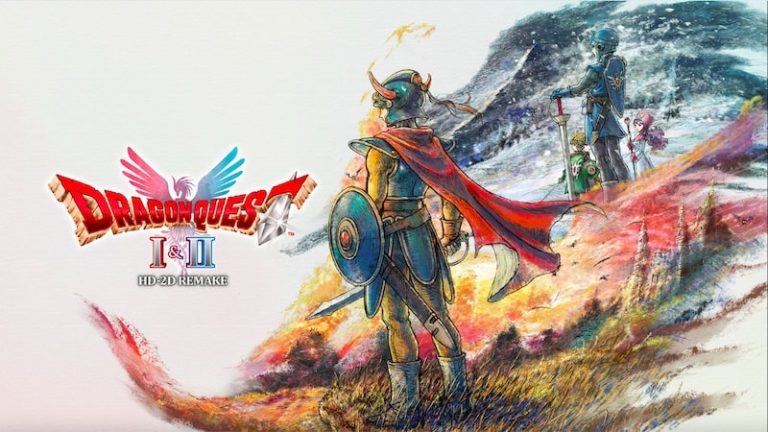
Dragon Quest I & II HD-2D Remake PS5 Review. It’s not every day you get to experience your favorite franchise getting so much love from its creators. Dragon Quest is something special, and it’s taken a long time to catch on outside of Japan, finally. Square Enix has done a marvelous job by introducing new players to this and showing them how far they’ve come.
Dragon Quest I & II HD-2D Remake follows the same formula as Dragon Quest III HD-2D Remake did last year. The visual upgrade is stunning, and the quality-of-life improvements make it feel more modern. Besides being wholly different games, Dragon Quest I & II feel like they got more of a modernization than Dragon Quest III did, and it’s better for it.
Dragon Quest I & II HD-2D Remake PS5 Review
The Beginning Of A Trilogy
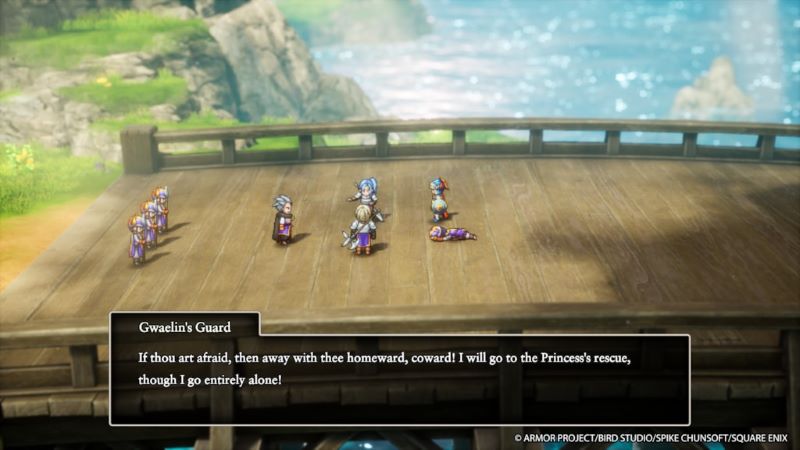
Dragon Quest I & II take place in the same world, albeit a hundred years apart. Dragon Quest tells the story of your silent protagonist as he takes it upon himself as a descendant of the great hero Erdrik to stop the Dragonlord from bringing everlasting darkness to the world.
A story that I’m sure we’ve all experienced in many titles before, but Dragon Quest also came before many of them. A story of its time, the protagonist in Dragon Quest goes at it alone—a lone party member against a never-ending horde of monsters.
The story in Dragon Quest was as simple as it got, and at the time of its 1986 release, it didn’t have many of the grand storytelling ambitions we see today. The game’s plot didn’t really have much going for it. Explore the land, collect the tools you need to get to the Dragonlord’s castle, and defeat him.
Story Improvements Across The Board
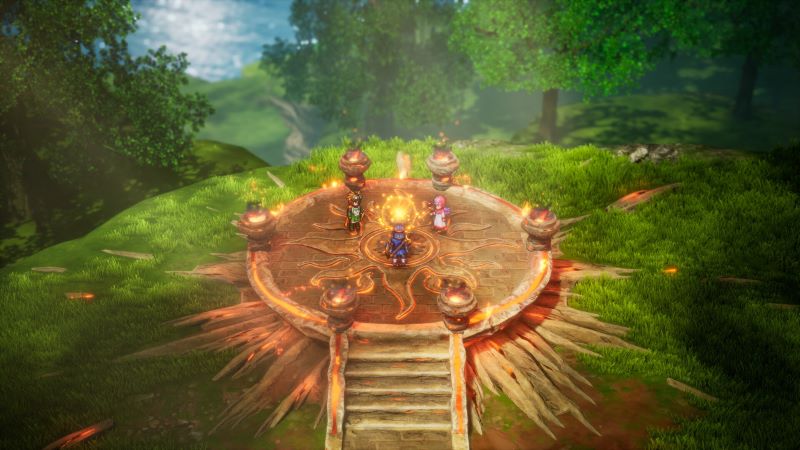
Dragon Quest II, on the other hand, became more of a full-fledged RPG with a party of two other members, allowing you to explore more of the world while also returning to older locations from the first game. Though the game was bigger, its story again really didn’t have the writing chops that Final Fantasy exhibited at the time.
The narrative this time follows the descendants of Erdrik, who band together after the evil Sorcerer Hargon attacks and destroys Moonbrooke Castle. The sole survivor is the princess of Moonbrooke, who vows revenge on Hargon.
The first game did feature one side quest that you can choose to complete or not, involving saving the king’s daughter from the clutches of a dragon, which you can choose to ignore if you want.
That’s no longer the case for both games. Every event that could have been construed as a side activity has been woven into the main narrative and even expanded upon.
No Stone Left Unturned
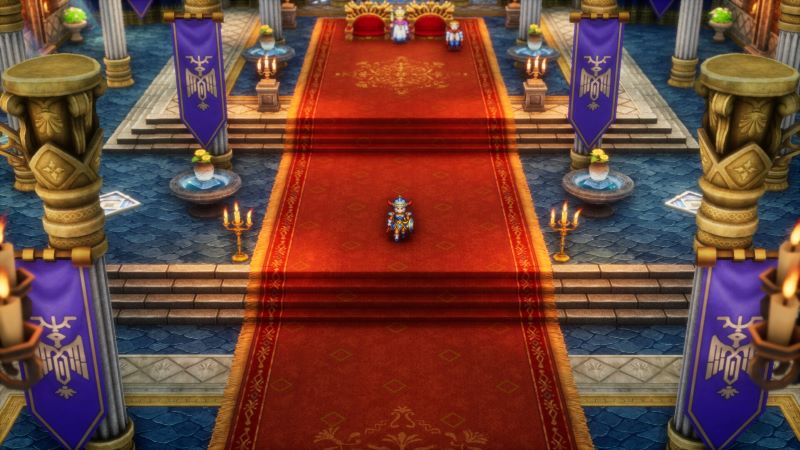
In Dragon Quest, rescuing the princess is now part of the main story, and you even have quests and narrative moments to help the King Guard Captain and his daughter, who is the bodyguard of the princess, who were little more than footnotes in Dragon Quest. Now, they have significant roles in the story.
Dragon Quest II has gotten the largest story boost with more scenes between the party, better writing, and a new party member that joins your team. Matilda, who is the sister of the Prince of Cannoke, is one of the original party members.
Matilda instantly steals the show when she shows up with her no-nonsense attitude and her constant teasing of her brother. The story in Dragon Quest II is easily the best in the trilogy of remakes.
Scrolls And Sigils Enhance The Combat
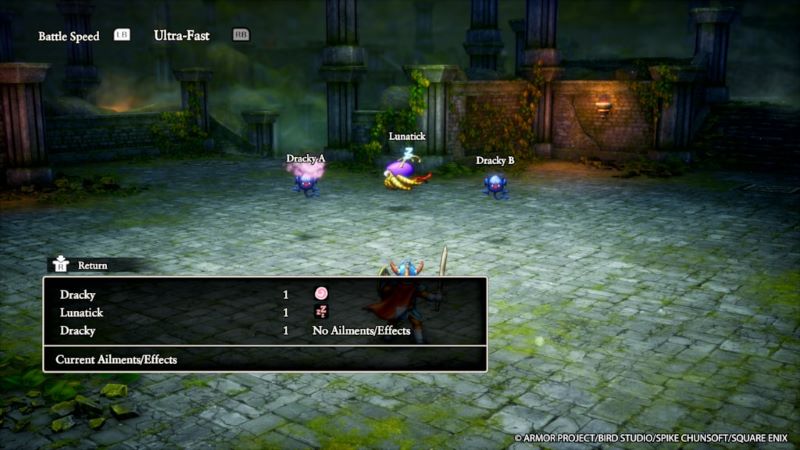
What Dragon Quest I & II HD-2D remake improved with its story, it didn’t improve much in its gameplay, unlike the Dragon Quest III remake, which got a significant gameplay update but not a story update.
Both games have gotten an upgrade in the form of Scrolls. These scrolls can be found in chests and other areas, and they allow your party or single hero in DQI to learn new spells and skills. This makes battles a lot easier to get through, and a lot of spells are new, which were introduced in later games.
With DQII, multiple characters can learn the same spell to utilize Kazam, for example, which can be learned naturally from leveling up by one party member. Still, it’s also a scroll that you can give the spell to another party member who won’t learn it naturally. It’s a great system and a welcoming one, as DQ2 is one of the franchise’s most challenging games.
This is a trade-off, as there aren’t any Vocations to switch between, unlike in DQIII. Sigils are another addition that you acquire as part of the story, but they also add buffs to the combat.
Sigils, once acquired, give you passive boosts like restoring a small amount of health when defeating an enemy or restoring MP(Magic Points) when you defend in combat.
Simple Combat For Everyone To Enjoy
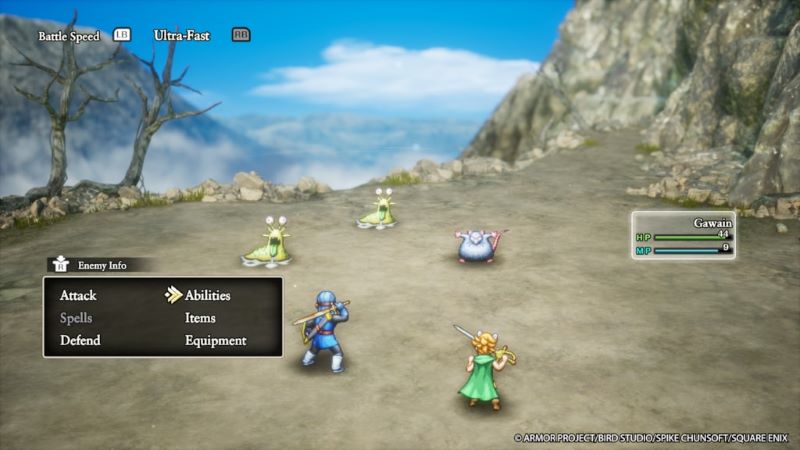
Combat, much like DQIII, is a simple affair: you have your standard attack, skill, magic, defend, run, and item commands. While basic at first, battles do become a more skillful affair as you learn which attacks and spells enemies are weak against to utilize said attacks as much as possible.
Quality-of-life additions have been added too, as in last year’s DQIII Remake. Auto-battle set up with specific orders for each party member, and you can increase battle speed by up to three times, making it ideal for those looking for a casual playing experience. God mode returns if you play on the easy setting, removing any real need for strategy.
Exploration is a blast from the past. The map in DQI isn’t huge, and there isn’t any location on the map that you won’t visit for the story. DQII, on the other hand, has the same map but also expands it, making it at least three times the size.
Exploring A Gorgeous World
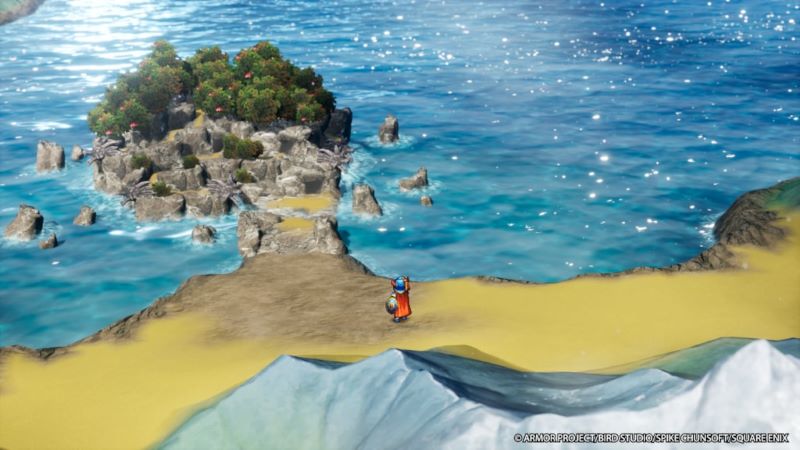
The larger map includes many islands and even ship exploration across its oceans, with plenty of hidden dungeons, towns, and locations to discover.
DQII also adds a brand new scenario to the main story. You get to encounter mermaids whose home comes under attack by Hargons’ forces.
This scenario sees you head underwater with your ship to the Mermaid village and a few new dungeons to explore and monsters to face off against. Underwater exploration is a great addition and lets you explore much of the map underwater.
Eye Candy
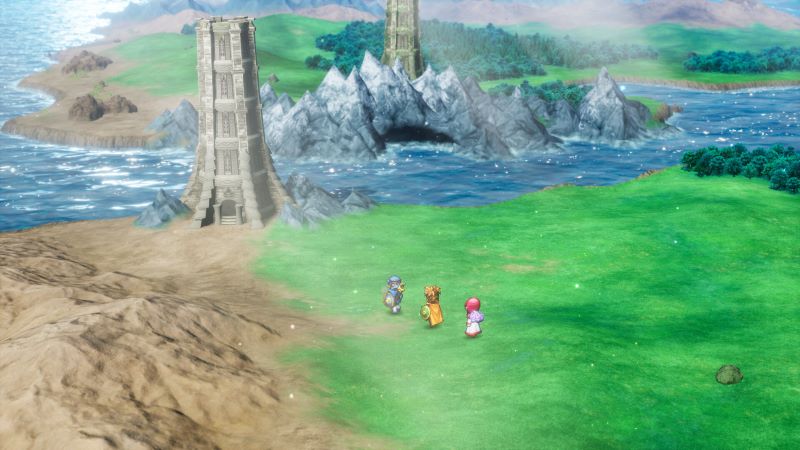
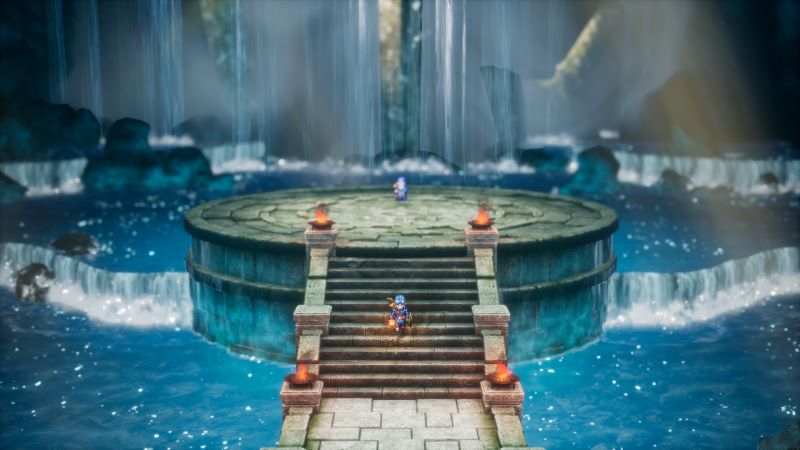
Visually, the game is as stunning as DQIII was. It’s a shame, though, that the day-night cycle didn’t make the cut for DQI and DQII. Everything looks crisp, and it’s a joy to experience.
From the fantastic spell animations and effects, to the snow-capped mountains or deserts you traverse, the visuals are showcase for the eyes. As such, I hope Square Enix uses this same template if they plan to remake the first six Final Fantasy games, or even Chrono Trigger, which would look great in the HD-2D style.
Dragon Quest has always been known for its incredible orchestral soundtrack, and that’s no different here. Though the selection of tracks isn’t abundant, it’s still a fantastic listen. You’ll hear a lot of the same tracks, which is a shame since both games apparently share a soundtrack; the music is still top notch though, so it’s not too much of an issue.
The voice acting is also equally impressive. Everyone speaks with almost a Shakespearean English; it’s old English, but somehow it fits the world you’re in. It’s also quite funny to listen to demons and monsters converse in Old English, with a deep, resonant tone.
Old Habits Die Hard
I do wish Square Enix would take the time to improve the franchise’s interface, though. It’s a lot of menus with few visual cues, so you constantly have to look for what you need. Each party member has their own inventory, as well as a shared inventory bag.
You constantly have to do management to make sure each party member has the items they need. You can’t use healing items unless a specific party member has them equipped. If it’s just sitting in your Item inventory, you can’t use it in combat.
The only other issue is the frequency of random battles. The recurrence of combat in DQII happens almost every three seconds, and it gets pretty annoying. DQI is much more forgiving, with an encounter every five to seven seconds. It may not seem like a big issue, but when some battles can take a good twenty seconds to get through, it can take its toll.
Dragon Quest is my favorite franchise, and being able to play through the original three games on a modern console has been a dream come true.
The franchise, especially DQI and DQII, may be a little too traditional for modern gamers, but there is just something special about Dragon Quest I & II HD-2D Remake that makes them feel modern in a classic package.
Dragon Quest I & II HD-2D Remake releases on October 30, 2026, on PlayStation 4, PlayStation 5, Nintendo Switch, Nintendo Switch 2, Xbox Series S/X, and PC.
Review code kindly provided by PR