
John Carpenter’s Toxic Commando from Saber Interactive and published by Focus Entertainment is an absolute blast from the first second. You’re thrown into sprawling maps with clear objectives, but there’s freedom to roam, hunt down bonus tasks, grab rare loot, and chase hidden surprises. It’s a bit like Helldivers 2, but without a ticking clock — you can approach each mission at your own pace, plan your route, and still feel the tension when things inevitably go sideways. It may not reinvent the co-op horde shooter. It doesn’t aim to reinvent the genre, but it does execute the formula with confidence, while weaving in genuinely fresh additions that keep the chaos exciting.
John Carpenter’s Toxic Commando Review (PS5) – Going Commando
The structure of each mission encourages exploration without ever losing momentum. You might head toward a main objective only to spot a side task that promises rare loot or a powerful upgrade. That small detour can quickly spiral into a full-blown firefight as enemies flood in from every direction. Moments like that give the game a sense of unpredictability that keeps missions feeling fresh. It’s not just about reaching the end point, it’s about surviving the madness along the way.
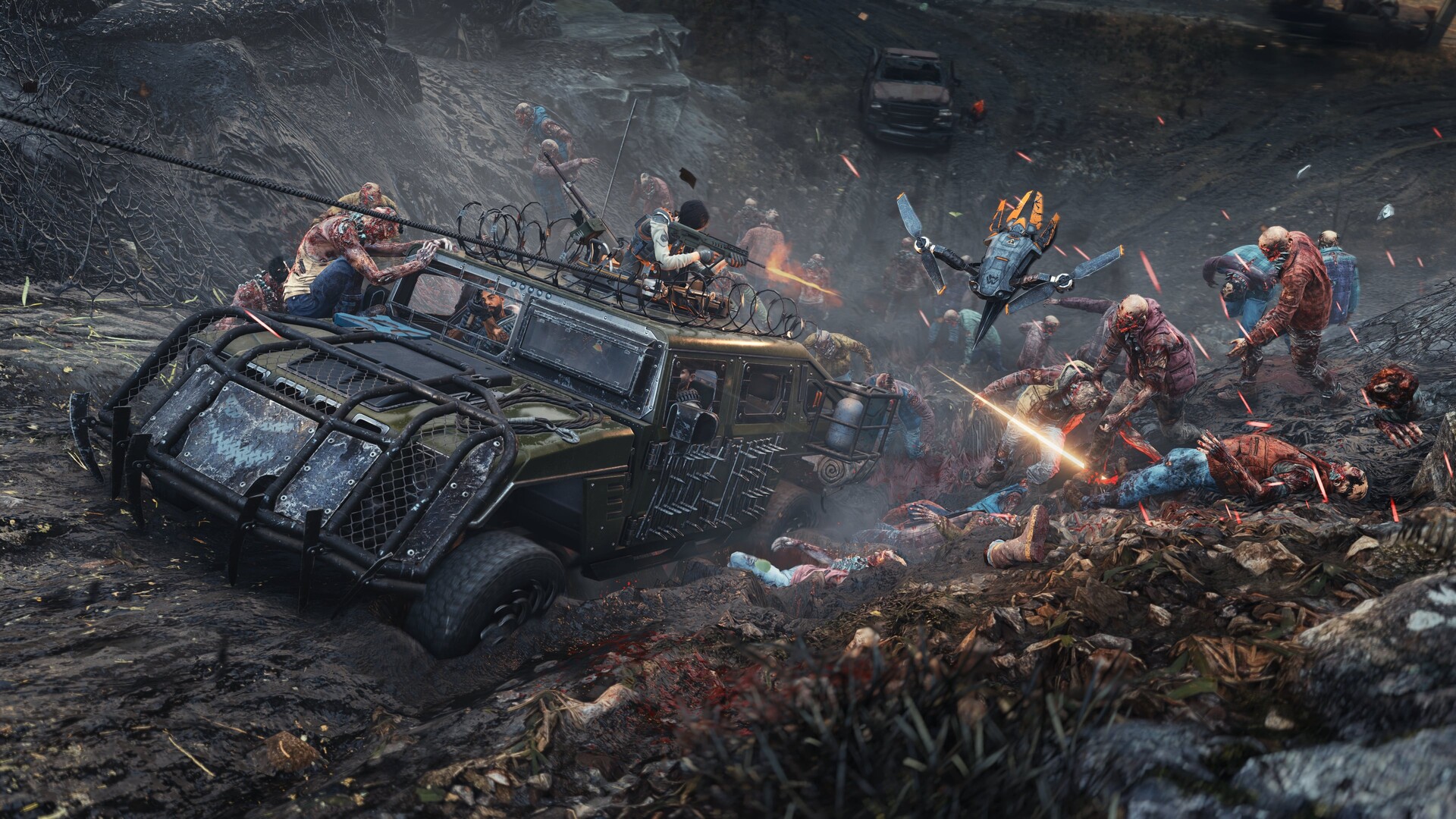
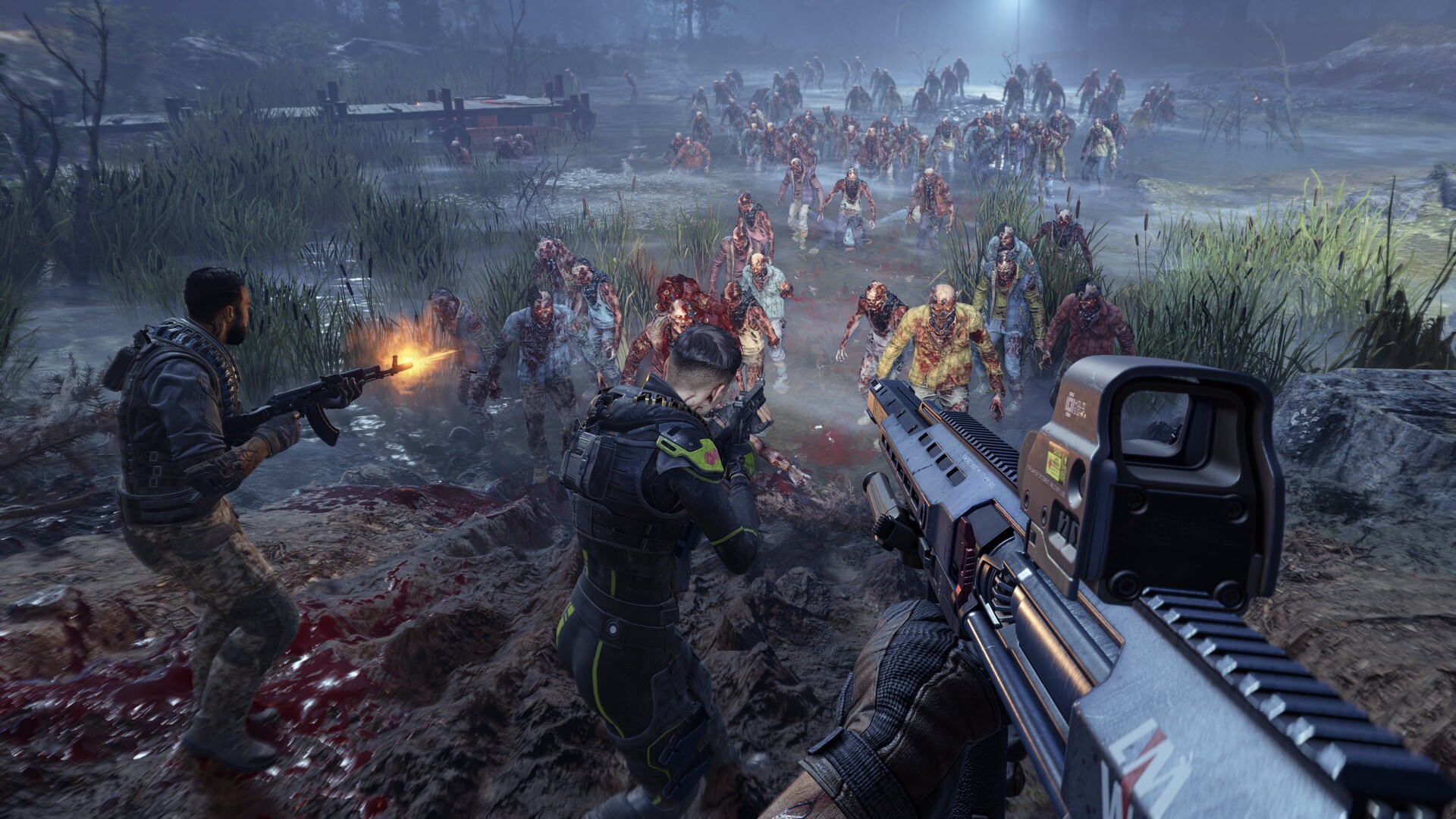
Saber Interactive has flexed its horde-slaying muscles before with the terrifyingly massive Tyranid swarms of Space Marine 2 and the relentless undead waves of World War Z. Both relied on Saber’s impressive swarm engine, which specialises in throwing vast numbers of enemies onto the screen at once. That same technology powers John Carpenter’s Toxic Commando, and the results are spectacular. Enemies don’t simply spawn in front of you; they surge forward in living tides that climb over each other and spill across the map.
Overwhelming Odds
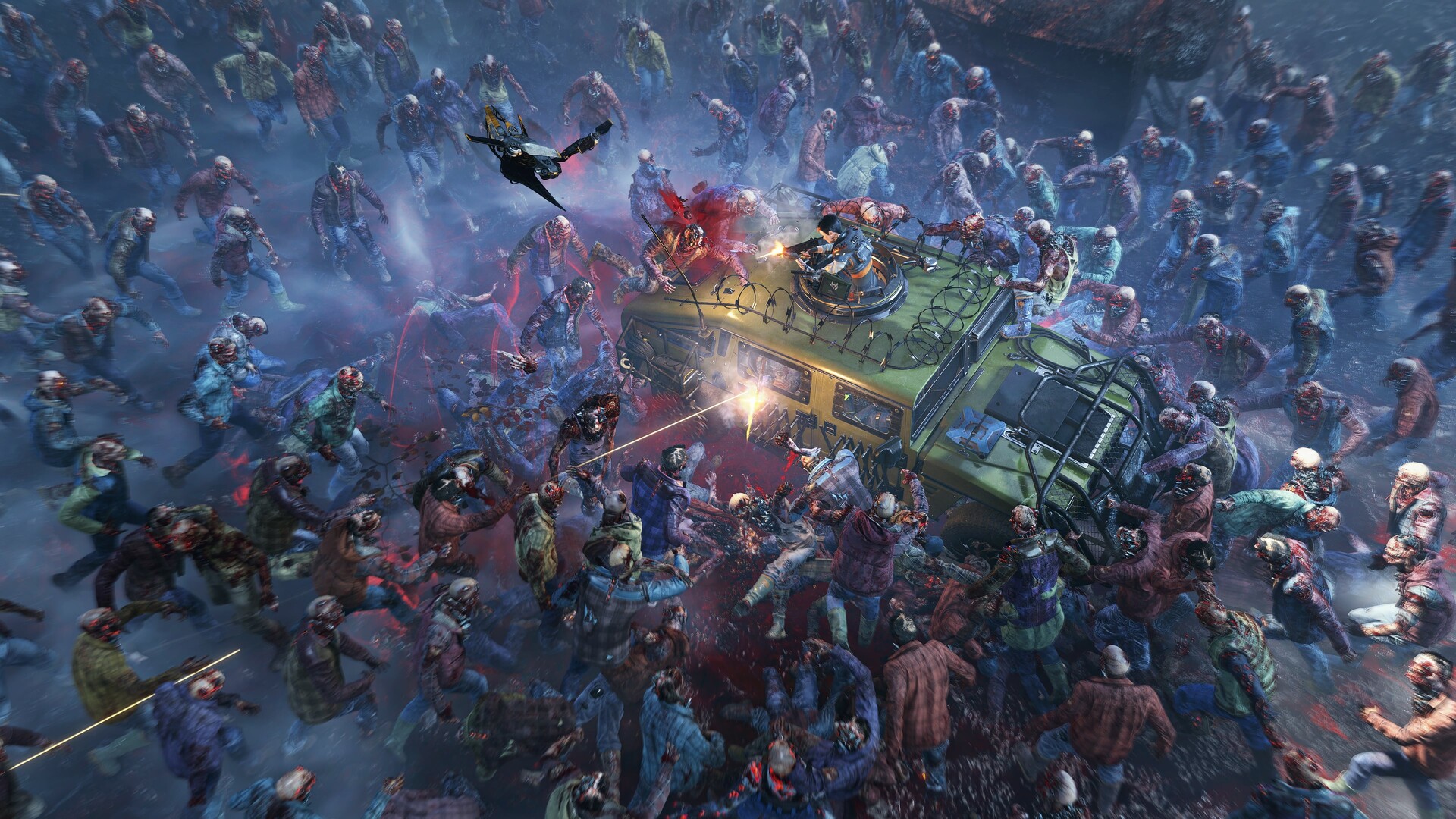
The scale of the chaos is genuinely jaw-dropping at times. One moment you’re clearing a manageable group, and the next a wave crests over a hill like a collapsing dam. Dozens of enemies suddenly appear from rooftops, alleyways, and distant ridges. It creates those heart-pounding last-stand moments where everyone unloads their weapons just to stay alive. The spectacle alone is worth experiencing, and it rarely loses its impact.
Thankfully, the gunplay is more than up to the task. Weapons have a satisfying punch, with strong audio feedback and clear visual impact on enemies. Shotguns tear through close-range threats while rifles chew through advancing lines. Each weapon feels distinct enough to justify experimenting with different loadouts. Reloading in the middle of a swarm carries real tension when enemies are closing the distance fast.
Weapon variety is also impressive. There’s a strong selection of primary firearms, and most of them come with their own progression paths and upgrades. As you play, you gradually unlock improvements that make your favourite weapons even more effective. It’s a system that rewards commitment without punishing experimentation. Trying something new never feels like a setback.
Big Guns, Bigger Enemies
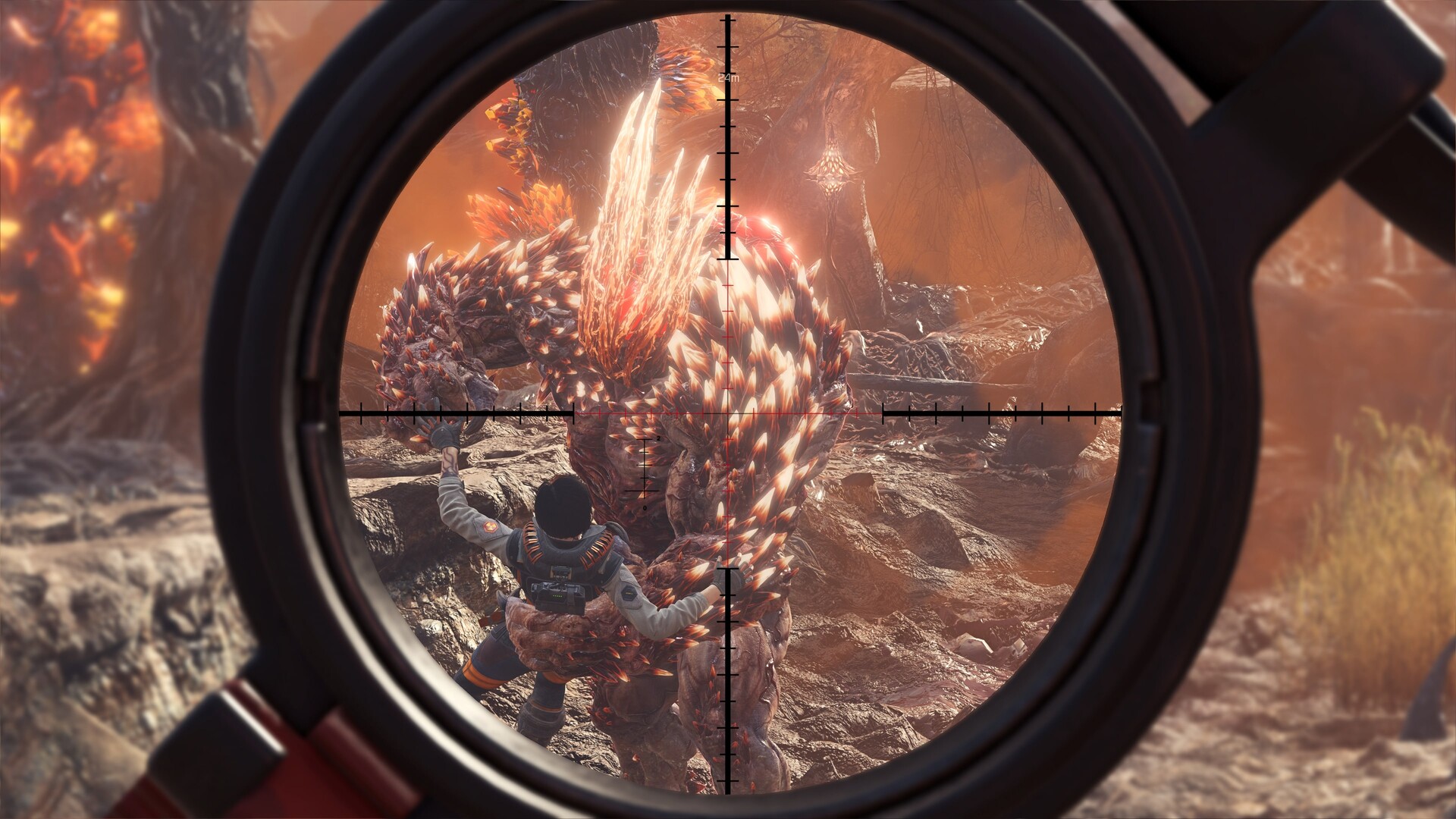
During missions you’ll also stumble across powerful salvage weapons. These temporary tools can dramatically shift the balance of a firefight. Picking up a devastating railgun or grenade launcher can instantly turn a desperate defence into a triumphant push forward. Moments like that add another layer of excitement, especially when the team coordinates around whoever is carrying the heavy firepower.
Salvage can also be spent in other useful ways during missions. Rather than using it all on infantry weaponry, you can save it to purchase supplies or reinforce defensive positions. Teams can place electric fences, set up mountable turrets, and buy supply crates filled with grenades or other helpful tools. These fortifications become incredibly valuable when the swarm numbers start to look overwhelming. A well-placed turret or electrified choke point can completely change the flow of a fight.
Enemy variety helps keep those encounters engaging. Standard infected make up the bulk of the hordes, but tougher variants quickly enter the mix. Some charge headfirst into the fight while others disrupt your positioning or force you to change tactics. The shifting enemy combinations stop battles from feeling predictable. You’re constantly adjusting to whatever threat appears next.
A Variety Of Violence
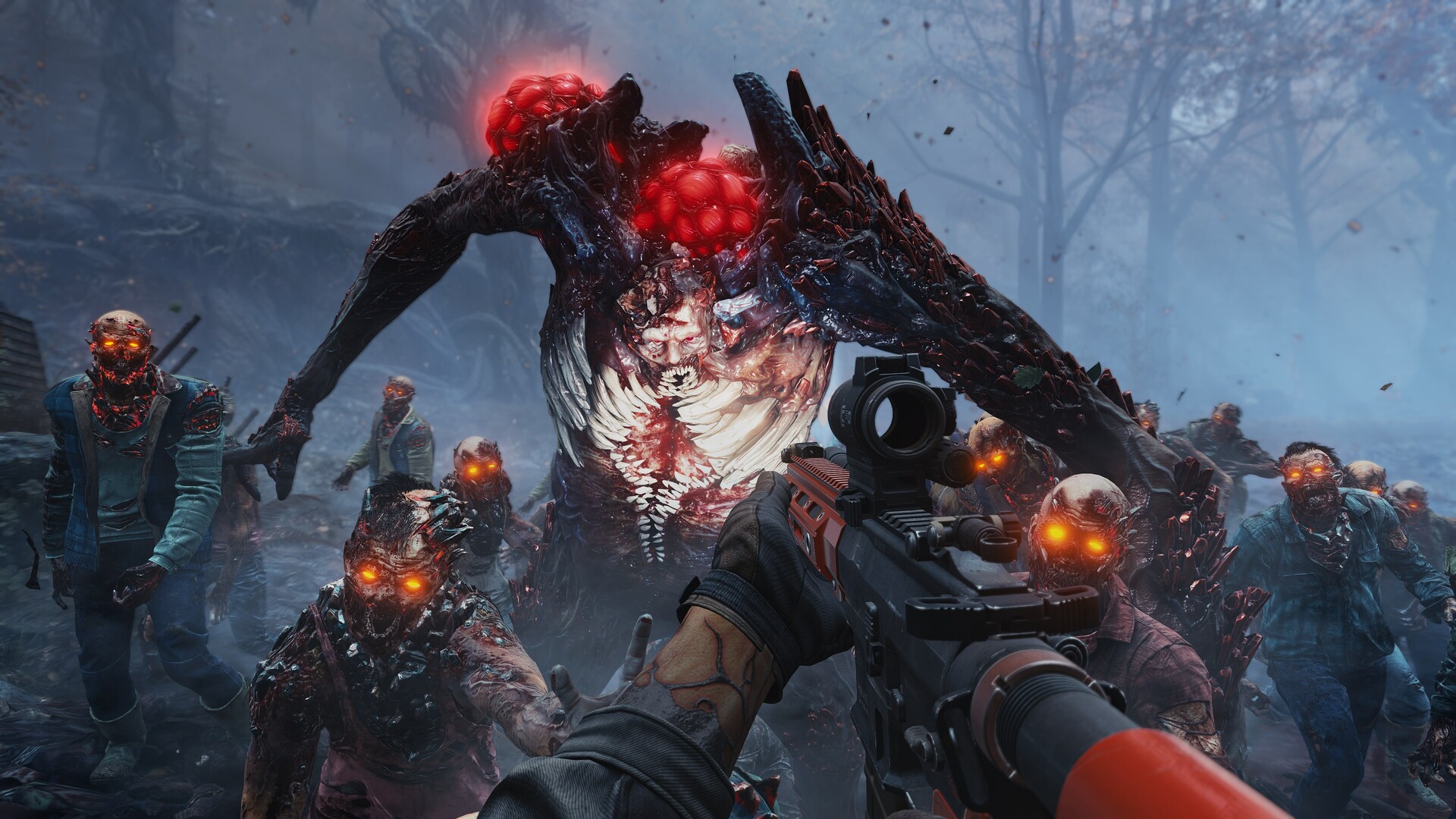
Maps also play a big role in keeping things dynamic. They’re wide enough to allow flanking routes, retreats, and creative positioning during the heaviest assaults. You’re rarely forced down a single corridor, which helps prevent the experience from feeling repetitive. Sometimes the smartest move is to stand your ground and hold a choke point. Other times it’s better to fall back and regroup before the horde overwhelms you.
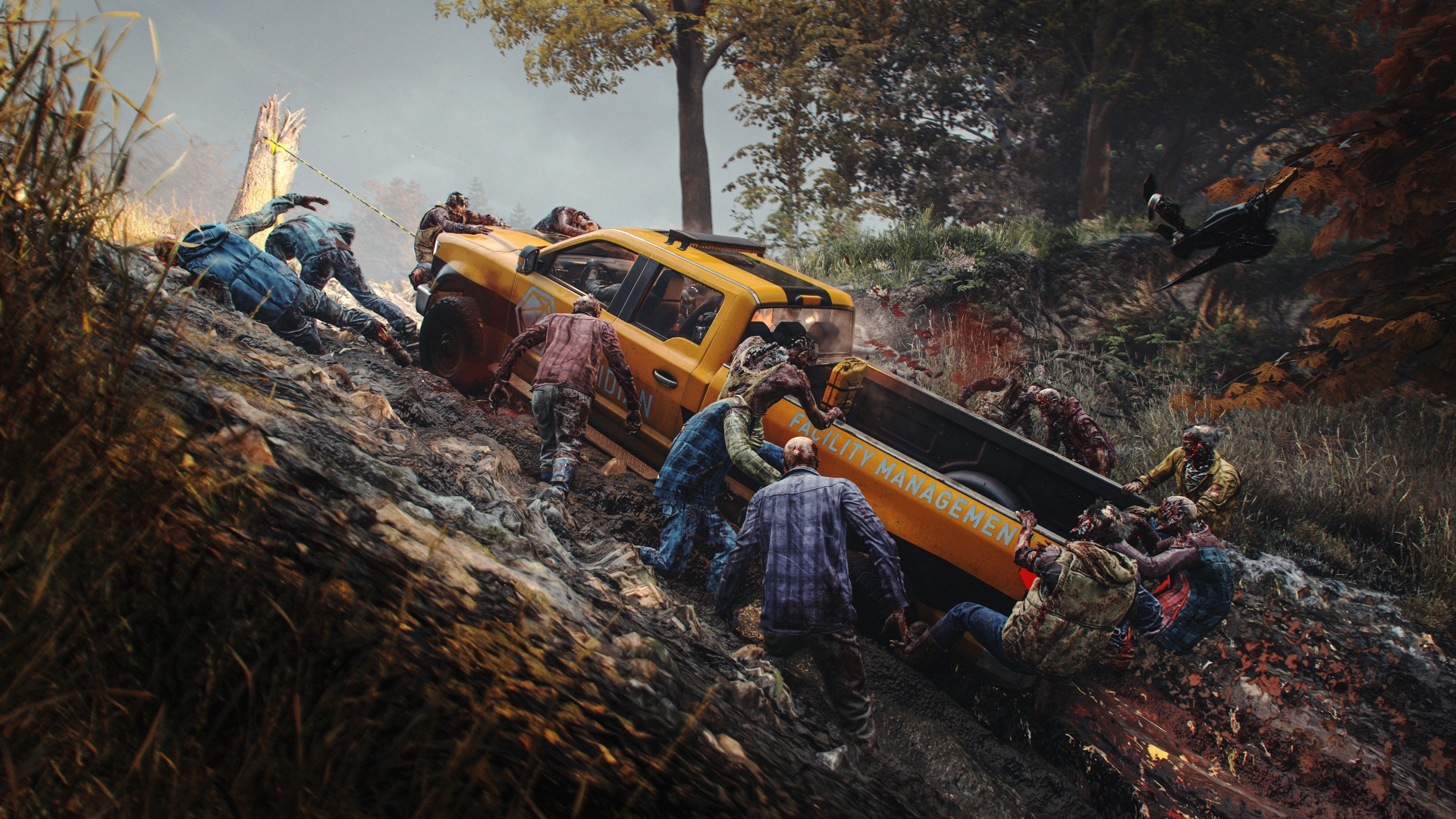
Vehicles are another standout feature and arguably one of the game’s most interesting additions. Instead of acting as simple transport, they become a vital part of the mission flow. You’ll often rely on them to push through dangerous areas, transport gear, or escape overwhelming swarms when things spiral out of control. At the same time, they never feel like a safety net. Vehicles can take heavy damage, become surrounded, and even break down if the team doesn’t manage them properly.
Venerable Vehicles
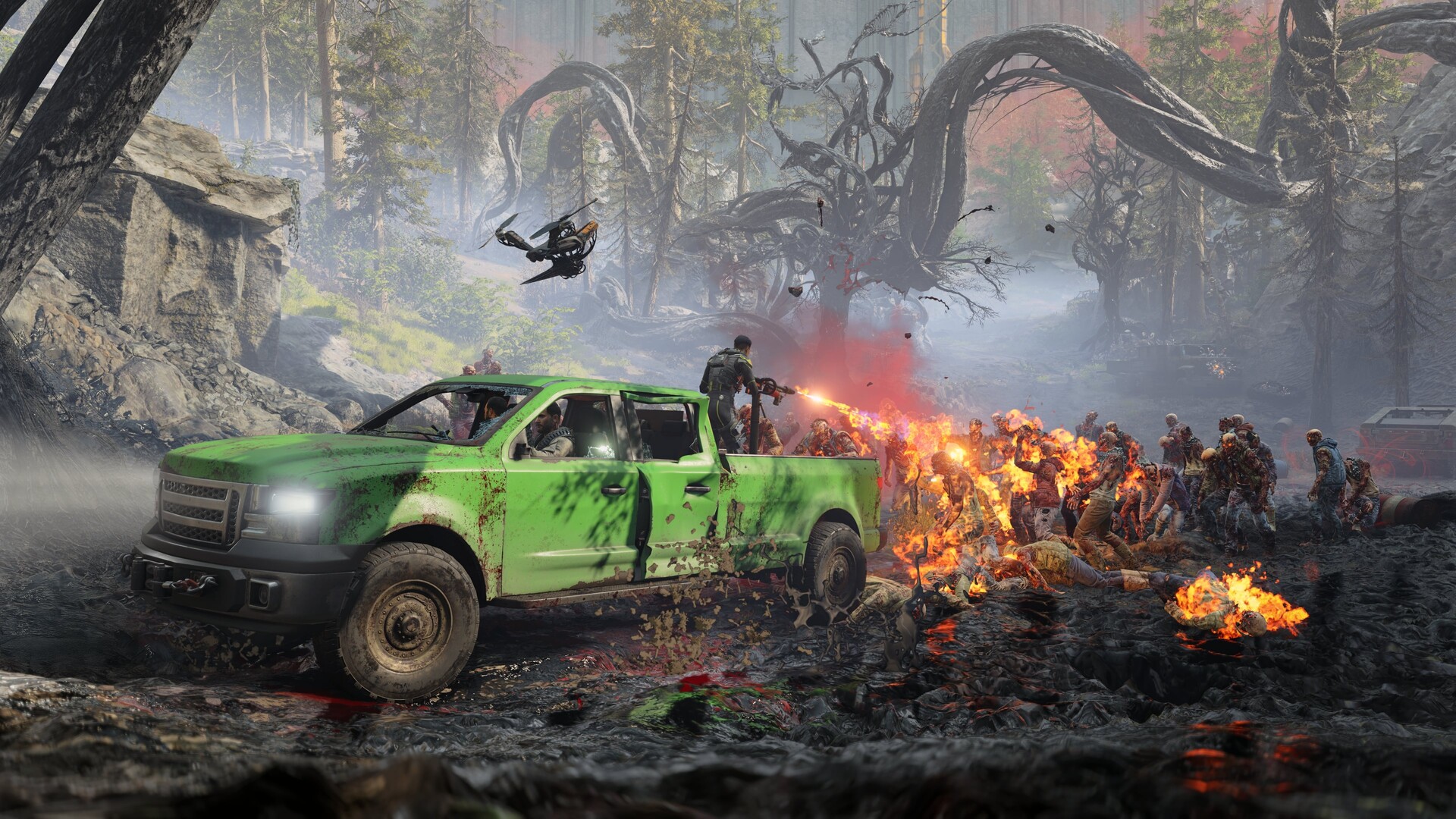
That vulnerability is key because the vehicles are far from an invincible bubble. Enemies can swarm them, block their path, and force players to jump out and defend the vehicle while repairs are made. It creates tense moments where the team must decide whether to push forward or regroup before the horde takes over. Losing a vehicle at the wrong moment can completely change the flow of a mission. Suddenly, what felt like a controlled push becomes a desperate scramble to survive.
Driving them is also surprisingly engaging thanks to the heavy, tactile handling. Vehicles feel like they have real weight, reacting to terrain rather than gliding across the map. Muddy ground and rough terrain can quickly trap you if you’re careless. When that happens, the winch system becomes essential, letting players pull vehicles free or drag obstacles out of the way. It’s a mechanic that draws inspiration from an unlikely ally in MudRunner, and it adds a satisfying physicality to traversal.
Each vehicle also brings its own personality to the battlefield. Some are built for durability and feature mounted weapons for teammates. Others prioritise speed and agility so teams can weave through danger. Certain vehicles even allow players to manipulate the environment to open paths or reposition during intense fights. The variety keeps things interesting and encourages teams to experiment with different approaches.
C’mon Baby, Winch Faster!
Of course, all that chaos comes with a small trade-off. During the most intense moments, performance can dip as the engine pushes huge numbers of enemies onto the screen. It doesn’t happen constantly, but it is noticeable during the largest encounters. The important thing is that the spectacle usually outweighs the slowdown. When dozens of enemies are pouring over barricades while vehicles roar past and gunfire erupts everywhere, the scale of the action is hard not to admire.
Classes add another welcome layer to the experience. There are four distinct roles to choose from, each with its own skill tree and progression path. Abilities can shift how you approach combat, whether that means supporting teammates, dealing heavy damage, or controlling crowds more effectively. Choosing a class isn’t just cosmetic; it actively shapes how you contribute to the team.
Progression encourages experimentation rather than locking players into a single playstyle. Upgrades gradually open new strategies and help define your preferred role within the group. One mission you might lean into aggressive damage output. The next, you might focus on survival and support to keep the team alive. That flexibility helps maintain long-term appeal.
Creative Chaos
During my time with the game I mostly played with AI teammates, as the servers understandably weren’t packed with players yet. I did occasionally match with real players, and those sessions instantly highlighted how much more fun the experience becomes with others. The chaos feels bigger, the teamwork more meaningful, and the escape moments far more dramatic. Even so, the AI companions do a respectable job of keeping the action moving when you’re playing solo.
If you were disappointed by Back 4 Blood, this will likely restore your faith in the co-op horde shooter. John Carpenter’s Toxic Commando captures the chaotic energy that made the Left 4 Dead games so memorable. Huge swarms, frantic firefights, and unpredictable missions combine into something genuinely thrilling. The sense of scale alone sets it apart from many similar shooters.
The story itself doesn’t carry much weight, and that’s completely fine. This is about adrenaline, skill, and chaotic fun rather than narrative depth. Objectives mainly exist to push players between increasingly intense encounters. That focus keeps the pacing brisk and the gameplay front and centre. In a genre built around repeatable missions, that approach works well.
Make Your Stand
John Carpenter’s Toxic Commando succeeds because it embraces pure, chaotic fun. Massive swarms, satisfying gunplay, inventive vehicle mechanics, and creative defensive tools combine to create consistently exciting missions. Weapon progression, salvage pickups, and class abilities give players plenty of ways to experiment. Even with occasional performance dips during the most intense moments, the spectacle remains impressive.
While it doesn’t radically reinvent the co-op horde shooter, it doesn’t need to. The formula is familiar, but it’s executed with confidence and energy. Saber Interactive clearly understands what makes this style of game enjoyable and leans fully into that chaos. The result is a thrilling, replayable experience that shines brightest when tackled with a group of friends.
Review code kindly provided by publisher.
John Carpenter’s Toxic Commando is out on March 12, 2026 for PS5, PC, and Xbox Series X/S.