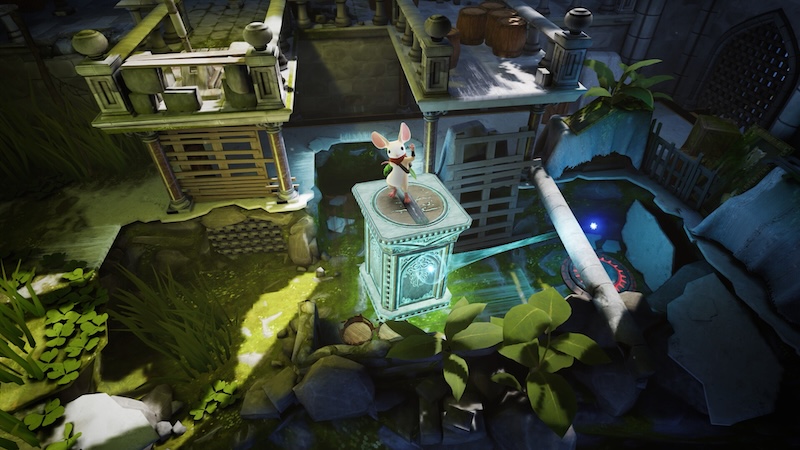
Moss: The Forgotten Relic PS5 Review. Sequestered behind the PlayStation VR for over eight years, Moss finally breaks out of its motion-sensing confines with Moss: The Forgotten Relic. A repackaging of both the original Moss and its sequel Moss: Book II, The Forgotten Relic looks to welcome more gamers into the world of the little white mouse named Quill, but does this transition to the PS5 controller pay dividends, or should it have stayed confined to virtual reality?
Moss: The Forgotten Relic Review (PS5) – Have A Mice Day
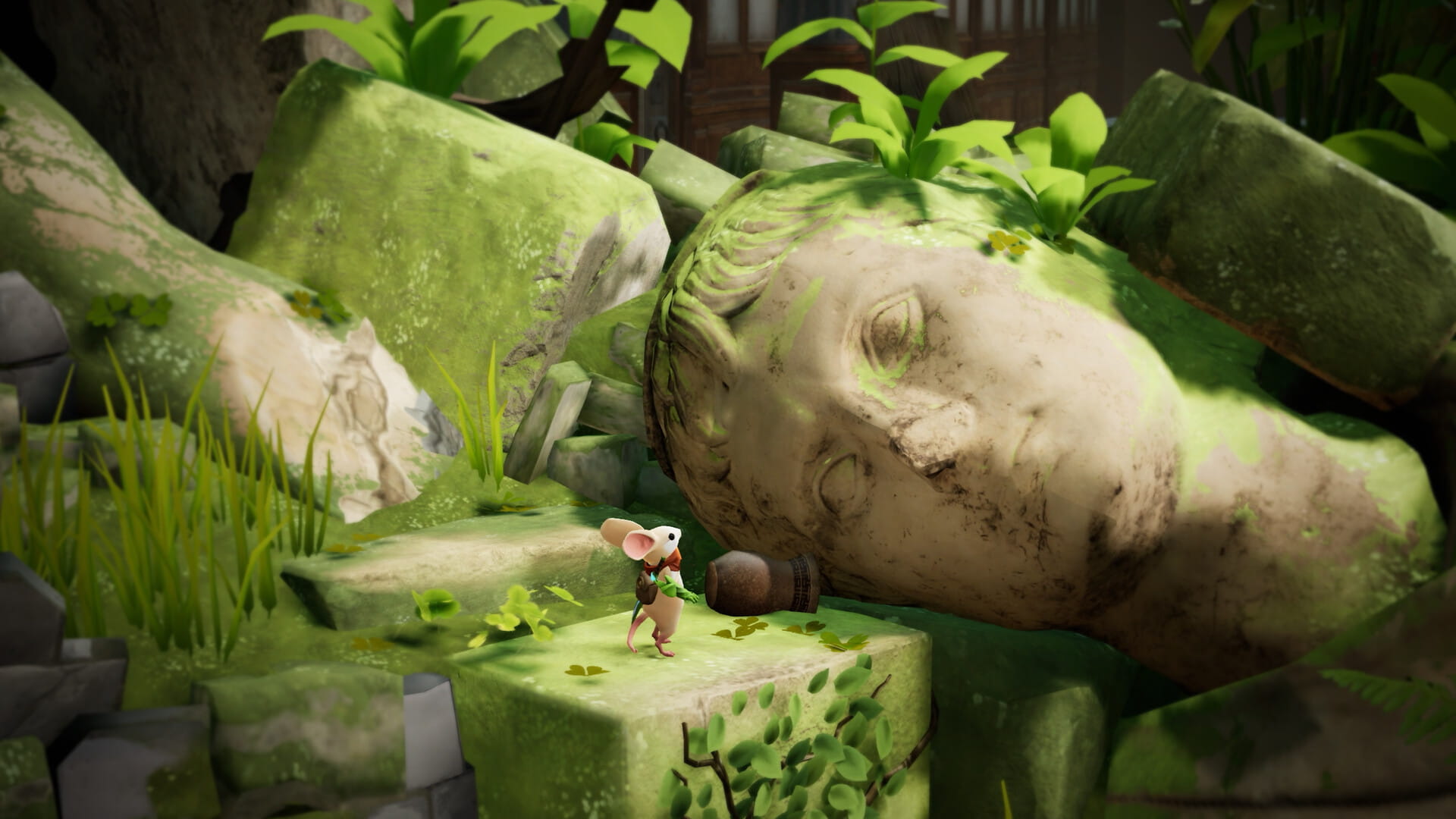
The first Moss game tells its story through a fairytale-like storybook, where a welcoming narrator gives meticulous descriptions of the tale told, setting up each of the game’s chapters with contextual crispness, allowing players to easily understand and enjoy the adventure accessibly as it unfolds. The main heroine of the tale Quill, is a puny mouse on a quest to save her Uncle Argus from a nefarious arcane army, hellbent on blotting her fantastical homeland with malevolence and dark magic. Quill’s uncle raised her and protected her, so her personal motivation to eradicate the nastiness is her number one priority.
Book II meanwhile, is a continuation of the first game, following Quill as her and The Reader look to collect a quintet of glass stones, but a scheming bird named Tylan is on the hunt to pinch the stones and keep the darkness where it is. Obviously you cannot let this happen, so you have to beat the bird and repel the lugubrious forces standing against you.
Neither story is groundbreaking, as they both follow conventional fantasy storytelling lines, but Moss deftly weaves the player into its tale as an active participant known as “The Reader,” who Quill discovers by picking up a piece of precious glass. The incorporation of The Reader into the inner story of both Moss games is commendable, though something crucial is lost in the substitution of VR for a PS5 gamepad.
The Presence of Omnipresence
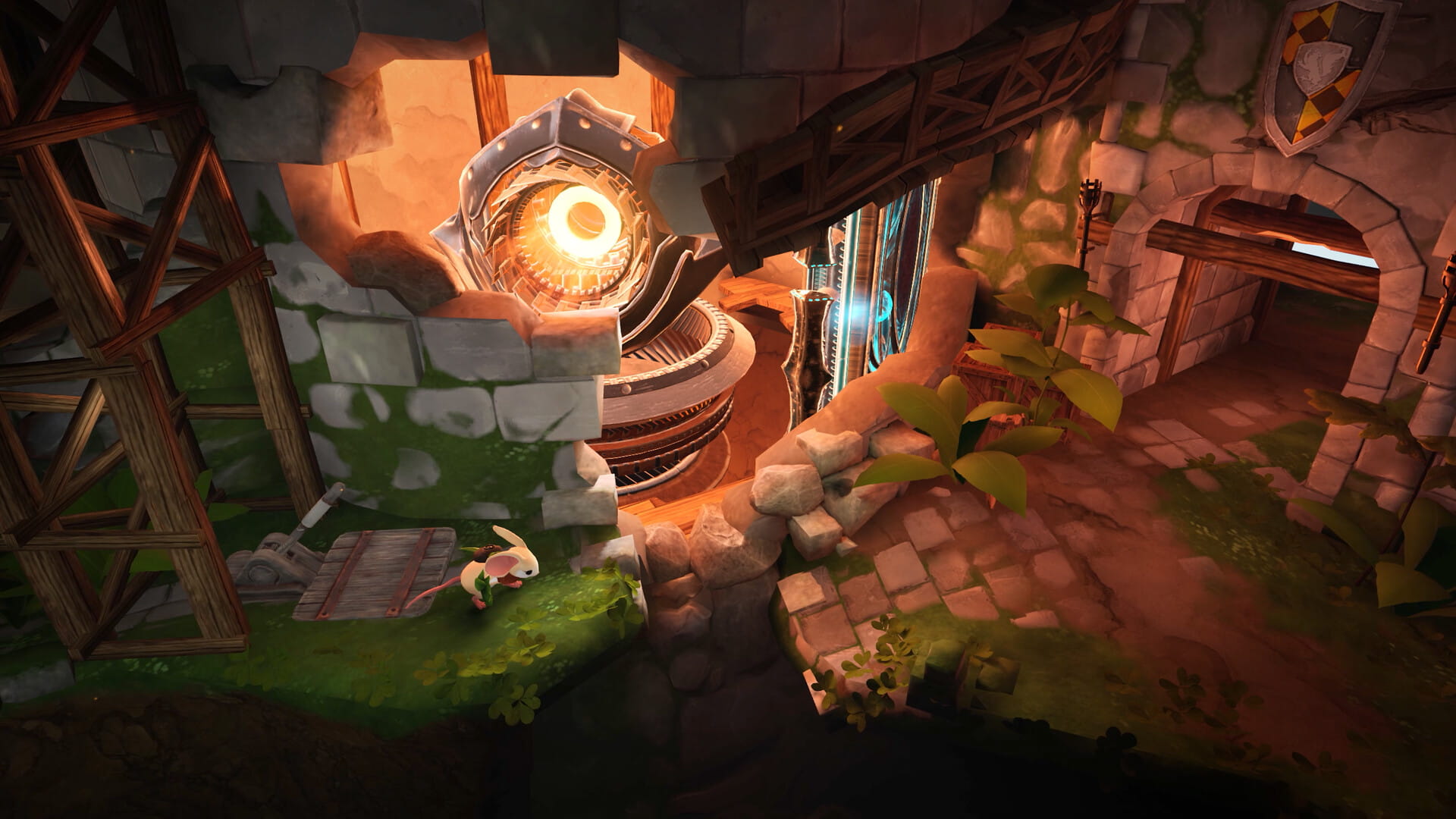
The player’s role as The Reader isn’t restricted to just reading because otherwise Moss: The Forgotten Relic would merely exist as a graphic novel, so when it comes to gameplay your input involves manipulating the game world and Quill’s actions. For example, you’re pulling out huge cube-shaped blocks that can be used as platforms for Quill to scuttle across, heal her if she takes damage, and repel enemies who bother her. You’re essentially playing the role of an omnipresent protector assisting an itty bitty vulnerable little mouse.
The impact The Reader has on Quill and the game world is nothing short of empowering, and gives players the kind of agency you don’t typically see in traditional controller-based video games. As such, you can understand why Moss was exclusive to VR, as the bespoke interactive features gave you a particular gameplay experience you simply won’t find with traditional video games.
The problem with the transition to a PS5 controller is you feel like you’re dragging a PC cursor constantly, which is a finicky alternative if you’ve played Moss with VR before opting to play The Forgotten Relic. The lack of a true hands-on approach is something you’ll truly feel, and nothing can replace the sensation of manipulating Moss inside the game’s fervent fantasy realm.
Thankfully, Moss is adept at ensuring that playing with a controller is a synch through its the twin-stick controller design, meaning tasks can be performed with relative ease, yet nothing can beat the more hands-on experience of playing Moss with a VR headset.
A Well-Quilled Adventure
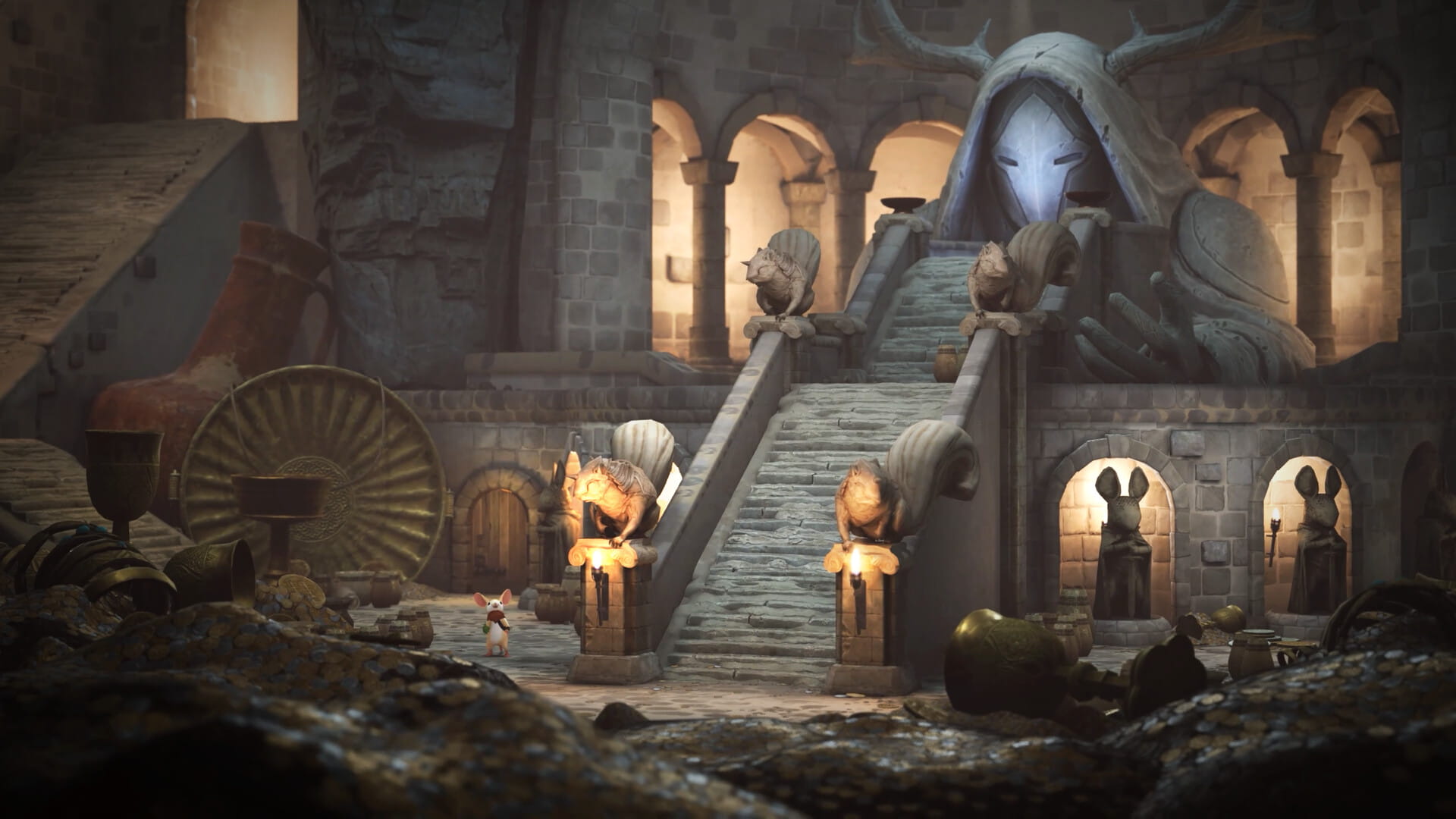
The original Moss is a smaller, simpler and homelier puzzle platformer than Book II, with straightforward mechanics welcoming you in, but in a restricting way. For instance, Quill only has access to a sword to combat nefarious fiends with, and environments are limited to forests and castles. Moss was about introducing you to a wondrous new world without complexities and refused to overwhelm players with a bundle of spritely new ideas, choosing instead to favour focus and fascination.
Book II on the other hand, throws more at you, doling out enhancements to your repertoire and expanding your capabilities as The Reader, providing a spread of new diverse and exciting environments to create a richer adventure overall. Quill has access to a hammer and throwable devices known as a chakrams, the latter which is a multi-purpose weapon you can whack foes with, hit otherwise unreachable switches, and use it as a platforming device for Quill to jump on and climb over objects with.
Environmental Awareness
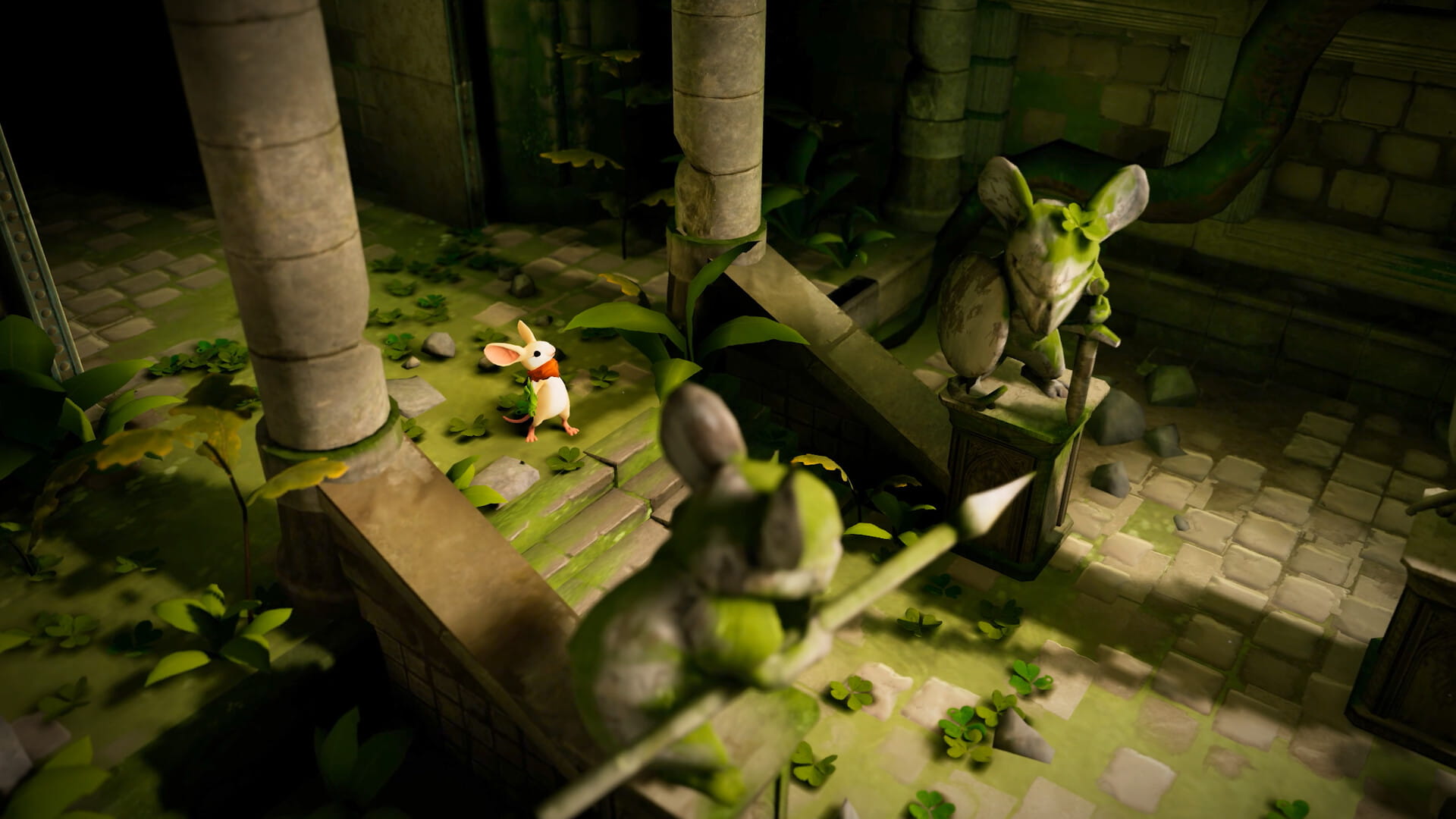
Stomping grounds are varied in Book II as well, you’ll be scampering through castles like the first game, but things open up with a foreboding foundry, a scorching refinery and ice cold mountain climes. The sense of danger is heightened this time around and Book II doesn’t feel as warm and accommodating as the first game because of this, but its purpose is to flesh out the first game’s limited supply and furnish it with grandeur.
The variety is definitely welcome here, though it is a cliche for sequels to throw new stuff in just to give players new places to explore and scenery to look at. What impression this gives off is that Book II arguably has everything the first Moss should’ve contained already, yet the other argument at play here is there’s a progressive uptick between Moss’s accessible newness and the sequel’s abundance and flourishes. Ultimately, both of these games together show an ascension of ideas from minuscule to mighty, and the fact they can be played by any PlayStation 5 gamer now is very appetising indeed.
Both Moss games are on the lighter side in terms of length with Moss taking roughly three hours, while Book II comes in at around seven hours. Length isn’t Moss’s forte but there’s no need for these games to overstay their welcome, they reside pleasantly on the shorter side to stave off excess and to spirit you away for a short while.
If you’re at all curious, then you should check out both Moss and Moss: Book II, especially now they’ve broken out of the confines of PSVR. Yes, both games are better suited to VR and are designed in a way that leans heavily towards the platform, but the adjustments made to bring both of these games to the PS5 controller are serviceable to the point you’ll resist forking out for a VR headset and all those accompanying cables. Both Moss games are short, but don’t let their length put you off as they’re meant to be breezy and accessible for the average PlayStation gamer to enjoy. Don’t miss these PSVR hits because now they can be enjoyed by the whole PS5 community.
Moss: The Forgotten Relic is available now on PS5, Xbox Series S/X, Xbox One, Nintendo Switch 2, Nintendo Switch and PC.
The review copy was generously provided by the publisher.