Patapon 1+2 Replay PS5 Review. If there was one thing that I wasn’t expecting in the year 2025, it was a remastered collection of the original Patapon duology for modern platforms. For us PlayStation players, Patapon has been an institution of Sony’s back catalogue for years now, but this release signals a passing of the baton and a new coordinator behind the classic action-rhythm game. This release has been handled primarily by Bandai Namco and licensed by Sony Interactive Entertainment.
To the average person, this might come across as a slightly bizarre detail to point out, but this key change of hands informs every creative decision and every improvement that this collection provides for the classic games. Patapon 1+2 is more than just another way to play Patapon, it shows that PlayStation are prepared to give some of their classic legacy to others in order to foster new audiences.
Despite being handled by a new team, this remaster is meticulous and by far the definitive way to experience these two classic PSP games, if you hadn’t already.
Patapon 1+2 Replay Review (PS5) – Passing the Baton for the Encore
Marching to the Beat
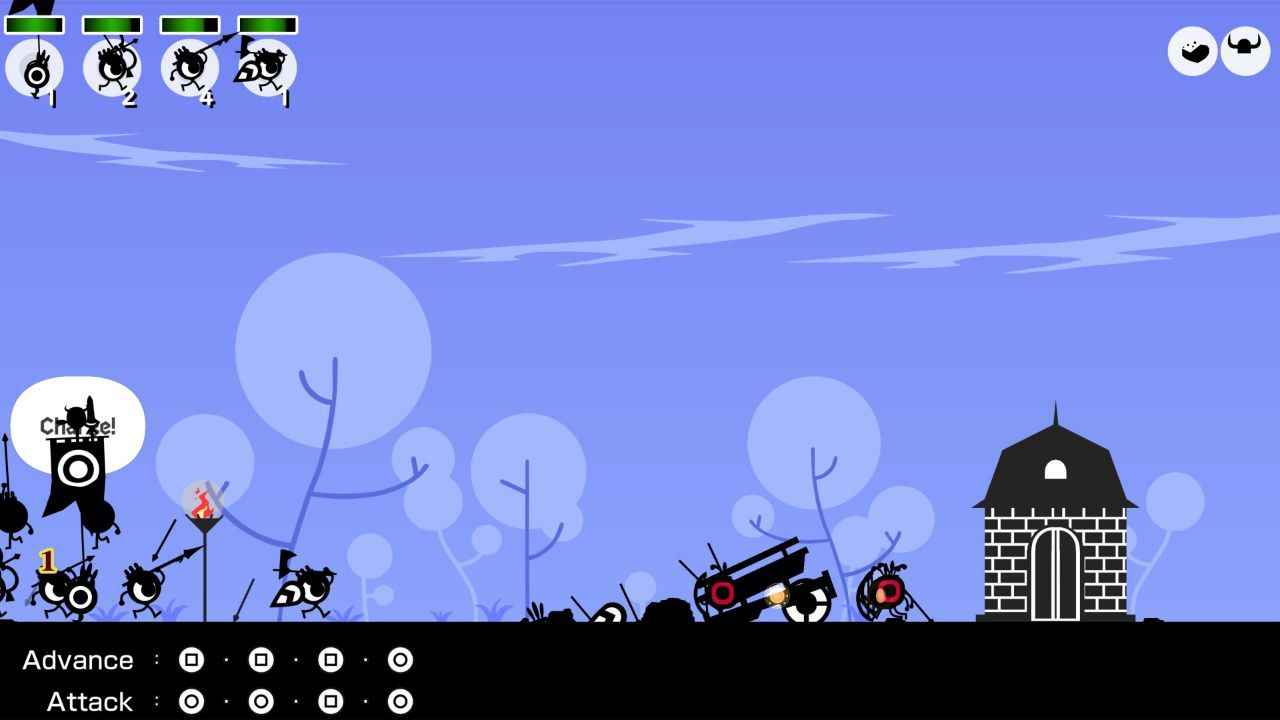
For the uninitiated, Patapon 1 and Patapon 2 have you taking the role of a godlike figure, orchestrating and guiding the Patapon on the journey to Worldend. It’s an incredibly simple setup for a game that is far more focused on the journey, rather than the destination.
Unlike the majority of first-party PlayStation games, Patapon is squarely focused on the experience of playing, rather than weaving a narrative tapestry. Ultimately, the plot of both Patapon games perfectly serves the type of game that they are, and that’s a fantastically innovative rhythm-action game that I’ve not quite experienced before or since playing it for the first time.
As someone who has spent a decent amount of time with both games before this collection was released, I was pleasantly surprised with just how well the experience has been maintained, despite the move to home console changing the way that I chose to digest it.
Pata-Pata-Pata-Pon
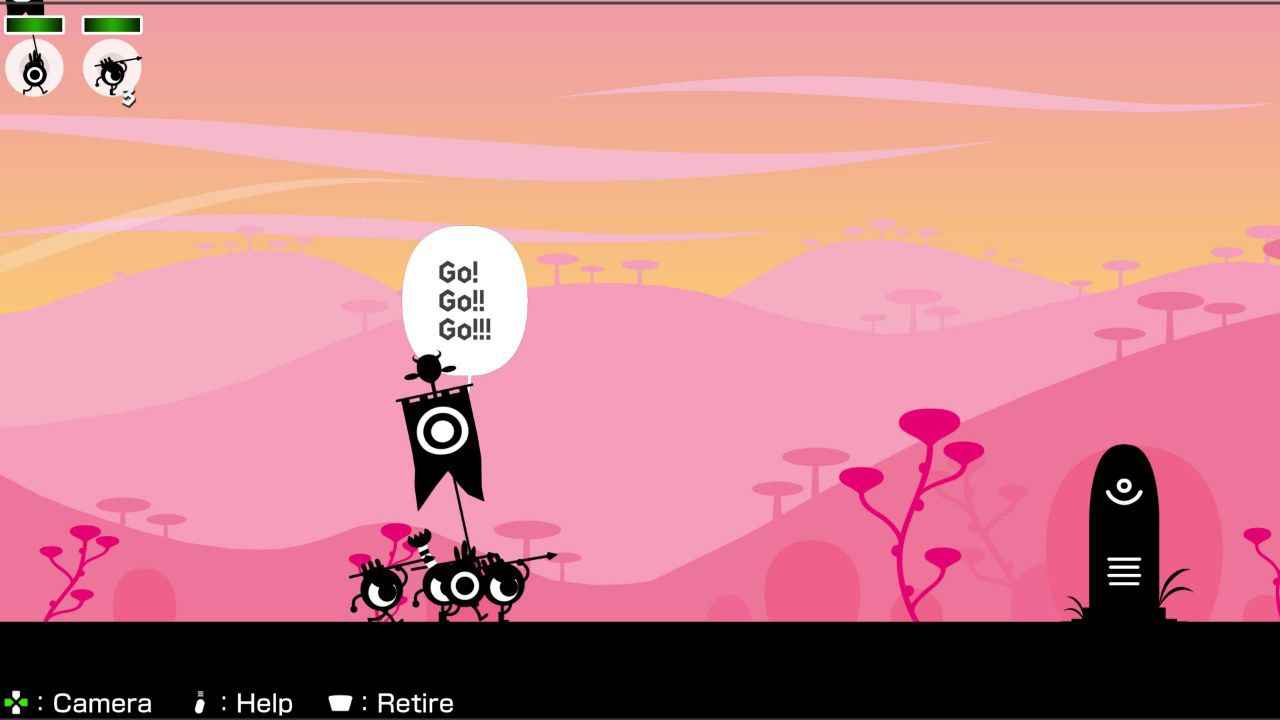
I would hesitate to call Patapon a “rhythm” game in the traditional sense of the word. You’ll be getting into a rhythm of calling out orders to your army of Patapon, but it feels far more like a call and response rather than pressing buttons at the right time. That isn’t to say that it isn’t fun; getting into the swing of calling out the right commands and seeing your army flourish under your leadership is a fulfilling achievement in its own right.
Very luckily, there are only a handful of commands that you’ll be relying on, each makes use of the face buttons of the controller. You’ll quickly memorise which buttons make what noise, and the key phrases that you’ll be relying on.
For instance, Pata-Pata-Pata-Pon will command your army to move ahead a certain distance. Pon-Pon-Pata-Pon is your call to attack any nearby targets. There are others, but these are your bread and butter as you move through each bite-sized mission.
Movement and attacking are largely automated outside of you giving the instruction for particular moves, so your focus is on making sure you know what button comes next in your order, to keep up a combo and your Patapon on task.
It’s a bizarre shift of perspective that might take some getting used to, but you’ll soon settle into a commander-like headspace as you see your petite army succeed against the odds, battling greater foes.
Moving with the Same Spirit
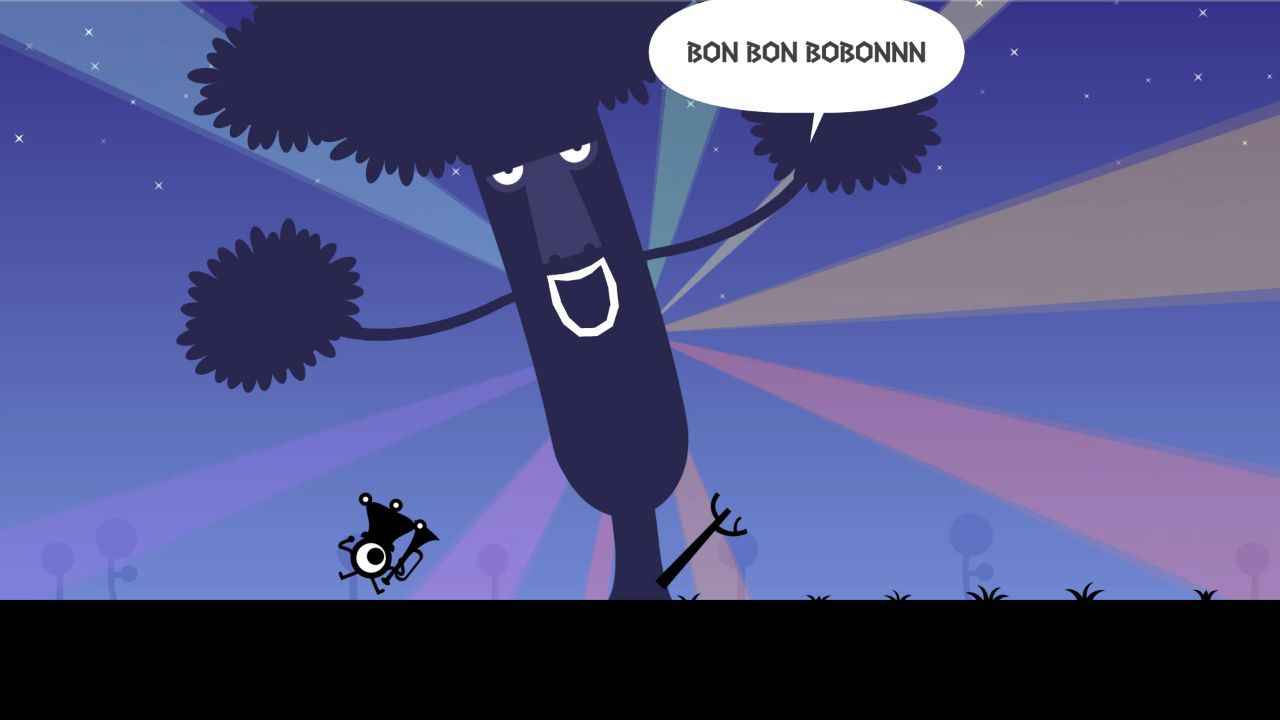
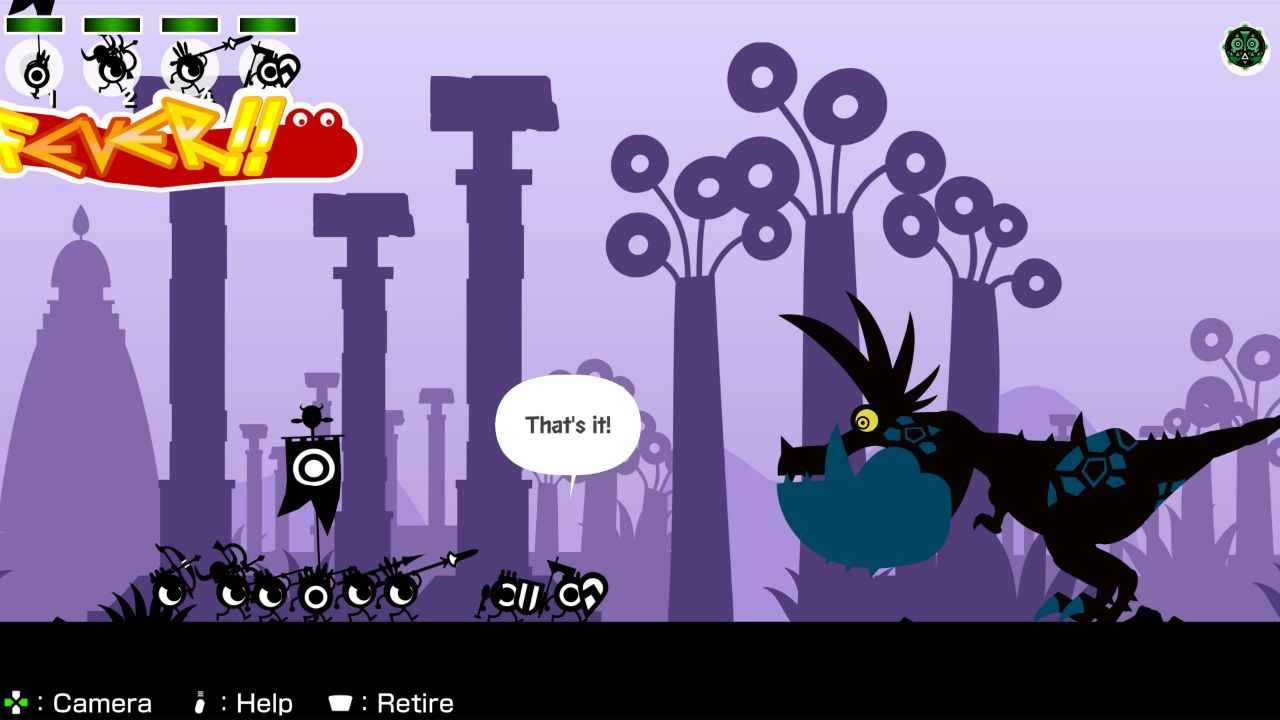
Next to the gameplay, the visuals of Patapon have always been distinctive among the crowd. There’s a comic-esque quality to the general style that helps to create a unique identity. The short and stout Patapon are contrasted with some gorgeously abstract and colourful backgrounds, helping with visibility as well as looking nice.
Resolution has seen a bump in quality for this remaster, with clean cut lines and clear backgrounds making it far easier to appreciate than when these games first released. The only caveat with these improvements is the use of the original cutscenes for Patapon 1 and 2 alike, with a noticeable dip in quality as a result.
While I appreciate that the majority of the game does look better, I was sad to see that the pre-rendered cutscenes were left behind, and it reminded me that these games were very much of their time.
The same is true for the audio side of things, with a weird crustiness undercutting the soundtrack. This is, once again, a remnant of the original PSP releases, but this is something that needs to be addressed in a remaster of a game primarily focused around audio. While you might not immediately be able to tell from a TV speaker alone, put some headphones on and you’ll be able to hear it.
This is disappointing, as Patapon’s soundtrack is full of toe-tapping bangers that are almost guaranteed to get stuck in your head as you direct the music. I just wish that the music was given the facelift that the visuals have gotten.
Resting the Drum
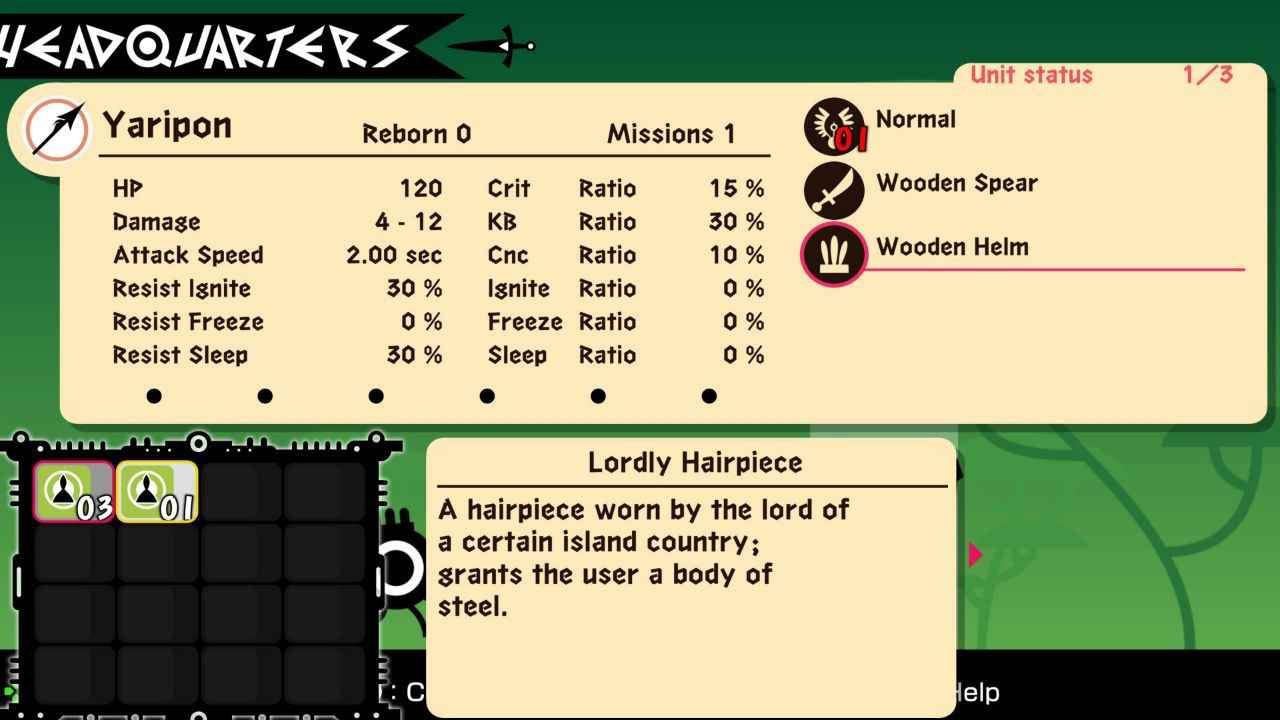
In between each mission, you steadily grow your army of Patapon in the safety of a home camp. Across both games, you’ll collect materials in missions and use them to effective birth new members of your army at the the Tree of Life. Each type of Patapon demands a different selection of material and currency to birth, with the more expensive Patapon generally being the powerhouses of your group.
The result is the occasional requirement for a grind, which wasn’t too onerous given the relatively short mission lengths.
But still, these elements feel slightly anachronistic. For a remaster of a game that is already available on PS5, I was hoping for a little bit more smoothing in the overall experience that I didn’t quite get here.
The fundamentals are important, but there are still some rough edges that I would prefer to see addressed in a release like this.
These fundamentals are consistent across both games and make for a mostly cohesive experience if you move from one to the other. My only quibbles with this remaster are that it still feels like Patapon 1 and Patapon 2 aren’t quite in harmony with each other. You can still tell that Patapon 1 was more of a proof of concept, where Patapon 2 is notably better in its pacing, mechanics and general approach to the concept.
That isn’t to dunk on what Patapon 1 lays down, but I was disappointed that there wasn’t a bit more effort put into bringing the two on par with one another. This collection introduces some compelling quality-of-life features that smooth things out, but I feel like it could have gone further in particular spots to really bring it up to modern standards.
The fact that we still don’t have a pause option for gameplay is a baffling omission and frustrated me beyond measure.
Looking at the Bigger Picture
For what it’s worth, both Patapon 1+2 are landmark titles that have been given a new lease on life in this collection. More importantly, this is another instance of PlayStation allowing another team to have a crack at a franchise that would have otherwise been lost to the sands of time.
It didn’t seem likely that we would see anything new related to Patapon this year, and yet we’ve all been blindsided by a collection that shows a real reverence for legacy and preserving the classics for a new generation.
Despite the few updates to the game on a fundamental level, this is the definitive way to experience this cornerstone of PlayStation history, and you should absolutely consider picking it up for that alone.
Patapon 1+2 Replay is available now on PlayStation 5.
Review code kindly provided by publisher.