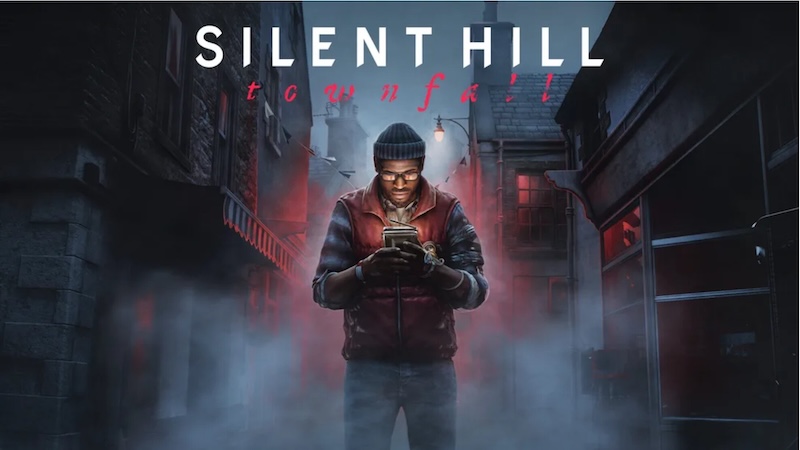
Silent Hill: Townfall PS5 Review. Silent Hill: Townfall is a game with a lot of weight on its shoulders; despite the remake of Silent Hill 2 and more action-focused Silent Hill: f generally being received positively, there was a feeling that Konami might not be able to capture the same spark that originally catapulted Silent Hill into the cultural phenomenon that it is today. Say what you want, Silent Hill is a household name in survival-horror that just hasn’t had the same injection of life that Resident Evil has enjoyed since 2017.
So then, I’m pleased that Silent Hill: Townfall seems to be doing its due diligence in returning to the roots of the series, feeling like far more of a return to form than any of the games before it in this proclaimed “reboot trilogy.” Silent Hill 2 played the old classics, Silent Hill f went for something totally new, and Townfall takes both and brings them both into concert to make for a memorable horror romp that, despite its faults, draws on cultural anxiety in a way that is far more convincing than I expected.
Silent Hill: Townfall Review (PS5) – New Perspective, Familiar Feeling
Popping Down The Road
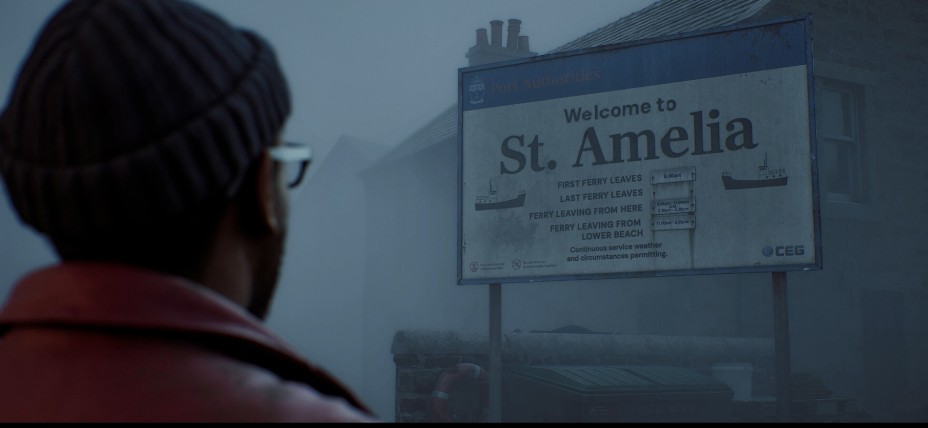
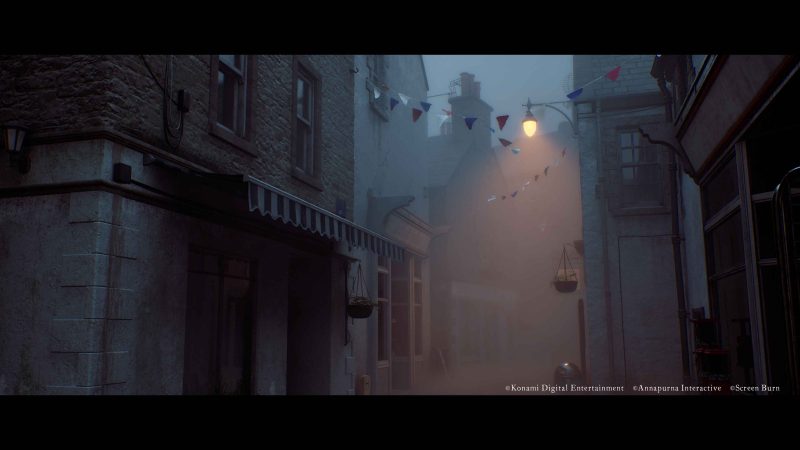
Silent Hill: Townfall hasn’t exactly been quiet in its marketing about how the game is set in the United Kingdom, Scotland to be precise. On paper, this makes my investment in the setting tenfold stronger than the investment I had in any of the previous games. In the ways that I’m sure Silent Hill 2 riffed on classic American architecture and culture, Townfall does the exact same, and to a degree that made me actively uncomfortable looking outside. The attention to detail is immaculate, and lends an incredible realism to the anxieties that Townfall examines.
I’m still somewhat digesting the narrative as I write this, but the broad themes of the game ring eerily close to home, and very much draw on anxieties that existed, and still persist to this day. Initially, I found myself worrying that being inspired by Silent Hill 2 would have Townfall playing a tune that was far too familiar, but that inspiration is twisted in a clever way that expands the scope of the story, while still feeling like a Silent Hill narrative.
As the change in setting suggests, alongside Silent Hill f beginning this trend, the concept of “Silent Hill” has become a shorthand coverall for introspective psychological horror that has a particular flavour. Where Silent Hill 2, a noted inspiration for this outing, focused primarily on the perspective of a single character, this game widens the scope to explore a broader narrative involving a bigger cast. Silent Hill games often have secondary casts that spur the player on, but rarely do they become an active agent within the story, that very much is the case here.
Consequently, the story has far more to unpack than I have the space to do here. Having seen the game to its initial conclusion and one more extra ending, this game is narratively built to be played through more than once, which probably isn’t a surprise to anyone with a lick of Silent Hill experience. These endings aren’t locked behind a single make or break choice, but draw on the actions taken throughout the game. As far as recurring staples, it’s reassuring that Silent Hill is going forward with a gameplay-first narrative system.
New Name, Same Game
Townfall opens with main protagonist Simon waking up on the abandoned pier of St. Amelia, a town with a name reveal that very obviously pays homage to the reveal of the Silent Hill name. Simon has no memories of why or how he’s here, only that he’s woken up in the cold, and attached to an IV drip that’s feeding him some kind of mysterious fluid that’s keeping him alive. It’s a weird setup, and the hospital imagery is absolutely not an accident.
Simon’s journey across St. Amelia has him coming into contact with two other characters, being Nurse Zoe, and another man called Richard. Their positions in the story are equally important, as all play a larger role in the bigger story that has impacted the town, far more than just Simon. By working his way through the town, as well as the trademark otherworld that has become a staple of the psychological horror, Simon slowly unravels the truth of the town and the reason why he keeps on waking up on the same shore.
Townfall deals generously in ambiguity and bizarre imagery that raises far more questions than it does answers, with those answers being mostly saved for far later on. Not a bad approach, but Townfall gets close to playing its cards too close to its chest at points, to the point of absurdity. There are plenty of ways to hide information without being so actively prohibitive, and I should never feel annoyed that I simply cannot form a solid thought about the larger plot. Long spells between breadcrumb details mean that I end up perplexed and frustrated rather than being gently pulled along.
This was only an issue towards the slight end of the game, where things did start to move into a quicker gear, but I was getting close to the end of my tether. Townfall draws on cultural anxieties surrounding trust in the people who look after us, and the progress of the future, and showing the real human cost that comes as a result of progress. If nothing else, I could feel a boiling anger behind the writing of Townfall that feels nothing if not timely, especially looking at the world today.
Simon might not enter the hall of fame for Silent Hill protagonists, because I ultimately think he isn’t given enough space to soar. I was perhaps spoiled by Hinako’s rich internal narration in Silent Hill f, but Simon (perhaps by intention) feels far less of a direct agent in a story that we control him. I think you could read into that, but I would have enjoyed a more active narration.
Stepping Into New Shoes
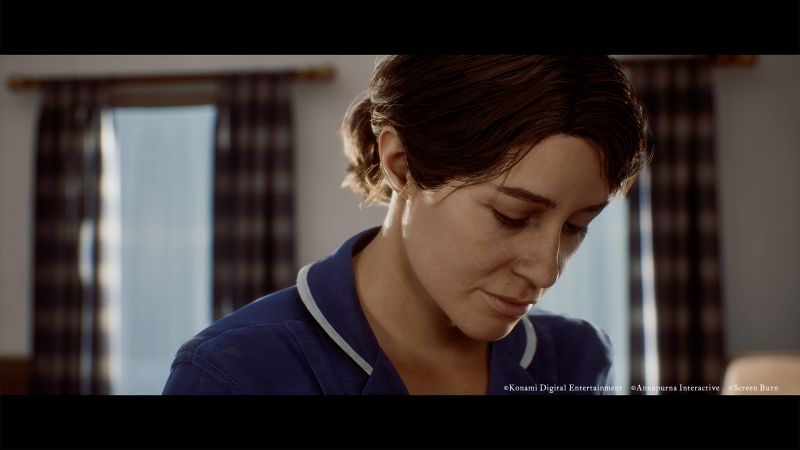
Silent Hill has flirted with the idea of going first-person for the best part of a decade, at this point. Between the free Silent Hill: Short Message and the oft-mourned P.T., we’ve never seen a full release in this way before. Townfall proves that the concept just needed the right idea to run with, because Townfall is an oppressively intense horror game that fundamentally does not work without the first-person perspective, as much as that might rub some the wrong way.
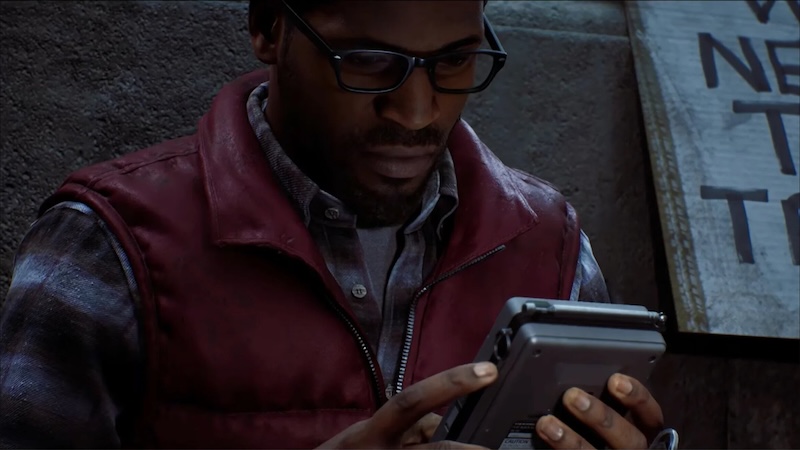
Without having the most reliable lay of the land during enemy encounters, Townfall introduces methods of trying to scope out the area to stay hidden. For Simon, this is done through the CRTV, a nifty bit of kit that allows him to tune into a variety of frequencies across the town.
In moments of brief respite, you can tune into frequencies to show you a vague hint towards your next objective, or a bonus bit of story from a forgotten resident of St. Amelia, but in combat you can use it to scope out the location of nearby enemies. In so far as it constantly disorients you and splits your focus, the CRTV is a genius addition that challenges you to juggle two lenses to see the world through. On the other, having to constantly flick between frequencies when more than one enemy is in the room ended up feeling borderline tedious towards some of the game’s closing chapters.
Hell, some parts of the game totally forgo this mechanic and give you a simple radar system, or no help whatsoever. These are only for specific scenes throughout the game, but exist somewhat to undermine how cool the idea of the CRTV is. In regards to puzzle solving, I used it maybe once throughout the game, and the rest of the time it was used as a vague marker for where I should be going next. I was left slightly wanting, but what was there was certainly inspired.
Combat has also seen an overhaul, with the emphasis clearly being on avoiding it wherever possible. Outside of it being a tenet of the survival horror genre, enemies are far more capable of hurting you when they see you compared to anything in Silent Hill 2. Enemies regularly have long range attacks that punish you for even running, so avoiding them is paramount. But when you do get into combat, it feels surprisingly snappy, and easy to work out.
While you aren’t playing with the most extensive range of weapons, each feels useful in a pinch, and certain parts of the game downright demand you shoot, but these are very much telegraphed. When and where you’re meant to fight is clear. It doesn’t have the same slightly confused feeling of Silent Hill f, but this combat does end up feeling a bit too cut-and-dry for the game. Far be it from me to call Townfall’s combat too good, but here we are. I want scrappy.
The Horror Will See You Now
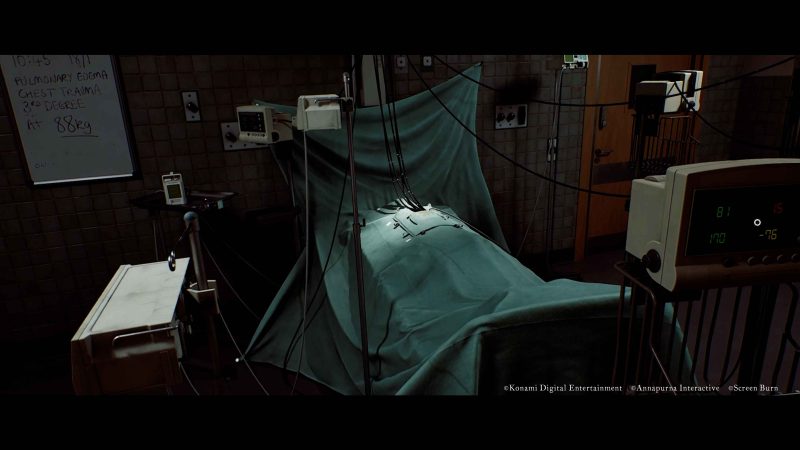
The vast majority of the storytelling in Townfall is done through the deployment of visual language and subtle clues to a grander story. I’m sure I won’t be the only person to talk about how frustrating it is that every single document and character you speak to dances conveniently around the incident that has led the town to be in such a state, but there were more than enough clues that I could pretty well call it by the time the big reveal happened.
Of course, none of those clues mean anything if you aren’t experiencing it for yourself, but I do wish that Townfall was a bit more generous with concrete clues through out its 15 hour runtime. Unfortunately a small amount of the game was spent with me wondering why I couldn’t exactly find anything about what the hell was going on.
With that being said, it’s clear that there’s a dedication to the story being told that feels actively invasive. If you’ve been following any of the pre-release material, it’ll be no surprise that medical imagery plays a massive role in the way the game presents itself. Simon is attached to a mystery cannula that’s pumping him full of some kind of fluid to keep him alive, and one of the main enemy types attacks you by stabbing you with a particularly aggressive cannula.
If you weren’t a fan of medical procedures, Townfall has that in spades.
There are particular moments that honestly rank as some of my favourites in the entire franchise, with one midgame section being a highlight. Without spoiling the experience for others, it brings the inherent discomfort of medical procedures into concert with the first-person perspective to make a narratively and mechanically brilliant small set piece that encapsulates everything I love about Townfall into a small package.
Breadcrumb, Breadcrumb, Puzzle, Breadcrumb
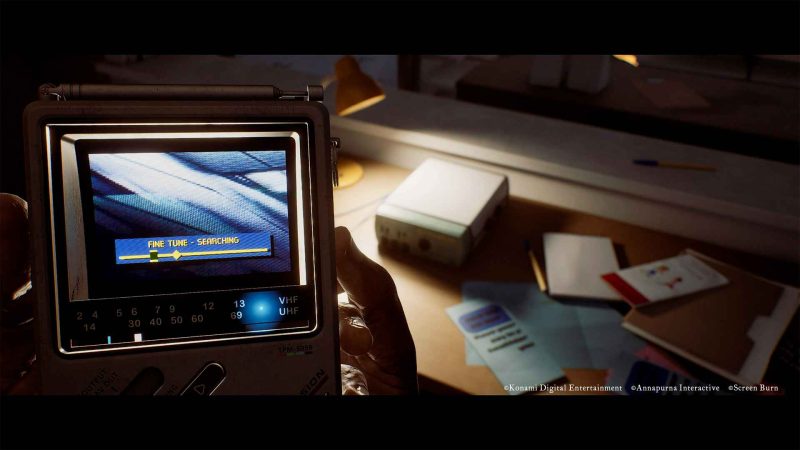
Townfall’s interpretation of environmental puzzles is one to be studied. There are aspects of puzzle design that I utterly love, and others that are maddening in their ability to miss one key detail, thereby locking you out for hours until you retrace. An early-game puzzle has you examining fuzzy footage on your CRTV to try and work out the number to a padlocked locker, and this is about as far as the CRTV as a puzzle-solving device goes. While it took me a while to really grasp it, the solution made sense.
The frustrating puzzles come from when Townfall refuses to give you the proper ability to see what the solution could be. Being told that the hint is in a painting is fine, as long as I can reliably see the details on the painting. I know what the solution is, I literally can’t read it. Other puzzles rely on you having to go through the most extended sequence of events, and this happens regularly. Area requires me to unlock a door, but the key is in another part of the building, that happens to be locked behind another door, requiring me to do a second detour to try and find the second key to get the first. That is the general approach to puzzles in Townfall and it gets tiring, quickly. What should be a quick solve regularly becomes a shopping list of the least convenience, which rapidly takes a dent to the horror aspect.
There are several examples I could point to, but I can’t help but think that the visual cues for interactable items should have been made clearer. Fool me once, shame on me for not seeing it, fool me three times in one session? Maybe I’m just bad at seeing, or maybe there needs to be a clearer indicator as to what I can use.
That all being said, Silent Hill: Townfall is far more than a simple spin-off to bring Silent Hill back into the conversation. The way that it delicately navigates current social anxieties while still writing an effective horror story is to be commended, and feels like a far cry from what we could expect only a couple of years ago. As someone who lives in the country being put on blast in Townfall, I finished it feeling utterly hollow.
And that is more than likely what was intended. Frustration be damned, this is strong.
Silent Hill: Townfall is a decidedly strong new entry in a series that has been straining to restore faith in itself. Townfall smartly draws on cultural anxiety in step with generally horrific imagery to make a game that more than earns the Silent Hill moniker. While I’m sure the next game we see will be totally different, I would love for this team to get another go.