Yooka-Replaylee PS5 Review. My opinion on this ostensibly remastered version of Yooka-Laylee is complicated and layered. On the one hand, I’ve been playing a collect-a-thon platformer that clearly understands the genre that it has situated itself in, with meaningful iterative improvements based on feedback from the original. On the other, I see a game that has gone too far in addressing the original, and erased some of the character that made it so distinctive.
In chasing the highs of other platformers in the last few years, Yooka-Replaylee hardly even feels like a homage to platformers from generations past. It now feels like just another platformer, in a sea of other great examples.
More than any other game I’ve reviewed recently, this game has a conflict in its very fabric. One that is being threaded between new and old, and respecting the lineage of what came before. Where the original embraced where the team came from, this game feels ashamed of that.
Yooka-Replaylee Review (PS5) – Turning a New Page
A Retread, In More Ways Than One
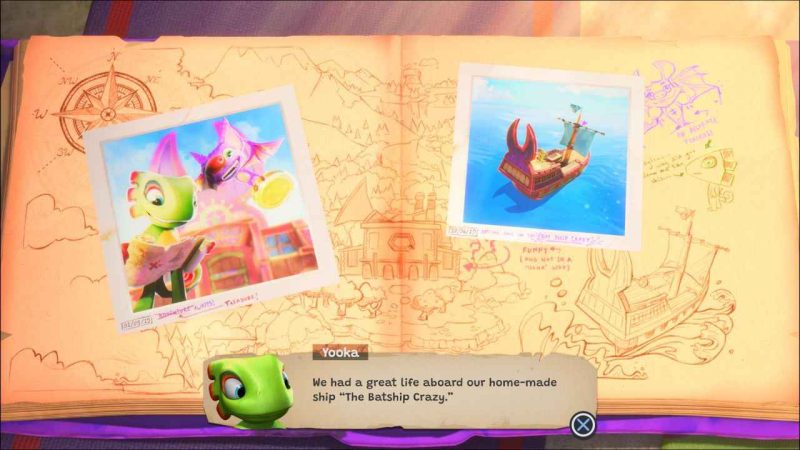
In its broadest strokes, Yooka-Replaylee returns to the original game and intends to bring it up to the high standard of other flagship 3D platformers in recent memory; you return to all of the core locations from the original, with primarily the same level design and aesthetics. These have been preserved, alongside the addition of a staggering amount of new content hidden within these familiar locales.
In real terms, the number of core challenges or “pagies” has increased by nearly two-fold. It’s an impressive step up that addresses one of the core complaints of the original, being that areas were simply too big and spread out. Unfortunately, this is a slapdash solution to a structural problem that simply hasn’t been addressed here. The solution to making areas feel more engaging is to redesign them to be engaging. You can’t stick a plaster over fundamental issues.
This is the main point of confusion that I have with Yooka-Replaylee; it can’t seem to decide what it wants to be. On paper, it’s a remaster that almost totally flips the table on the structure of the original game, so it’s more than a remaster. But it still holds itself to the original structure of Yooka-Laylee, meaning that it does fall into that category. It’s a paradox that just collapses in on itself.
For what it’s worth, most of the genuinely irritating mechanics from the original Yooka-Laylee have been adjusted and changed to feel a little bit better. It just so happens that literally everything else has been changed as well, in a way that makes me raise an eyebrow.
A Game Still Full of Charm
It would be incredibly easy for Yooka-Replaylee to play it safe when it comes to its plot and general narrative; being built on the original game allows for some liberties to retread the same dialogue. Luckily, I still found the dialogue to generally be full of fun jokes and a shocking amount of innuendo.
I mean – Trowzer as a concept is hilarious. It’s the type of dry humour I would expect from a British studio, and it still lands most of the time; if there’s one thing I can’t knock Yooka-Replaylee for, it’s the sharp humour throughout.
The plot itself is nothing particularly special; Capital B’s plot to take over the world publishing trade through the One Book is simple and serves mostly as an excuse to force Yooka and Laylee through his built-up complex that serves as the game’s hubworld.
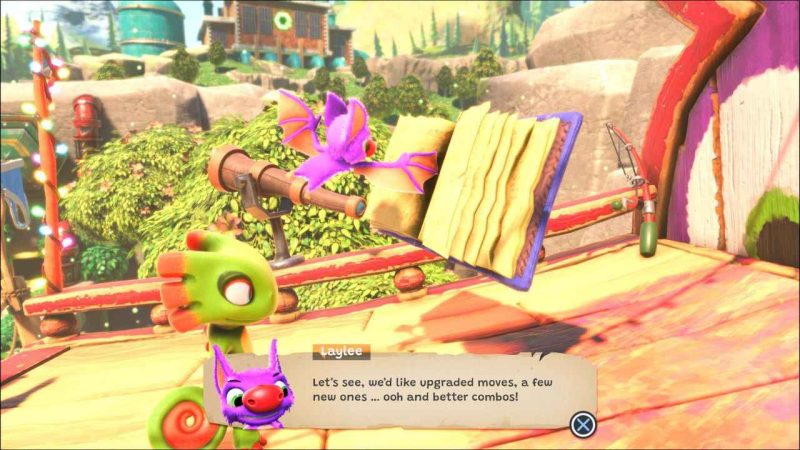
What brings it together are the gags throughout; I enjoyed seeing Laylee write in the One Book about their new and improved moves from the previous outing. The entire game is framed as a retelling of the original Yooka-Laylee in the opening, and it’s a cute excuse to retread.
Meaningful Visual Improvements
Some of the improvements in Yooka-Replaylee are more subtle than others. The improvements to general game flow are apparent from the very beginning as a tongue-in-cheek reference to better moves helps to explain how Yooka and Laylee have access to a wider variety of moves from the outset.
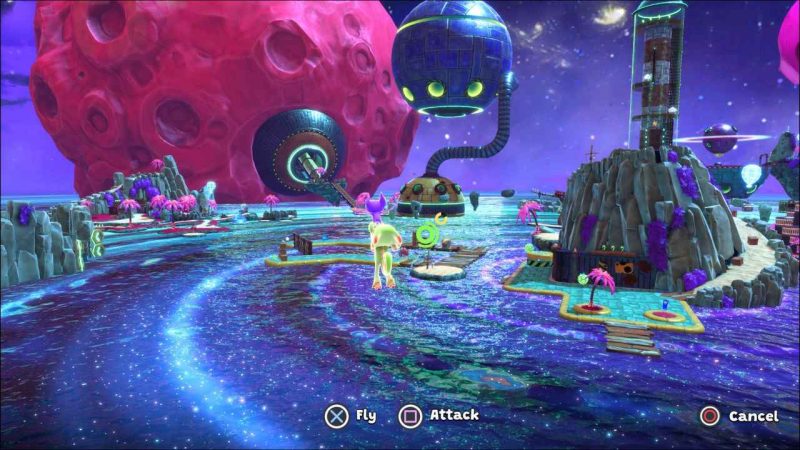
In terms of visuals, the game does genuinely stun. In subtle updates to geometry and texturing, this genuinely is one of the better-looking platformers that I’ve played in recent memory. Impressively, I didn’t notice most of these improvements until I went back to the original game to try and take some comparisons, and the difference was stark.
Yooka has a distinct scaly texture, where Laylee is now a furred bat; Vendi reflects light as a real vending machine would. Environments have dynamic effects that react to your movement, with particularly nice-looking fog effects in particular places.
At the very least, this remaster hasn’t skimped on bringing the original visions of these areas back to where they wanted to be. Walking around gilded casinos becomes a lot more visually exciting when you get to see the reflections all around you.
It’s clear that a good amount of time was spent trying to polish the game in quite a literal sense, and that doesn’t seem to have gone to waste. Similarly, extra effort has gone into increasing the amount of “tonics” that you can unlock throughout the adventure. These don’t necessarily totally reinvent the wheel, but add an element of customisation that can suit individual players. While I would never decry an attempt at allowing players to play how they like, I must admit I find it bizarre how much of a tentpole these are when it comes to what you unlock throughout.
This feeds into the greater issue that lies at the heart of Yooka-Replaylee, but the effort itself isn’t unnoticed. And – to be fair – some of these customisation options are fairly charming in their own right.
A Good Game, At What Cost?
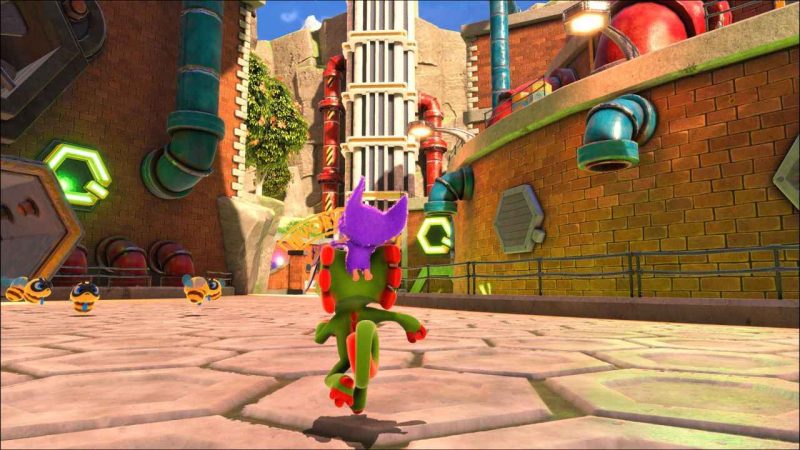
Let’s put one thing to bed now: Yooka-Replaylee is a perfectly fine game. The platforming is tight, and the environments are still fun to explore with a wide variety of movement options and freedom to explore as you like. But the improvements over the original game have been done so at the cost of any kind of distinctive identity that made Yooka-Laylee stand out in the first place.
The clue is in the name; Yooka-Laylee was originally pitched as a spiritual successor to Banjo-Kazooie. It’s made by people who worked on those games, and has much of the same flavour. From the gibberish dialogue to even things like HUD design, this was the third Banjo game that we never got to see.
So why does the remaster of that original game systematically remove every single element that paid homage to its roots? There are quality-of-life improvements, and then there’s just not having faith in your own creative ideas. The addition of fast-travel points spread around each level and the ability to track collected Pagies is brilliant, and enhances the experience of finding each one at your leisure.
Features like that belong in modern platformers and complement the original style of Yooka-Laylee without feeling overly corrective. The issues come in the finer details. This might very well be the first time in a review where I draw significant scrutiny to something as menial as a health gauge, but the change from the Banjo style to a style that very clearly riffs on a certain other 3D platformer speaks to the total lack of faith that this game has when adapting its own source material.
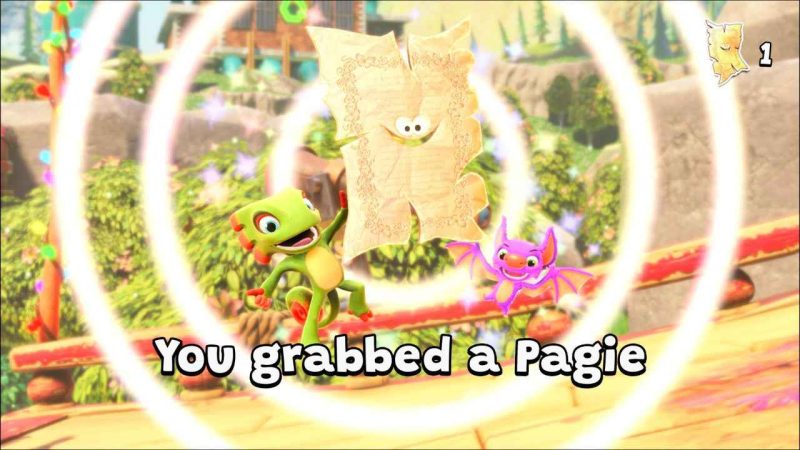
A stamina wheel that similarly looks borderline identical to a certain Game of the Year winner from 2017; it all riffs on games that came out around the time that the original did, and it’s so blatant. The charming gibberish dialogue? All but totally absent from this remake. The arguably interesting mechanic of expanding levels through collectables? Also totally absent. I wouldn’t go as far to say that Yooka-Replaylee egregiously draws from others in the space, but I think ignoring the similarities is a pointless exercise in ring-jumping, which the game has you doing enough of, anyway.
Yooka-Replaylee is less of a remaster and more of an overcorrection; a game that has little to no faith in the ideas that it is building on, and does away with every idiosyncrasy from the original in favour of what the rest of the crowd is doing. And unfortunately, that isn’t enough to bring the game up in my estimation.
I simply don’t know why Yooka-Replaylee wasn’t a proper sequel. Sticking these new standards into old levels only highlights the dissonance between the two, and that dissonance threatens to topple the entire experience.
Yooka-Replaylee is now available On PS5, Xbox Series X/S and PC.
Review code kindly provided by publisher.