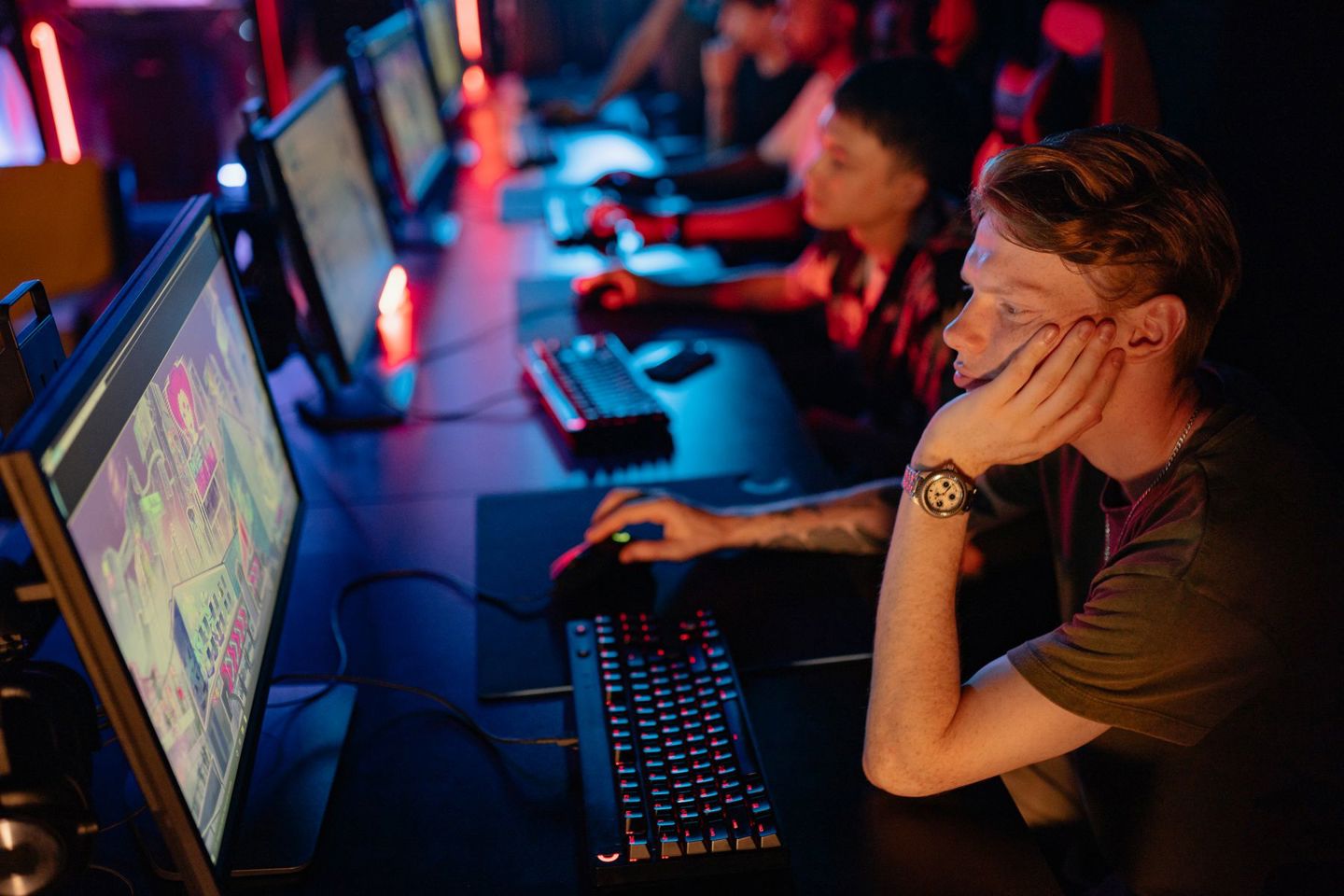
Esports has expanded far beyond the games that built the industry. While titles like League of Legends, Counter-Strike and Valorant remain firmly established, new games are constantly testing whether they can make the jump from multiplayer hit to competitive spectacle.
Several newer titles already have organized competitions, while others are developing communities that could support a bigger tournament scene. Here are some of the games worth watching.
Deadlock
Valve’s Deadlock is still finding its feet. The game remains in early development, with Valve describing it as a multiplayer title and listing it with MOBA, hero shooter and competitive shooter tags.
That combination gives Deadlock plenty of ingredients for competitive gaming. Team-based play, hero abilities and strategic elements create plenty of room for players to develop different approaches to a match.
There’s already evidence of a grassroots competitive scene too. Esports Wales held a Deadlock championship in September 2026, with eight teams able to compete in the main event and qualifiers available if more teams registered.
That doesn’t mean Valve has announced a major official esports circuit. For now, Deadlock is better viewed as a game with competitive potential and an emerging tournament scene. Whether Valve eventually gives it the same kind of esports support seen around its other competitive games remains to be seen.
Battlefield 6
Battlefield 6 had a huge launch. But it has never been an obvious esports title. Its huge maps, large player counts and chaotic battles have traditionally made it feel very different from tightly controlled competitive shooters.
That could be changing.
EA has built an official competitive ecosystem around Battlefield REDSEC, the free-to-play Battle Royale experience associated with Battlefield 6. It includes both an Open Series and an Elite Series, giving players a route from open competition toward higher-level tournaments. EA describes the Open Series as a starting point for players looking to break into competitive Battlefield, with top-performing teams able to qualify for the Elite Series.
And this isn’t just a small experiment. EA’s current competitive plans include Cash Cups across APAC, EMEA and the Americas, with $150,000 in total prize money, followed by an Open Series running through October and November. The Elite Series then returns in December with a $1.338 million global prize pool.
EA has also acknowledged the grassroots competitive scene around Battlefield, including community-led 4v4, 8v8 and 32v32 formats. The publisher says it wants to work with the community on future competitive formats for Battlefield 6’s core multiplayer modes.
THE FINALS
If there’s one game on this list that has already started building the infrastructure for a serious esports future, it’s THE FINALS.
Embark Studios has continued to expand THE FINALS’ competitive scene in 2026. Its TGM26 Online Series gives teams across the Americas, EMEA and APAC an open route toward The Grand Major at DreamHack Stockholm.
The structure is worth paying attention to:
- Open competition gives new teams a way into the scene
- Regional events create a regular competitive schedule
- Teams earn points toward qualification
- The season culminates in The Grand Major at DreamHack Stockholm
That puts THE FINALS in an interesting position. It’s no longer simply a game that could become an esport. It’s actively being developed as one.
Could new esports games attract betting?
As new games arrive, some can develop established competitive scenes and attract interest from esports bettors. Major tournaments give fans another way to follow a game, while betting platforms and review sites can provide information about available markets, promotions and other features. As these competitions grow, betting can become another part of the wider esports ecosystem.
Anyone considering a betting promotion should check the terms attached to an offer before using it, as requirements can vary between promotions and platforms. This includes checking details such as eligibility requirements, wagering conditions and any restrictions that might apply. The Stake bonus code terms and conditions provide an example of the information players can review before deciding whether to use a particular offer.
What makes a game work as an esport?
Popularity alone doesn’t guarantee an esports future. Plenty of multiplayer games attract huge audiences without ever developing a sustainable competitive scene.
A successful esports game generally needs several things to come together.
Competitive depth: Players need room to develop increasingly sophisticated strategies and skills.
Spectator appeal: Matches have to be understandable and entertaining for people who aren’t playing
Developer support: Regular tournaments, balance updates and competitive infrastructure can help turn a community into an ecosystem
A route for new players: Open qualifiers and grassroots tournaments give aspiring competitors somewhere to start
This is why the development of games like Battlefield 6 and THE FINALS is especially interesting. Both are creating more formal competitive pathways instead of leaving tournament organization entirely to the community.
The next esports breakout?
Some games arrive with competitive ambitions from day one, while others build their tournament scenes gradually through player communities and developer support. Deadlock remains a fascinating possibility; Battlefield REDSEC now has a substantial official competitive structure, and THE FINALS is continuing to build its esports ecosystem.