
So much for the relaxing family game… Mario Kart, routinely brought out at parties and handed to players of almost any age, produced a higher average heart-rate increase than Fortnite in a study of 16 popular games!
The jump was clear on the monitors, as Mario Kart raised the group average by 21 BPM, from 64 at rest to 85 during play. That put the racer first overall, with Fortnite rounding out the top five. Beneath those bright tracks sits an efficient tension machine: leads disappear quickly, and the final few seconds can undo everything that came before. Cheerful? Certainly. Calm? The numbers said otherwise.
The study measured two kinds of response. Average heart-rate increases captured pressure across an entire session, while peak readings caught the moments when a game made the body jump. That distinction tells us how Dark Souls III produced the highest individual spike without taking the overall crown.
A Party Racer Wins on Sustained Pressure
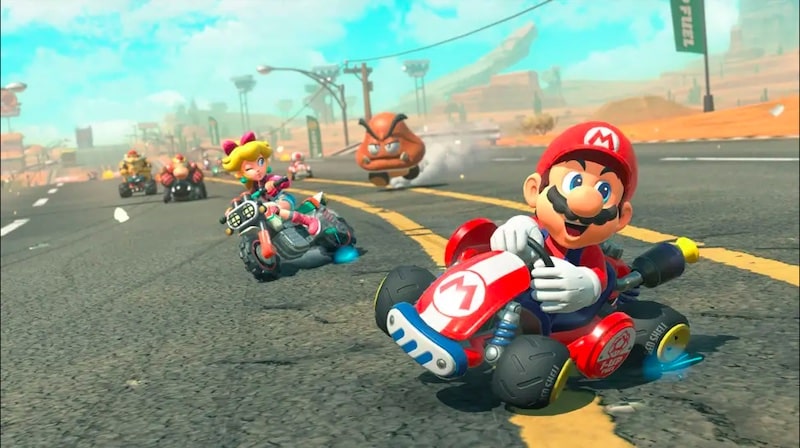
The ranking of the most stressful video games used the average rise in heart rate across sessions lasting up to 30 minutes. Mario Kart finished narrowly ahead of FIFA 20, while Call of Duty: Modern Warfare took third place, and Dark Souls III came fourth, one position above Fortnite.
| Rank | Game | Average BPM increase | Increase from resting rate |
| 1 | Mario Kart | 21 BPM | 32.81% |
| 2 | FIFA 20 | 20 BPM | 31.25% |
| 3 | Call of Duty: Modern Warfare | 19 BPM | 29.69% |
| 4 | Dark Souls III | 18 BPM | 28.13% |
| 5 | Fortnite | 17 BPM | 26.56% |
The order runs counter to the visual character of these games. Call of Duty fills the screen with gunfire, while Mario Kart looks welcoming. Its pressure? Well, that stems from sheer instability. A strong performance can build a lead in Mario Kart, but a power-up item the front-runner cannot fully control can erase it.
How the Heart Rate Study Worked
The researchers recruited 14 highly engaged gamers who played for at least 15 hours each week and were already familiar with the shortlisted titles. Each participant wore a monitor so the team could record heart rate while gaming at 10-second intervals, and resting rates were taken first to establish the 64 BPM group baseline.
Readings were averaged across the participants who played each title, limiting the influence of one unusually calm or excitable player. For the peak ranking, the researchers selected each participant’s highest reading in a game and averaged those figures separately.
It is a modest experiment, of course, not so much a universal verdict. Familiarity and skill can shape a physical response, while using the same baseline and recording method gives each selected game the same frame of comparison. The results capture how this group reacted without relying on post-match recollections.
Why Mario Kart Keeps the Pulse High
Mario Kart rarely lets a lead settle. The racer at the front remains exposed to attacks from behind, while items keep the field competitive late into a race. Several strong minutes can still end with lost positions near the line. That possibility hangs over the session instead of arriving as one isolated scare.
That anticipation around an uncertain result also appears in chance-led digital entertainment, including online slot sites. Mario Kart attaches the uncertainty to a visible lead, then threatens to erase it before the finish.
The game’s presentation may sharpen the surprise for some. Bright scenery and playful audio create an expectation of easygoing fun, yet the underlying rules repeatedly threaten progress. So, yeah, Video game stress doesn’t need a grim setting when the mechanics keep putting a fragile lead at risk.
Dark Souls Delivers the Biggest Spike
With all of that said, the peak measurements produced a different winner. During the Darkeater Midir encounter in Dark Souls III, heart rates reached 127 BPM, a 98.44% rise from the group’s resting baseline. That was the largest short-term increase recorded anywhere in the test.
Fall Guys followed with a 95.31% peak increase when participants reached a final, where late elimination gives every mistake immediate weight. Mario Kart placed third for peak increase at 73.44%, level with Street Fighter.
You’ll notice how the rankings describe two different physical patterns. Dark Souls III delivered the sharpest jolt; Mario Kart kept the average higher over time. One reading reflects a crisis point, while the other catches tension that refuses to leave.
Three Games Actually Lowered Heart Rates
Animal Crossing, The Sims and Skyrim moved in the opposite direction. Across their 30-minute sessions, the three titles lowered average participant heart rates by as much as 5%.
Skyrim can turn violent, and The Sims can become chaotic, yet both allow stretches in which the player controls the pace. Animal Crossing, by contrast, is built around that freedom, as a looming defeat screen rarely forces the next decision.
What the Numbers Really Capture
Heart rate records physical arousal, yet they cannot identify whether a participant felt frustrated or excited, and a small group of experienced gamers cannot represent the entire gaming public. As a result, the findings are best read as a controlled snapshot of 16 selected titles rather than a clinical scale of danger.
Still, a game’s surface says little about its physical effect. Heart rate during gaming can remain elevated through uncertain rewards or threatened progress, and graphic intensity is only one route to that response.
Dark Souls announces danger through a dragon filling the screen. Mario Kart sends a blue shell into a cheerful race. The monitor records the body’s reaction to both, and across 30 minutes, the shell won!
For players who’d rather keep that pulse steady, PSU has also looked at the real benefits video games can have for mental health, from stress relief to sharper focus, in a separate feature.