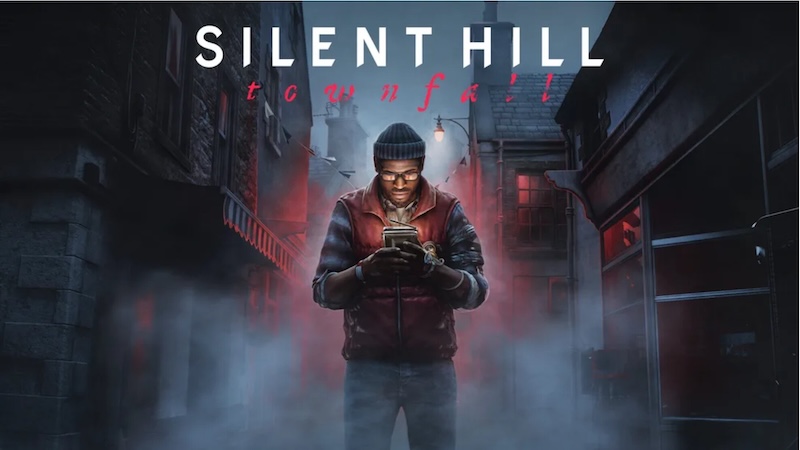
Silent Hill: Townfall Hands-On Preview & Impressions (PS5) – Coming off the back of the Silent Hill 2 remake, and the brand new interpretation of the formula in Silent Hill f, Silent Hill: Townfall is proof that Konami’s new vision for the storied franchise is full of potential.
Having played the first hour and a half of the final game, I left my session feeling incredibly excited to dig further into the weird of St. Amelia, and see what on Earth the things I was seeing were all about; despite being in a totally separate place, this is a bonafide Silent Hill experience.
Silent Hill: Townfall Hands-On Preview & Impressions (PS5)
New Town, Same Energy
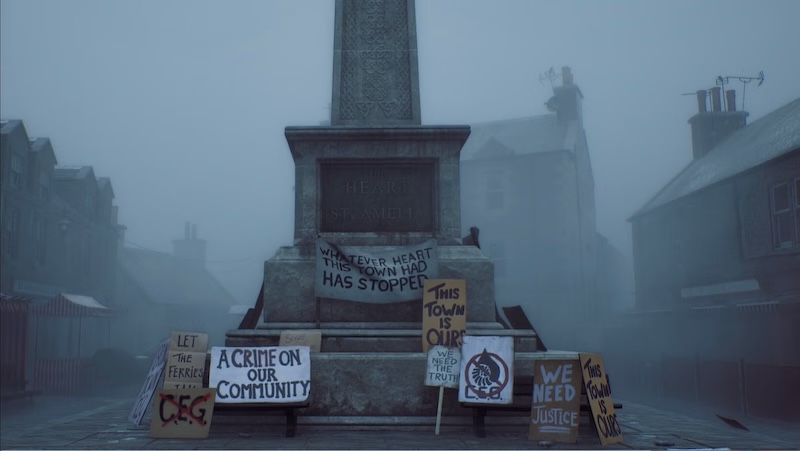
My hour and a half with Silent Hill: Townfall was a solid stretch from the very beginning of the game, into the reeds, and then some. Screenburn’s interpretation of the Silent Hill formula draws readily on the games that came before, but does more than enough to set itself apart.
Between the remake of Silent Hill 2, the more action-oriented Silent Hill f, and now the first-person perspective of Townfall, it’s clear that Konami’s approach to the franchise has changed quite distinctly for the modern era. Instead of each game following the footsteps of the other, Silent Hill has become akin to an anthology of games that each have their own interpretation of what makes Silent Hill.
For the team at Screen Burn, Silent Hill Townfall maintains the internal psychological horror that so many revere it for, but does so with a new perspective that reemphasises the voice of the protagonist with an explicit internal monologue, and being forced to see the world through his eyes.
Humble Beginnings
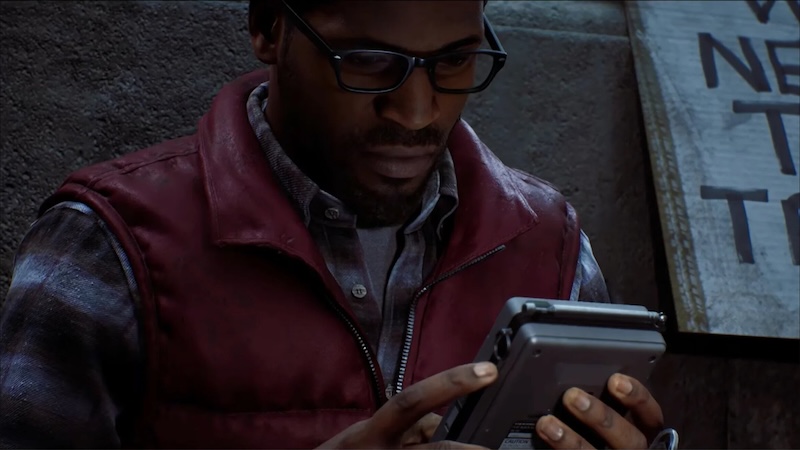
As far as Silent Hill protagonists go, Simon Ordell certainly fits the bill. The opening of the game has him waking up in the foggy town of St. Amelia with no memory of who he is, or how he’s connected to the town. He also wakes up with a cannula in his arm connected to an IV bag of dubious origin. It’s clear that something is very wrong, but my time with the game only had me asking questions, and speculating based on vague environmental clues.
The first hour of the game, as expected, is all about getting you to ask questions about what on Earth the bigger picture could be about, and while I have my own personal ideas, I’ll refrain from going into those here. All I know is that Townfall is playing with a lot of medical imagery, which is a surefire way to get me to look away from any screen.
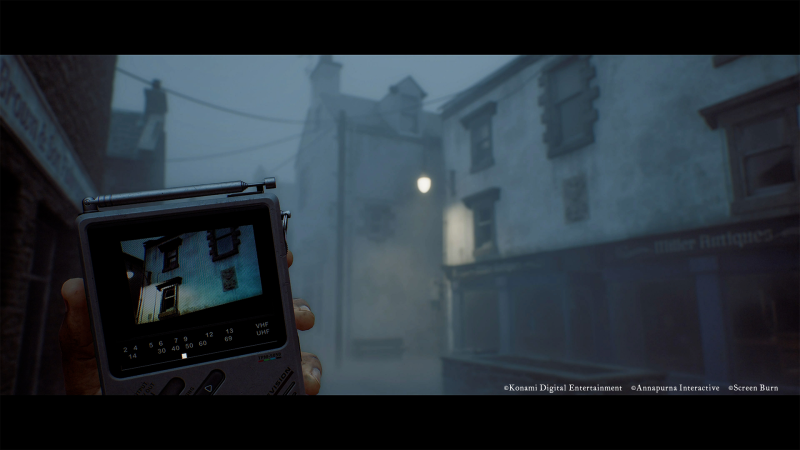
Townfall also manages to take the tried-and-true concept of audio logs in horror games and turn them into a mechanic you need to engage with; the CRTV is a core part of Simon’s toolkit, and allows you to tune into various frequencies as you explore the island. The majority of these frequencies will give you dialogue and visuals that direct you towards points of interest, without straightforward signposting.
An early instance of this had me having to inspect footage on my CRTV against the houses around me to find where I might need to go next. The CRTV also plays a pivotal role in stealth, allowing you to see threats from behind the safety of cover, permitting strategic plays and avoiding combat.
Playing with Perspective
This isn’t the first time that Silent Hill has dabbled in a first-person perspective, but so far it feels like the most convincing effort. Ignoring a particular delisted title, the only other major foray into this perspective was in Silent Hill: The Short Message, a free title that was released to mixed critical reception, and was more of a demonstration than a mechanical experience.
Silent Hill: Downfall very much brings the perspective into the core experience, making for a game that quite literally only works in first-person. Where Resident Evil managed to convincingly transition, it never felt like it couldn’t have been done in third-person. In a variety of ways, Townfall justifies a shift in perspective and weaves that into the very fabric of the game.
The CRTV is a unique way of delivering important story details and puzzle hints without feeling too in your face, and adds to the entire experience. Anything that you do find out about the town or the people who were in it comes through a distorted fuzz that puts you on the back foot. It hisses when enemies are around, not dissimilar to the radio in Silent Hill 2, it offers solutions to puzzles, but forces you to wrestle with distortion to see the truth.
For all of the CRTV’s usefulness, I do worry that it might teeter on the edge of tedium in some particular situations. My preview session ended with a particular puzzle in which I had to work out the code to a safe. Hardly a unique one, but the solution was hidden in a sequence of distorted images being fed to my CRTV, based on posters around the room I was in.
My issue came from how it was unclear where the hint began and finished, as the video on the CRTV chose to unpause rather than restart whenever I brought it out. The result was a puzzle that I nearly solved about 5 times, but missed the loop point. This is a very small hiccup with an otherwise cool mechanic, but I worry that I might have to contend with it more than once throughout.
Saying that, Silent Hill: Townfall is a confident stride into an established franchise by a clearly enthusiastic team. I am excited to see what the rest of this game holds in the not too distant future.
Silent Hill: Townfall releases on PlayStation 5, and PC on September 24.