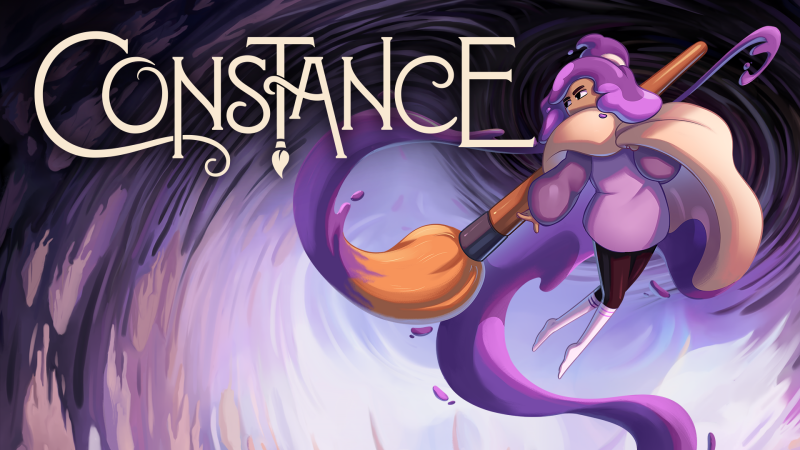
Constance PS5 Review. Constance is a game that’s somewhat crept up on me, being a game that I was massively excited to see on social media, before quietly releasing just this last month, and what a brilliant little surprise it’s been. Constance feels like an ode to the artists that made it, and the artists that continue to create out in the world now, as well as just being a brilliantly solid Metroidvania.
I went into Constance worrying that it would be a pastiche of certain other games in the space, and left it slightly conflicted. There are some incredibly original creative decisions that underpin Constance, but I wanted to see those creative directions given more space to breathe. As it stands, I want to see more, and that can only be a good thing.
Constance Review (PS5) – A Master-Stroke Metroidvania With More To Give
Identity is Everything
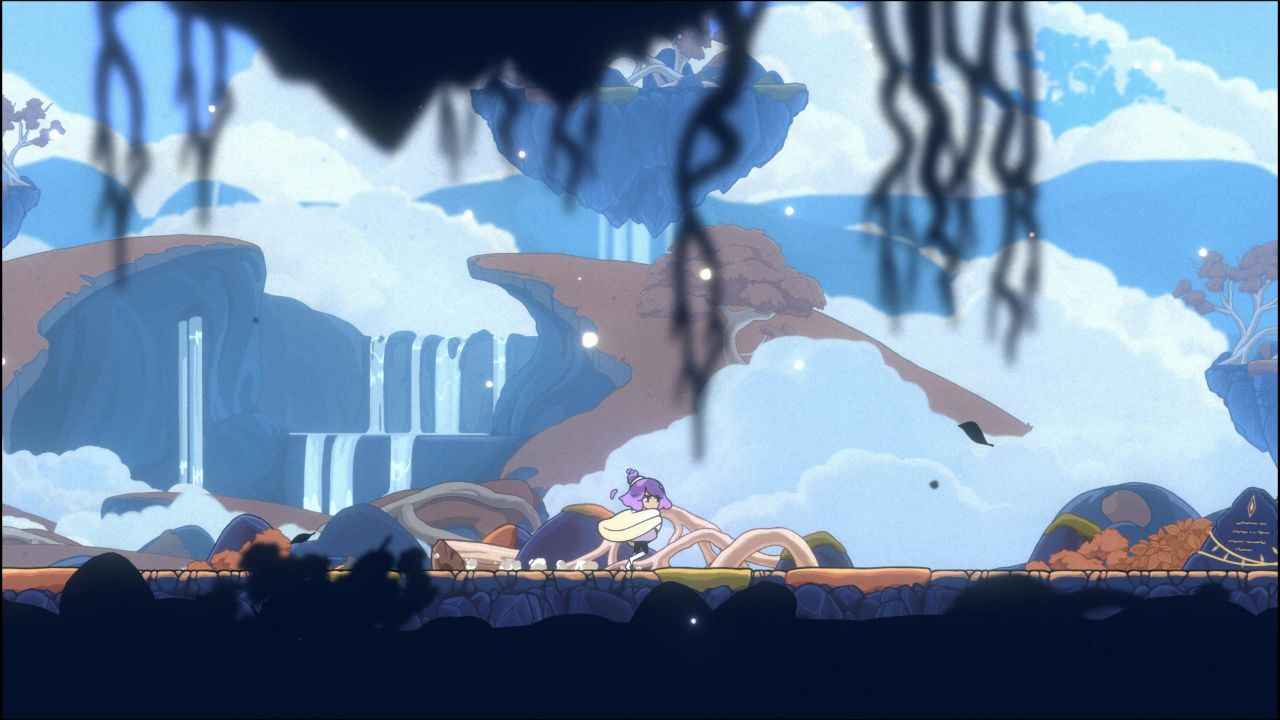
Constance joins an evergrowing subsection of the platformer genre, and obviously wears its inspirations on its sleeve, but manages to do so in a way that is far more compelling than it is derivative. You’ll fall into a mysterious world with distinct biomes, and be tasked with working your way through a labyrinthine map in pursuit of specific objectives that are often marked out for you, with the option to go off the beaten track to find upgrades and bonuses.
It’s as bread and butter as you could want, but this is a formula that has served some of the greatest indie games in the last few years, so I can hardly fault this approach, especially as I’ve come to appreciate it more and more. If anything, for what Constance doesn’t reinvent with world design, it does so with aesthetic tendencies, presenting a far more lively world when compared to others.
The beating heart of Constance’s identity is art; art and the pursuit of creativity is core to the entire story, and this is woven through every element of the game, from world design to UI, to the very enemies you fight, there’s a clear intention to what Constance puts down.
Enemies are robotic intrusions that all have a pretty uniform design philosophy, but stand as a nice contrast to a painted world. Robots can’t understand art.
Living in the Shadow of Greatness
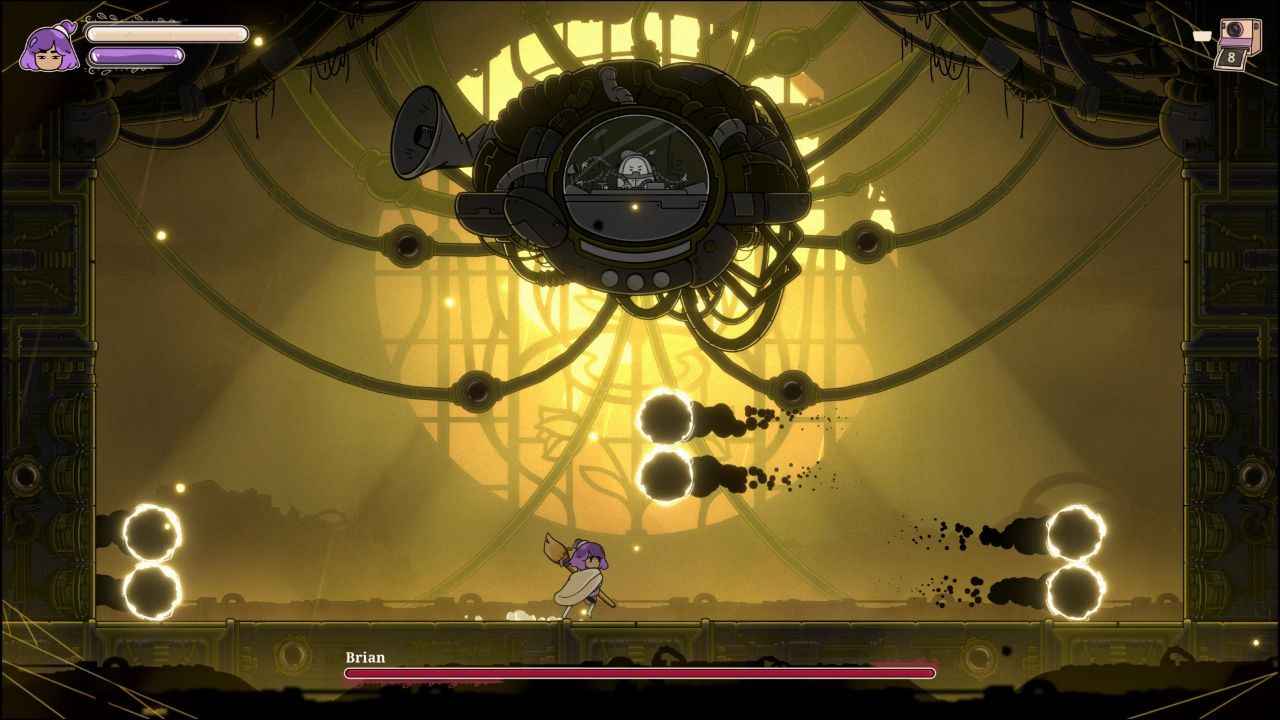
I said above that Constance largely avoids being like a pastiche of certain games that came before, but you can certainly see those similarities in some core moments, particularly the combat. I don’t want to spend this entire time comparing oranges to apples, but the focus on combat in Constance had me feeling the clunk compared to another combat-focused Metroidvania, Hollow Knight.
The comparison to Team Cherry’s duology are inevitable, with a similar system of upgrades and checkpointing stitching the world together, and this goes down to the boss fight design too. Bosses tend to be fairly simple fares, with an emphasis on pattern recognition before very specific points in which you can hit them. If it isn’t broken, don’t fix it, but I couldn’t help but feel like these bosses were attempting to chase after a wagon that already left.
This isn’t to say that they’re bad, but I rarely felt like they were particularly inspired. The same goes for the abilities that you acquire throughout the game. A dodge that grants you brief invulnerability, a pogo stick ability to jump on spikes, it’s nothing that hasn’t been done before. It’s clear that the substance in Constance is in the broader strokes, rather than the minute details.
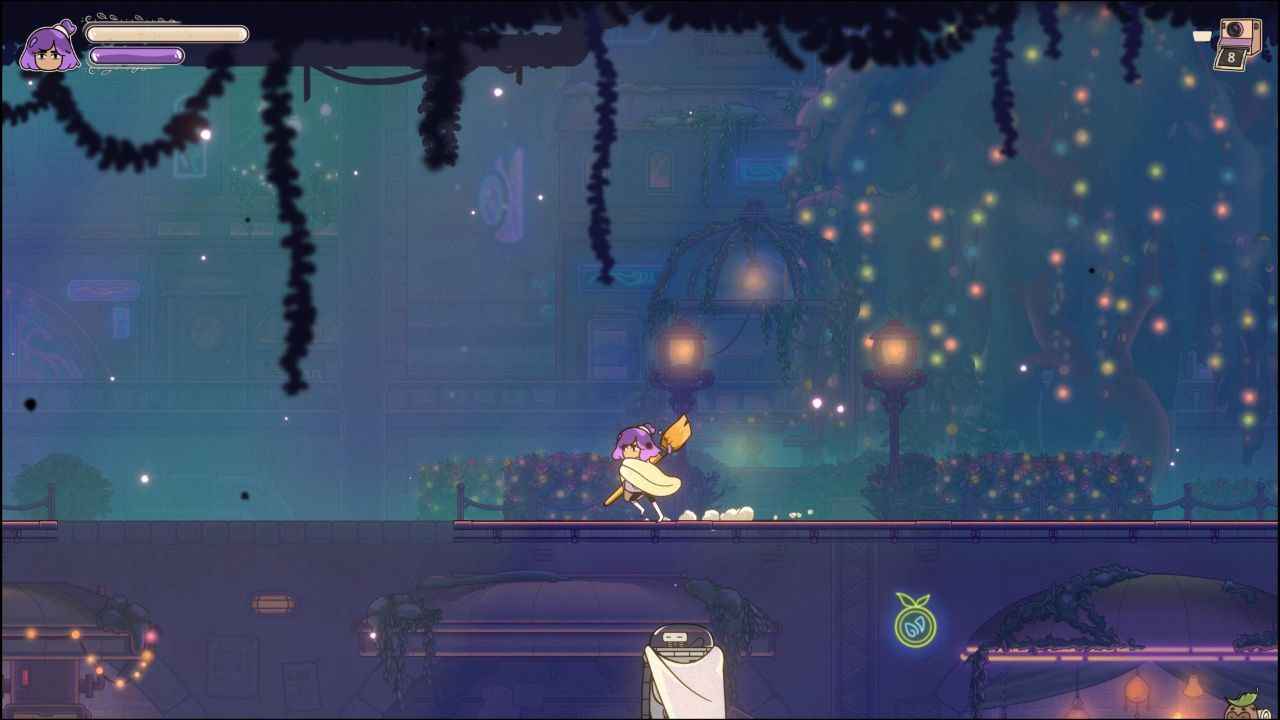
That isn’t to say that Constance doesn’t have something of its own to bring to the table, namely in its version of the mana and death system that sets it apart. Most of your abilities in Constance require the use of ‘paint’, being your stand-in for magic or stamina. If you use too much in a short window of time, you’re left ‘corrupted’, where any more use of paint will drain your health.
There are abilities to mitigate this, but are often equipped at the expense of extra damage.
This is the same for the checkpointing system, which typically throws you back to a dedicated area when you die, forced to retread to get back to where you were, marked helpfully on the map. While you aren’t having to save lost currency, it can still be frustrating. That’s why you’re given the option to reload at the start of a room at the cost of stronger enemies that hit harder and harm you when you dodge through them, until you reach the next checkpoint.
It’s a fun balance, and was something that I dabbled in from moment to moment, if I really wanted to steamroll ahead. It lessens the frustration for players who were just that close.
Looking at the Bigger Picture
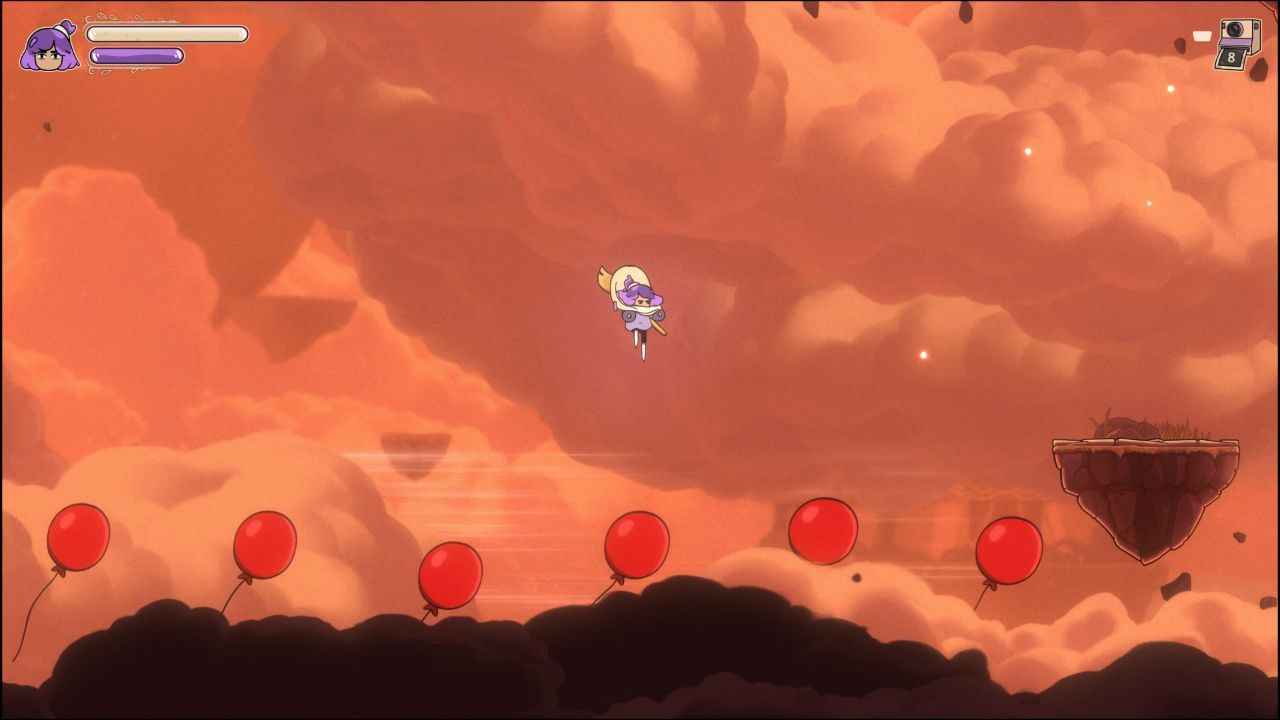
The actual world of Constance is one that’s far more alive than most others of the genre. While other games have you navigating the dilapidated ruins of the world that came before, you’re thrust into the alive world of Constance’s imagination, and set free to interpret that as you like. While there may still be some junk floating around, there is a distinct hope to the world that contrasts well with some of the storytelling that is explored throughout.
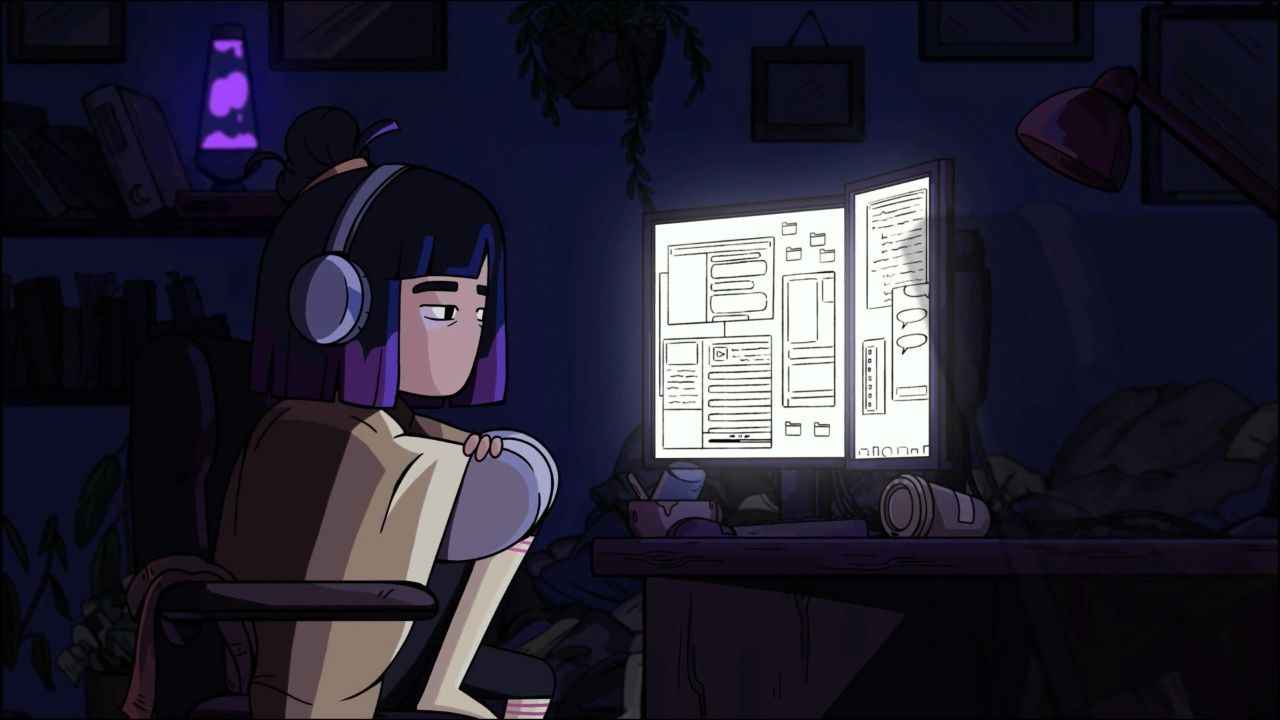
For how bubbly these biomes can be, there is a very real story about the destructive impact that work-life balance can have on creative pursuits, presented through intentionally jarring sequences that force you to wade through the monotony of office work, and the stress of juggling deadline after deadline.
These are interactive sequences, but aren’t challenges in the same way that bosses are, and instead stand to illustrate a point, rather than legitimately test you. Regardless, it was an inspired way of exploring this very real issue that plagues creatives all over, and genuinely got me frustrated in the healthiest way possible. Show, don’t tell, and I was shown the most overwhelming and frustrating experience possible.
Not Missing The Forest For The Trees
On paper, Constance has all of the makings of a classic in the space. Imaginative world design, tight gameplay and a narrative that certainly resonates in a world obsessed with maximalism, but it falls short of being fantastic into being something with an abundance of potential.
I love a lot of what it puts forward, but finds that it never finds the feet to do them justice. The world of Constance never falls in true step with the narrative that it wants to present. While I praise the jarring inclusion of real-world interactive segments, I never truly felt like there was much in the way of environmental storytelling across the board.
This kind of storytelling is perfect for the type of story that this is, and yet I never felt like it was explored until later. In that respect, it feels like Constance should have taken a few more notes from games like Yume Nikki, and really embraced the dream-like nature of the world.
Ultimately, I’m picking at these small details because the foundation is just that solid. I can’t fault the base gameplay of Constance, but I would have liked to have seen it embrace its own ideas a little bit more on top of doing the basics well.