Daemon X Machina: Titanic Scion Review (PS5) – Daemon X Machina: Titanic Scion is a game that’s chock-full of interesting ideas, but I left my time with the game feeling like I was missing that special spark. It meaningfully iterates on the previous game in the series, while introducing a slate of other oddities that made me wonder if some of them had been thought through.
In some respects, Titanic Scion is an impressive evolution of a series that I originally thought wouldn’t see a new entry. In others, it gets frustratingly close to a game I love, but falls short enough to leave a middling impact.
Daemon X Machina: Titanic Scion Review (PS5) – One Small Step for Mech Kind
A Whole New Story
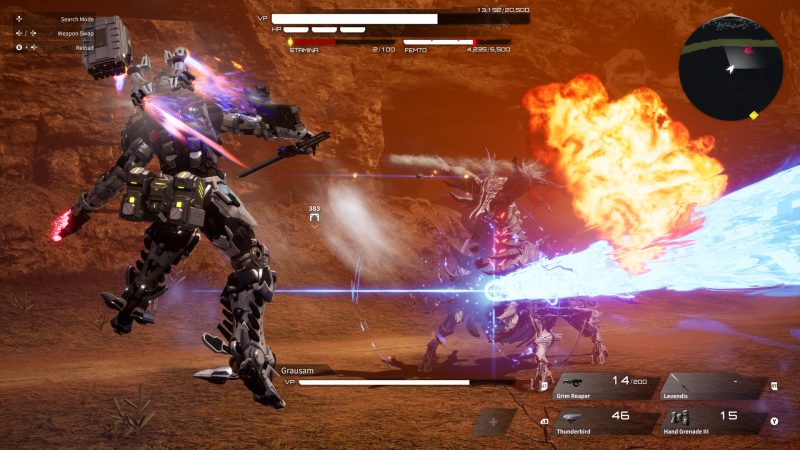
The core of Daemon X Machina: Titanic Scion is relatively unchanged from its first outing on the Nintendo Switch in 2019; you assume control of a mech suit and defeat enemies in a variety of different scenarios. Despite this, the core formula has been pretty significantly modified to fit a more narrative-focused experience when compared to its predecessor.
I say “narrative-focused” with some stipulation, as the narrative of Titanic Scion feels a bit more incidental than I was originally led to believe. It falls fast into established tropes and struggles to do much of interest beyond that for me. The initial setup promises a level of intrigue that I never felt was truly delivered by the time I wrapped up the main story.
Further Reading – Upcoming PS5 Games 2025 – The Best PS5 Games Coming Soon
Despite some interesting intrigue and a pretty mouthy player insert character, I felt like it was wasted on a story that fell in genericism and never goes beyond what I’d expect for a post-apocalypse. The tension between the Outers and Humans was one that was headlined and never really jumped out to me as something I should care about, given how quickly the story moved past it.
Maybe my expectations were set a little bit too lofty with this one, but if you’re going to refocus around a narrative structure, I’d prefer there to be a bit of bite where possible, rather than playing with the standard figures of the genre. It’s still nice to have some kind of connective tissue bringing the missions together, though.
Getting Down to Business
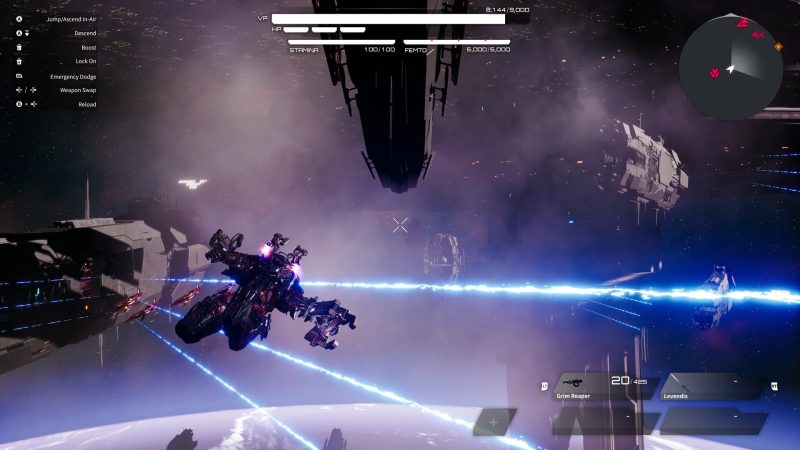
At the core of this subgenre is the customisation; you cannot have a mech-game without a good degree of customisation, it’s borderline the law. And in that respect, Daemon X Machina: Titanic Scion both impresses and slightly disappoints. Once you’re set upon the open world, you’ll quickly be looting equipment from abandoned trucks and defeated enemies to slowly craft your ideal robot suit.
This ranges from both armour pieces to the weapons that you’ll use to smack down other humans or the weird Immortals. In an interesting twist on a system that usually showers you with overwhelming amounts of pick-ups, you’ll have to carefully decide what you want to take from enemies, and where the rest is left behind.
When out on the field, this resulted in some interesting weighting, when I would consider maybe going for the extra consumable pickup instead of a slightly stronger weapon. It’s short-term success versus long-term gain, and I found this to be a pretty clever way of alleviating what is usually a blob of meaningless items in my inventory. Everything I picked up was something that I specifically chose, rather than having it thrown at me.
In terms of the weapons themselves, I’m in two minds. On the one hand, there’s an impressive variety of offensive options across a slew of categories in both melee and ranged weaponry. From bows to sniper rifles, to missile launchers, and all kinds of clubs and swords, there’s almost definitely a build for you hidden here somewhere.
The open world encourages this exploration in both combat and general progression, but during my review period there were several times where I genuinely thought the game had broken, or I was softlocked. Fast travel works by placing you into various outposts around the map, where you wait for the door to open. You can move around during these sequences, so you’re essentially trapped inside a totally sealed room.
The first time I sat through one of these load times, I thought the game had fully softlocked and that I was trapped inside the room, before it opened nearly a full minute later. In a bizarre twist of loading times, it seems the game loads the world separately from moving your character around it.
Once I understood what was happening, I was fine, but it certainly stood out.
Between a Robot and a Hard Place
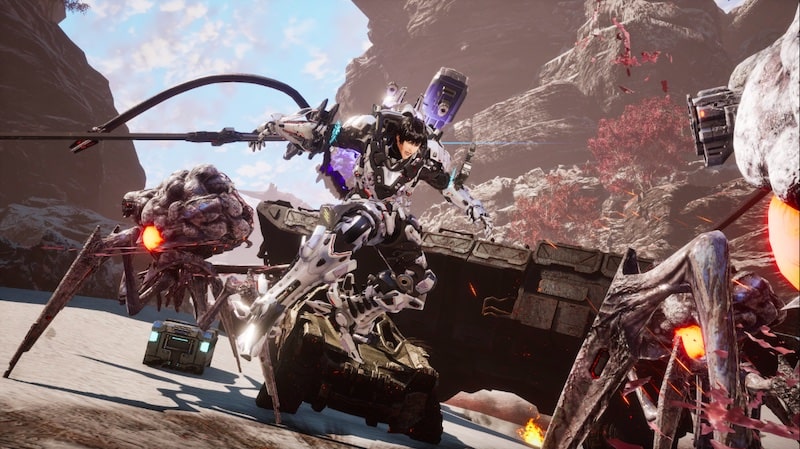
For as much as I appreciate the variety of combat options when it comes to your Arsenal, this falls slightly flat in the long term when combat feels as light as it does. Which isn’t to say that combat feels bad, but it certainly doesn’t have the crunch that I would expect from big mechanical conflicts. My mind is drawn to games like Armoured Core, that manage to balance the pace and precision that high-difficulty games need, alongside some seriously weighty moves and impact based purely on the damage you deal.
Daemon X Machina: Titanic Scion has flying combat that feels zippy and light, but it doesn’t match what I would personally expect from a game like this. When I hit a giant robot crab tank with a club half the size of my body, I think I should probably feel that impact and see some feedback. This is where Daemon X Machina: Titanic Scion personally drops the ball and manages to betray the cool factor of its own concept.
Outside of that dissonance, combat feels fairly solid and good for what it sets out to do, if being a bit fiddly with the amount of airborne small enemies.
The hulking Arsenals from the first game have been somewhat trimmed down into mechanical exosuits that match their pilots far more than a hulking tank. It works, but it lacks some of the oomph.
A Pivot and A Reset
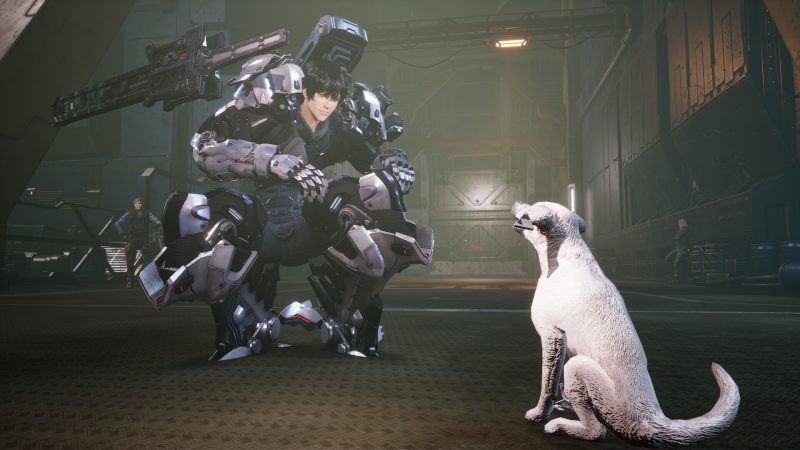
In a lot of ways, Daemon X Machina: Titanic Scion feels like the franchise is attempting to redefine itself and position itself as something brand new. The way it alludes to the original game is done in a way that can almost brush it off as a predecessor rather than essential reading, which is vital when redefining so much of the original foundation. And while I appreciate the refocus on narrative and the decision to change so much, doing so means that Titanic Scion feels like another go at first steps.
Just like the original game had some great potential and ideas buried under some cruft, the same is true here. I really worry that by totally redefining what the series is, it risks making the same mistakes as when it first came out; what’s here is really solid, and though I appreciated the change in direction, it did feel like a cautious step into a new era, rather than a confident stride.
There’s the core of something special here, I just wish that it was given the time to nurture.
Daemon X Machina: Titanic Scion is out now on PS5.
Review code kindly provided by PR.