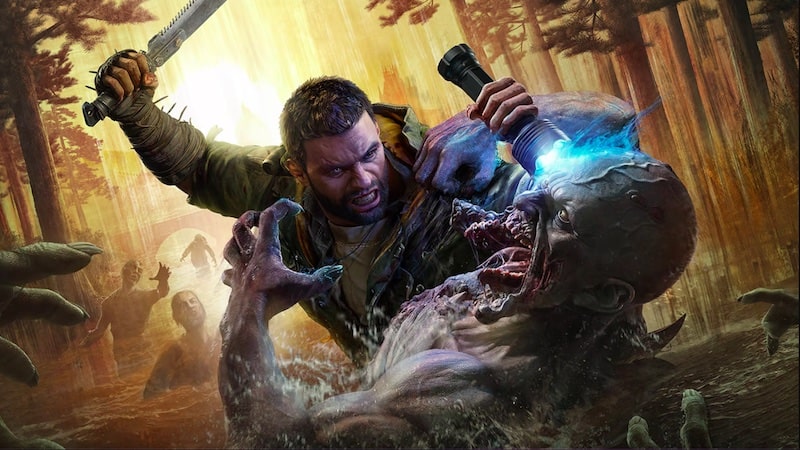
Dying Light: The Beast PS5 Review. Dying Light as a franchise is over a decade old now, and in that time we’ve only been subjected to three entries in the series. The first Dying Light was an ambitious parkour-heavy take on the zombie survival sub-genre of video game, and featured urgent storytelling as you’re plonked into the parkour shoes of Kyle Crane, a Global Relief Effort operative, who visits the city of Harran and finds its jammed up with flesh-devouring creatures.
Dying Light 2 meanwhile, shifted gears with a new setting and a new protagonist attempting to fight off a larger pandemic than seen in the first game, and was an even more ambitious game with a greater sense of urgency.
Now, Dying Light: The Beast throws us back into Kyle Crane’s parkour kicks, but sees him exploring a new infected region known as Castor Woods – an idyllic area with serene landscapes and many picturesque locations. This new paradise does not bring peace though, rather it brings plenty of pestilence in the form of a horde of flesh-munching undead psychopaths of various forms and threat levels.
Originally conceived as a piece of DLC for Dying Light 2, Dying Light: The Beast has been morphed into a seismic colossus befitting its namesake, but will you be feasting on good times playing this standalone expansion to the Dying Light universe as it chews through our expectations, or does this beast need culling?
Dying Light: The Beast Review (PS5)- A Beast For The Eyes
The introduction to the story of Dying Light: The Beast recounts the immense struggles threaded through the previous entries in the franchise. Kyle Crane was a member of the GRE, and had worked tirelessly to find a cure for a lethal virus that turns humans into undead swarmers known as Volatiles. However, lies, kidnapping, and over a decade subjected to torturous experimentations were the result of Crane’s efforts.
The Beast picks up inside an experiment facility as Crane awakens from his prolonged gestation. He finds out that a man known as The Baron had been holding him captive, so that he can enact his ambition to create formidable humans and a new world order. Crane swears to track down and kill The Baron, while he also contends with his own beastly augmentations due to all the years playing guinea pig to ruthless virus experimentations.
There’s no playing around with The Beast’s set-up: you want to find the man responsible for putting you through hell, so now you want to give him hell. Due to the unbridled power of The Baron, Crane must inject himself with the DNA of beasts known as Chimeras, and in so doing he’ll gain new powers and abilities which will eventually match and overwhelm those of The Baron.
In order to track down Chimeras, Crane requires the assistance of a group of Castor Woods settlers, and an important sidekick named Olivia, who helps Crane track down Chimeras for him to slay so he can become stronger. Along the way, Crane will find new characters, some of whom struggle to trust him, while others assist him through his quests.
There’s plenty of intrigue the world of Dying Light offers up, and The Beast does a good job of expanding the alluring traits of the Dying Light universe, while adding meaningfully to it. There’s a good hunk of meat to this evolved DLC’s bones, and you’ll be happy to devour it. The fact the main story is roughly 10 hours and there’s not a whole lot of fluff around the edges, you’ll certainly be pleased that The Beast doesn’t waste your time.
Time For Some Hardcore Parkour
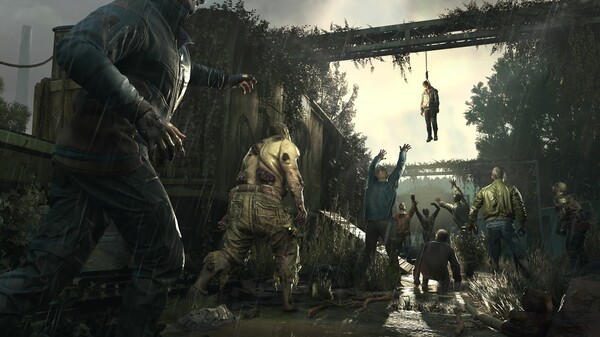
Preserving the ins and outs of previous entries, The Beast refuses to toy around with the established tenets of undead genocide that the series has made a name out of. These hallmarks include parkour, the vicious and gratuitous maiming of the undead, and exploring the world by climbing structures, helping citizens out with tasks, and gaining further insights through collectibles you’ll find strewn throughout Castor Woods.
Movement is the vital ingredient to The Beast’s genetic configuration. Get ready for Crane to exercise his leaping and platforming abilities, as well as his legs to sprint, bound over environmental objects, shimmy carefully along buildings, and occasionally dropkicking the hapless undead stragglers in the neck who get in his way.
The rhythm and flow of The Beast’s parkour is very gratifying and challenging, especially when you’re constantly looking out for the next grabbing point and gradually clambering your way to the top of structures. Sometimes it’s tricky looking for the next ledge to clutch onto, and monkeying your way from platform-to-platform is nothing new for returning fans of the series, but there’s no doubt the fluidity and finesse of climbing is the most unique selling point to the Dying Light experience.
On the negative side though, the parkour hasn’t received noticeable changes, which may irk devotees of the series, especially those really enjoyed some of the climbing activity in Dying Light 2. Also, we’re still subjected to climbing towers as though we’ve leapt back to Far Cry 3 from 2012 – but at least they’re not overbearing this time.
The Quest For The Beast
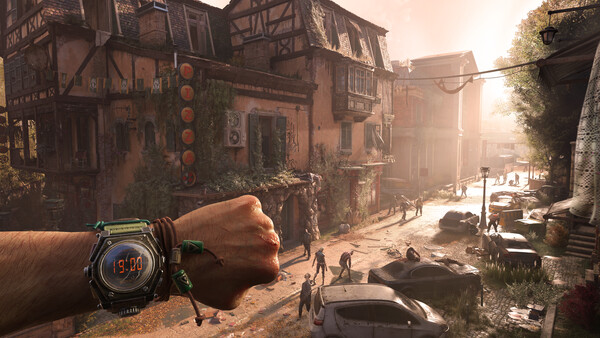
Quests in The Beast tend to air on the side of errands and running favours for people. Restoring power is one of the repetitive objectives you’ll need to get used to, though your associates can make Crane’s manual labour harder than it should be. When you’re trying to put power back into the power plant for instance, you need to communicate with a bozo who at one point messes Crane around, and in turn Crane threatens to shoot him if he doesn’t instruct him clearly and accurately.
Of course, there will be ample room for you to put your parkour skills to the test and reach a checkpoint while attempting to figure out how to get there by looking around for ledges and platforms that can boost you up and give you a pathway forward, but much like other types of missions in The Beast, they can become routine and banal before long.
Some missions are infiltrations, which are high stakes and full of weekend soldiers, so although you need to proceed with caution, you can pacify them with stealth or take them all out with your arsenal and beast abilities.
Combat in The Beast is exacting but requires players to be resourceful. Weapons will degrade and firearms can run on empty, but when you’re smashing wrinkled corpse heads in or peppering them with bullets, that’s where the enjoyment comes in. Sure, it’s very easy to start sprinting forward, only for a shambling undead to grab you and say hello in an inappropriate and impolite way, but you can bosh them off without much concern, but you’ll be best served by surveying your surroundings and being armed to the gills. Lopping undead heads off is very satisfying and seeing their flesh split apart is graphic and moreish.
What can be just as moreish is battling with Chimeras. These gigantic beasts are tests of your own beastly prowess, and they’ll prove to be a gargantuan nuisance like a bunch of mutated King Kongs rudely hurling cars at you and furiously swiping to take you out. Once they’ve been bested, Crane takes a sample from them and injects it into himself, and this is where you steadily climb the beasty ranks until you eventually come face-to-face with The Baron.
A Good Defense Is The Beast Offence
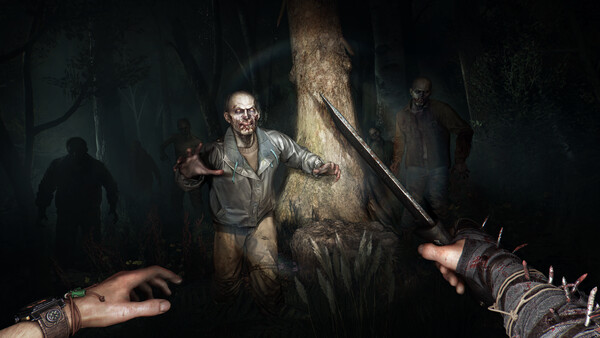
Time to address The Beast in the room, as in the beast and non-beast powers and abilities in Dying Light:The Beast! Like prior entries, The Beast has token skill trees to upgrade your abilities. One of these is a general upgrade tree for Crane’s basic skills, and the other is related to his special beast form.
The generic upgrades include straightforward enhancements like fall damage reduction after huge jumps, the ability to kick undead further away from you, and a perk ensuring you don’t burn as much fuel when driving about in cars. You can also acquire the know how to craft weaponry like flamethrowers and grenade launchers.
These basic skills are unfortunately a bit naff because they’re weak and don’t provide much of an advantage to you during gameplay. For example, what is the advantage of kicking undead further away from you? Ok it’ll give you a momentary chance to escape if the undead crowd around you, but it’s quite a joke because there’s nary a feeling of empowerment to it.
The Beast Skills meanwhile, are fraught with superpowered abilities like freakish jump extensions, a furious charge that can aggressively bypass enemies when you’re in a hurry to get somewhere and have no time to be munched on by a living dead corpse, and gain health regenerating abilities from savagely ripping limbs off.
Using these epic powers during gameplay is nothing short of ferocious, and really good fun-but just like the stamina system, the Beast Mode won’t last long, and the beast meter will have to fill up with red before you can use it again. Temporary bursts of rage like this do feel awesome in the moment, but many of the upgrades feel quite cheap and unimaginative. For instance, the roar ability is powerful to the point of stunning nearby undead-but why can’t it pop their heads off? When we’re assuming the beast form, we should be unstoppable and we should be able to eat zombies for breakfast and toy around with them, but The Beast is too po-faced for that it would seem.
Managing The Beast
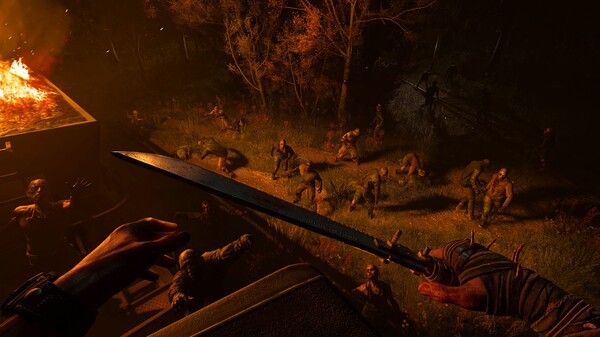
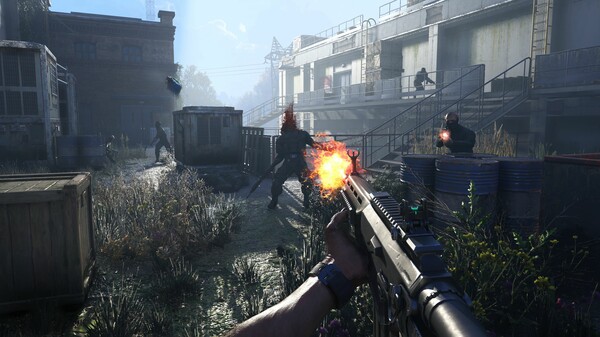
Weapons in Dying Light have always been varied for the purposes of undead mutilation, and this is no different as far as The Beast is concerned. Some weapons like the machete and pipe are serviceable, but you may need to cave undead heads in multiple times before they remember to stay dead. Firearms can be picked up from the corpses of human foes, but their limited ammo capacity forces you to be careful when firing each and every round, so the good does come with the bad there. There are bows you can pick up and use, but the feedback with them is surprisingly weak and aren’t worth using unless you’re a good shot. You’ll enjoy using the flamethrower and grenade launcher though when you get your hands on them because their destructive potential is definitely tasty.
Crafting is straightforward if you have all the raw ingredients you need to concoct the weapons and healing items you need. The undead sure do carry a lot raw ingredients with them, making you wonder why they’re so loaded – it’s not like all of them were DIY specialists when they were alive.
Managing weapons and equipment isn’t ideal, as you’ll have to select weapons from the inventory to then initiate a quick select. Cycling through your inventory on the D-Pad should feel like a synch, but there’s usually not enough in each menu for you to capitalize on, especially when you need a weapon or health pick-up urgently.
The Beauty Of The Beast
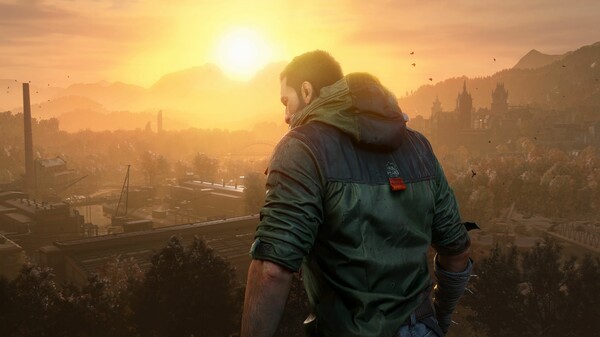
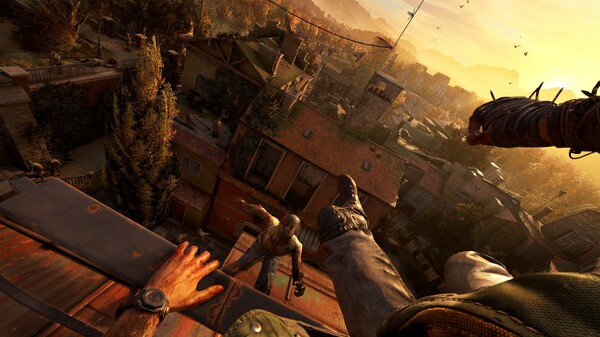
We’ve come this far into the review and we haven’t delved into how gorgeous Castor Woods is. This might be a Dying Light game, but you wouldn’t have thought that the setting would be so idyllic, but it’s so gorgeous with its pristine lakes and fervent blue skies. When you first step towards Castor Woods and look down on it from a vantage point, you’ll truly embrace the artistry of the environment Techland has crafted. It’s truly stunning. Yes, there are many concrete areas, factories and rundown buildings too-but you can see glimpses of nature that haven’t been devoured by apocalypse.
The Beast suffers from a lingering case of the doldrums though. Dialogue is bleak, characters are stern and po-faced, and generally there’s nary a flicker of personality to relish here. Crane is too serious; of course, it’s understandable given what he’s been going through, but drawing an emotional connection to him or the other characters is difficult.
Crane’s interactions with the survivors he meets are very plain and dull. For example, he requests that the survivor he’s helping out has to do him a favour too, but when they ask what that favour is, he says he doesn’t know yet and he’ll tell them when he knows. Kyle behaves like a typical errand man, not too dissimilar to Deacon St. John from Days Gone-only less grizzled and embittered by a traumatic past in active service, and more vengeful because he’s been victimized by experiments.
Is It The Best Beast In Class?
If you’re up for an expansion-level helping of Dying Light, then Dying Light: The Beast has you covered nicely. The story is straightforward and exacting, allowing you understand what’s going on without any superfluous nonsense. Beast abilities are empowering and momentarily allowing you to feel like an unstoppable force, and The Beast has generally retained the qualities the previous games are known for, and in a new beautiful setting no less.
However, The Beast does behave much in the way typical dlc does, in that it gives you plenty of what you’ve already seen before from the series, and with Crane behaving like an errand child who puts his trust in people too easily and does their dirty work-it’s difficult to feel wholly connected to the world when the Crane and his characters don’t give us reasons to truly care about them as fictional people.
It’s clear that the emphasis of Dying Light and thus The Beast is to give you a world where you can run about within it and make infected corpses your playthings, but there’s a lot of room for evolution. The Beast is successful at giving us another scrumptious slice of Dying Light, but the irony of The Beast is while it strives to be untamed, its leash can only extend so far before it’s pulled forcefully back because of the limitations and lack of upgrades that meaningfully unleash the monster within. So yes, The Beast is good, but it’s neutered.
Dying Light: The Beast is out now on PS5, Xbox Series S/X, Microsoft Windows and GeForce Now.