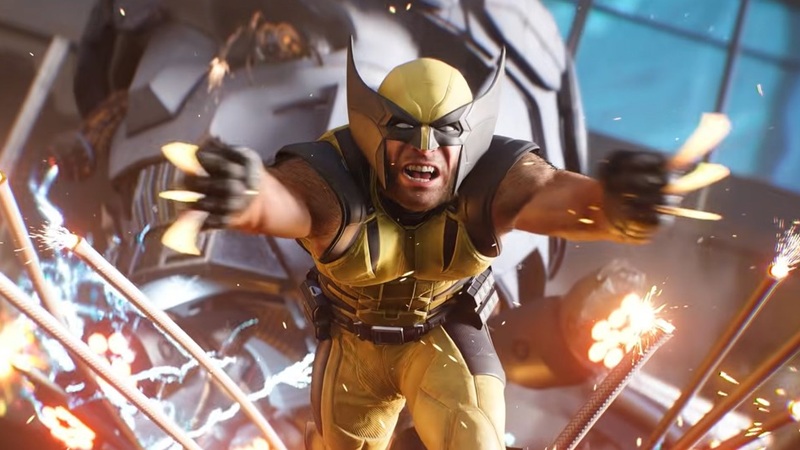
No longer just known as the house which Ratchet & Clank built and with three critically and commercially acclaimed Marvel’s Spider-Man offerings under its spandex belt already, I think it’s pretty clear that Insomniac Games knows how to craft superhero titles that delight and excel, though separately, I would still very much want to see the Burbank mega-studio look to its non-Marvel laurels for its next outing nonetheless.
Each of the Spider-Man games released by Insomniac Games didn’t just feel like incredible, genre defining efforts in their own right, but perhaps more crucially each title also demonstrated that the Californian developer knew what makes a great superhero experience tick in the realm of video games and with its latest effort, Marvel’s Wolverine, that fact feels as true as it ever did. Additionally, I think I can also safely declare that the more than seventeen year stretch of Activision’s X-Men Origins: Wolverine holding its spot as the best Wolverine video game ever, has come to an end, too. Alas, it was a good run.
Marvel’s Wolverine PS5 Review
Marvel’s Wolverine soars because like Insomniac’s Spider-Man games, the talented hands behind its creation clearly understand what makes its titular protagonist so compelling, requiring visuals, actor performance and moment-to-moment gameplay mechanics to work in blissful unison to realise this latest vision of Marvel’s most grumpy superhero. Insomniac’s take on ol’ Blades is a roundly riveting one and much of the credit should go to Australian actor Liam McIntyre (he of Starz Spartacus fame), who brings the grizzled hero to vibrant life, offering up a perfect balance of irresistible fury, poignant vulnerability and well-placed sarcasm whenever the situation calls for it. I would certainly pay to watch Liam McIntyre’s Wolverine do his thing on the big screen in a heartbeat, let’s put it that way.
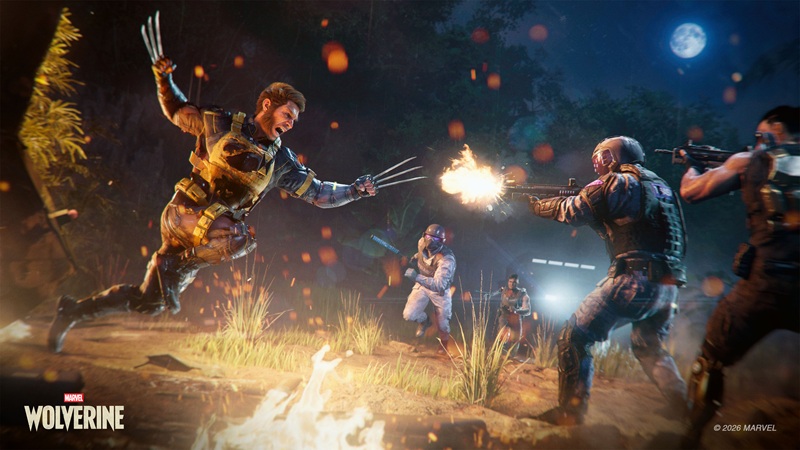
Pointedly, there is a scene right at the beginning where Wolverine takes a full barrage of fire from a mounted gun emplacement and then slowly rises from the blood-mixed muddy quagmire, as the bullets fall out of his now exposed adamantium ribs and his healing factor starts to kick in, causing the metal in face begins to congeal with the blood and bone around it like some sort of self-healing Terminator – which of course is precisely what Logan is. Leap, roar, slash, stab, dismember, growl, move on. This is the Wolverine that we know and this is precisely the Wolverine that Insomniac Games and Mr. McIntyre has given us.
Looking deeper into this iteration of the character, this version of Logan is also appropriately afflicted with the kind of amnesia which defines the core of his struggle. Given a kind of family in the form of Team X, with Nathaniel Essex at the helm in an almost paternal role, Logan, Sabretooth and Mystique travel the globe rescuing mutants and simultaneously avoiding the cross-hairs of rabid anti-mutant genius Bolivar Trask and his near-infinite arsenal of mutant-walloping tools.
Related News – Insomniac Games Is Still Reportedly Working On A Standalone Venom Game
For anyone who has a level of familiarity with the comic source material, and in particular the Team X stuff, aspects of Wolverine’s plot will certainly prove familiar, especially as Insomniac’s latest hits the high point of that particular arc with verve, especially as the love/hate/frenemy dynamic that exists between Logan and Sabretooth rarely fails to be anything but hugely entertaining. Elsewhere, Troy Baker’s turn as Nathanial Essex is suitably… entertaining. And that’s all I’m going to say about that.
Clearly also, there is a yawning chasm of tonal disparity between Marvel’s Wolverine and its web slinging predecessors. Broadly, the level of body horror and violence in Marvel’s Wolverine is such that it sits a veritable galaxy away from the gee-shucks coded shenanigans of the Spider-Man games, and there is enough cursing from just about all of the characters to refloat the Titanic, most of it coming from Sabretooth, unsurprisingly. To say it hits that ‘mature’ age rating would be an understatement to say the least.
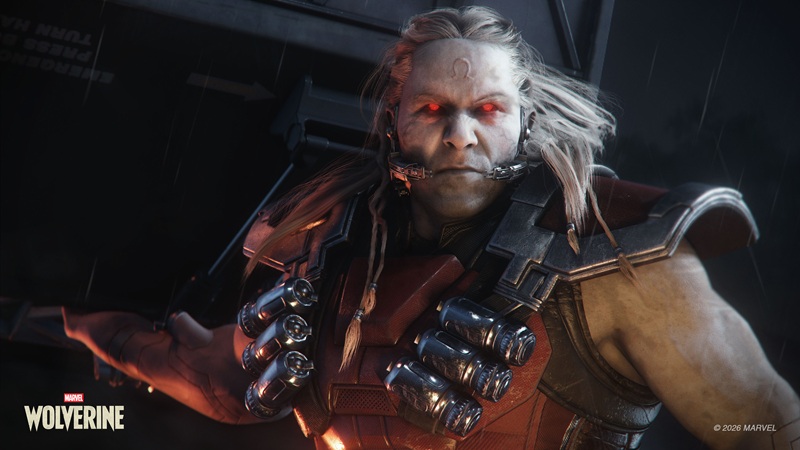
It’s also worth mentioning that across a single playthrough of around eighteen or so hours (not including New Game Plus and scooping all the collectibles, mind), Marvel’s Wolverine also packs in some material from other Wolvie comic runs as well, providing a sufficiently meaty overarching plot that really goes places, both emotionally and geographically. It really does cover a lot of ground from the comics and actually provides a fair amount of insight into what Marvel Studios 2028 MCU X-Men movie could yield. Oh, and like with every entry in the Marvel Cinematic Universe, you’ll want to stay for that post-credit sting. Trust me.
Like all the best Wolverine stories then, Insomniac’s take on Marvel’s most recognisable X-Man is a drama steeped in the tragedy of its characters. Afflicted with an especially insidious brand of PTSD where Logan finds himself irrecoverably scarred by a past he cannot remember and can never heal from (an ironic storytelling device given his regenerative mutant powers), brutality is how Logan communicates with a world that has essentially failed him – his black dog hued thoughts and insecurities manifesting as the punctuation and syllables in his language of violence.
Visually, Marvel’s Wolverine excels on a number of levels. Not only does Logan look every inch his comic book origin, complete with relatively humble vertical measurements, but technically the game looks incredible – which should perhaps come as not too much of a surprise given the stellar pedigree of developer Insomniac Games. Tech fans will be cheered to hear that you get the usual spread of quality and Performance modes, with 120Hz modes for 40FPS and a smattering of ray-tracing to boot, but PS5 Pro owners get the best of both worlds, with ray-tracing stuffed Performance Pro and Fidelity Pro modes offering up a tip-top visual experience that simply looks incredible and easily stands shoulder to shoulder with some of the best looking console games of this generation.
Much like the superpowered source material that it is based on, Marvel’s Wolverine is a markedly different prospect from the Spider-Man adaptations which have preceded it, as clearly your eyes and ears must tell you, and yet, it also remains similar in a number of surprising ways.
Starting with the traversal side of things, Logan has a lumbering intensity that initially feels a world away from the lithe, featherlight acrobatic feats of the Spider-Men, Peter Parker and Miles Morales. He moves and controls like an angry primate – able to close distance extremely quickly while lumbering along at speed. There’s a real sense of weight and that sort of low centre of gravity that attributes Logan with the sort of heft one would expect.
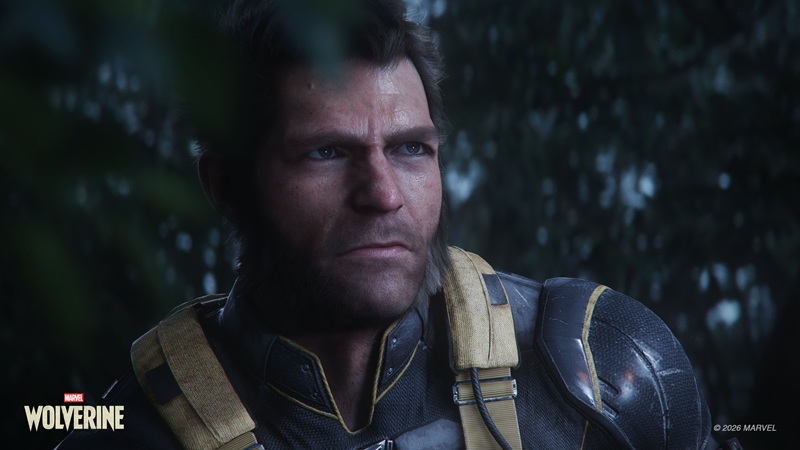
Yet, even though Logan clearly moves differently from the friendly neighbourhood Spider-Men, he can mimic their parkour skills (though perhaps not quite so gracefully) by holding down that same ‘R2′ button, causing him to automatically leap over any obstacles in his way in true tried and tested cinematic fashion. Speaking further on the topic of traversal, whereas you felt like (and could in most cases) traverse just about any surface in the Insomniac Spider-Man titles, our gruff hero can only mantle and leap onto very specific surfaces (white paint appears to be substituted for yellow paint, here) – a fact makes sense given just how much of a linear fair Marvel’s Wolverine is intended to be. Elsewhere, the familiarity continues as Insomniac’s penchant for epic cutscenes is once again anchored by the use of Quick-Time Events, while the double team moves from the Spider-Man games also make a return.
Oh and before folk start having a go about the whole ‘red trail’ thing where Logan must chase someone, using a red trail to guide him in the correct direction, Insomniac actually embeds this as a constant mechanic in the game where Logan’s elevated sense of smell allows him to track down key individuals, hidden loot boxes and various types of whiskey which allow him to reconnect with key events from his past. See? There’s a reason for it. Sort of.
And also much like the Spider-Man titles, there are slower moments punctuate the veritable tsunami of baddie claret that Marvel’s Wolverine frequently partakes in, where you’re guiding Logan around the environment, speaking to other folks and searching for clues in the environment such as notes, audio recorders and so on which serve to enrich the lore. It does have its lighter, more tender moments too. In one such scene, Wolverine and a friend are tasked with tracking down a quartet of children’s drawings in order to convince a young scared mutant to leave his room. In another, he’s chilling out – at least as far as he can – with the members of Team X in a bar within the Lowton district of Madripoor, before things start to get dysfunctional.
One of the marquee differences between Marvel’s Wolverine and Insomniac’s Spider-Man games is that the former gets rid of the open-world map entirely in favour of something much more linear and narrowly focused. There’s this alluring old-fashionedness to Marvel’s Wolverine that oddly makes it feel like it comes from a time earlier than that of Insomniac’s open-world focused Spider-Man games, and yet it feels precisely like the sort of experience that gamers are hungering for at large. Something lean, with no bloat, no open-world and just full-throttle combat gameplay funnelled into a nitrous-powered linear game design template.
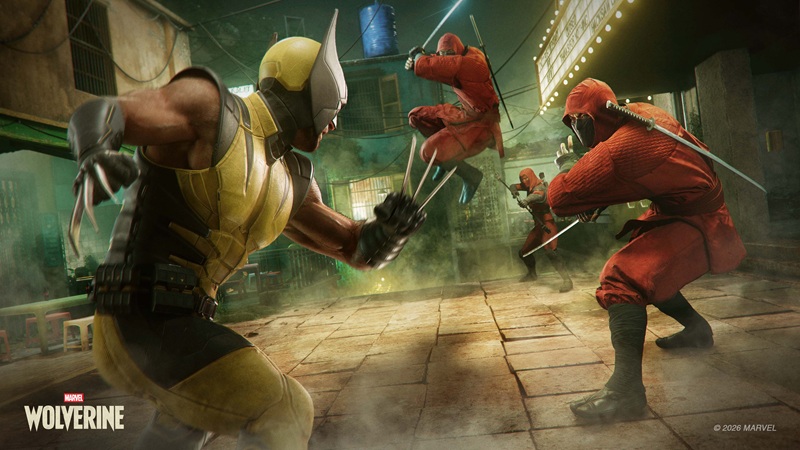
Pleasingly, there is also a good amount of variety in the locations that you’ll get to visit, too. A proper globetrotting adventure, Marvel’s Wolverine takes players everywhere from the frosty climes of Northern Canada, to the fictional Asian city of Madripoor and even to Tokyo. In fact, thanks to the extensive photo research conducted by Insomniac, Tokyo’s infamous Kabukicho district has never looked better (and quite coincidentally I’m sure, proves to be a great place for showing off all of the studio’s refined environmental ray-tracing tech).
In truth though, it’s really in the combat as you would expect that our mutton-chopped slicer of bad dudes truly separates himself from the Marvel superheroes that have come before him. Put simply, this is some of the most viscerally satisfying third-person combat ever and the DualSense makes you feel every strike, slash, disembowelment and dismemberment with grim aplomb as basically every fight seems to result in a string of Mortal Kombat style fatalities, causing the red stuff to just spray absolutely everywhere and coat every surface like some sort of serial killer themed Powerwash Simulator.
Sitting at the heart of Wolverine‘s combat system is the kind of parry and stagger system which shouldn’t really surprise anyone familiar with just about any half-decent third-person melee effort from the last decade or so. The upshot is that while the combat in Marvel’s Wolverine is extremely entertaining, it doesn’t feel as terribly inventive as it perhaps should, not least because with more challenging enemies and boss characters you feel largely locked into that now shop-worn rhythm of parrying and staggering, parrying and staggering, before dealing any real damage. Our boy Logan can also use the environment to his advantage by Sparta kicking enemies off of ledges, dropkicking them through destructible elements of the scenery and even picking them up and charging them onto conveniently sharp tree branches and pipes, resulting in an appropriately gory impalement.
Luckily, there’s more to Wolverine’s combat than just environmental kills, parry and stagger states and the rage system plays a significant part in keeping Logan’s violent pursuits suitably fresh and compelling. Kills and combat actions build rage which in turn allows Logan to enter various states of rage where he can do neat things like engage his Last Stand ability to come back after being taken down and deal additional damage with devastating combo enders where a heavy strike ends a procession of chained together light strikes. The highest tier of the rage system meanwhile allows our hero to essentially immediately execute enemies which have lower health, and when used in a crowd, can effectively be chained from one hapless foe to the next with relative ease.
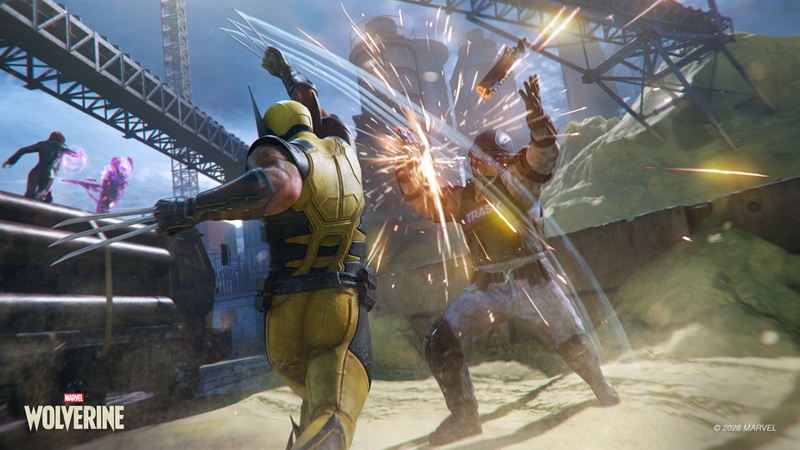
Arguably it’s this rage system really helps to drive home just how authentic Insomniac’s rendition of Wolverine feels, as that sensation of tearing apart one enemy before leaping to the next and then the next just feels utterly and completely satisfying and precisely evokes how Wolverine unleashes his seemingly limitless anger upon his adversaries from the comic book and big screen source materials. Sitting alongside the rage system are a range of cooldown based special abilities such as Tornado Spin, which turns Logan into a spiky whirling dervish for a spell, and Healing Factor which allows our hairy lad to channel his healing ability in order to regenerate health quicker. There are up to four abilities that you can have equipped at any one time from a selection of six or so that each can each be upgraded as you gain levels, so there’s certainly some satisfying, if straightforward, character progression to be had here.
Speaking of progression, Adaptations meanwhile are an additional progression mechanism which buff certain moves and can provide other boons such as gaining additional health for dodging incoming attacks, lessening cooldown of special moves and more on a grid type layout. It’s certainly an enticing system in terms of encouraging you to track down all of the Adaptation points (earned primarily by scooping up wayward bottles of whiskey), but nothing we really haven’t seen before in similar fare. The same also applies to the suit system as well which somewhat echoes its counterpart in the Spider-Man games where you need to collect materials dotted around each map to make them. The difference here however is that there’s an incentive for creating these various cosmetic makeovers for Logan beyond just trophy hunting, as the more suits you create, the higher maximum health you gain as a result. New claws can even be constructed too – but these offer visual distinctions only and don’t confer any other kind of benefit to our clawed protagonist.
The last piece of Wolverine‘s progression puzzle centers around special challenge maps which are activated by walking through Nightmare Doors which spring up in just about every mission. Essentially, these are increasingly difficult challenges which are split between traversal and combat disciplines that when completed allow Logan to recover a particularly painful memory from his past. None of them are especially challenging to be fair, but completing them does provide the dual-hook of nabbing additional Adaptation points while also filling in some of the blanks in regard to Logan’s past.
Believe it or not, despite the outright savagery of the combat in Marvel’s Wolverine, there are also plenty of opportunities for some gnarly stealth takedowns too where ol’ Wolvie can use his heightened senses to pick out the vitals of enemies in the environment and pounce on them for a grisly kill.
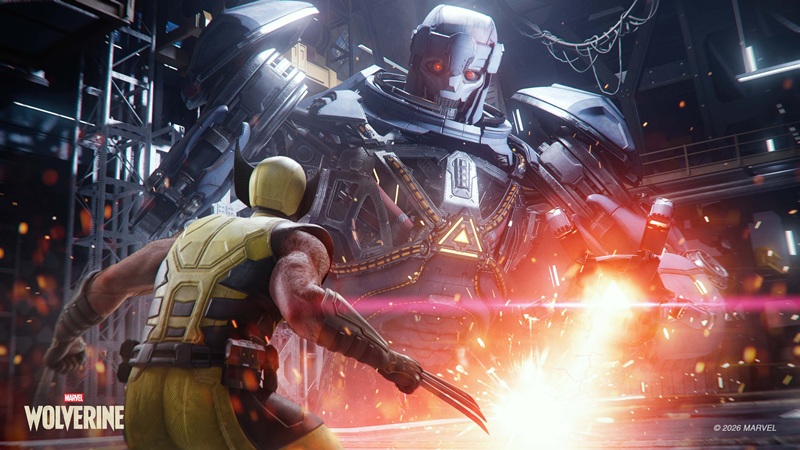
Largely though, whether you want to approach a situation stealthily or via direct confrontation, is entirely up to you. If you’re confident in your abilities to rend flesh mid-fight en masse, there is no reason at all why you should be stealthy. The decision utterly rests with you and to be clear, there are no insta-fail stealth sections in Marvel’s Wolverine – which is nice. Folk who weren’t exactly jazzed with the idea of being forced to play non-superhero characters (I’m looking at you, MJ haters) in the Spider-Man games, will be relieved to know that Wolverine is the sole playable character – from beginning to end.
I would say that where Marvel’s Wolverine trips over its adamantium feet up a little, is when it decides to temporarily drift away from what it does best – namely hugely violent third-person combat – and delve into these oddly constructed awkward motorcycle riding subgames which occasionally link missions together. I say awkward because when Logan hits an oncoming car at full speed, for example, he’ll just grunt and lose some health while the on-rails nature of this particular section pulls him ever forward. It feels quite at odds with the rest of what is an ultra-polished package and quite honestly should have been told by a regular cutscene, or even QTE-driven cutscene, rather than the haphazard and ineffectual experience we have here.
With Naughty Dog having been on the shelf for all of this console generation thus far, various The Last of Us remakes and remasters be damned, Wolverine is yet further proof that Insomniac is heir apparent to the spectacular cinematic first party throne (as if the Spider-Man games weren’t evidence enough of the fact), though clearly it has some work to do with its vehicle chase sequences, which clearly feel much too janky to survive comparison with those ageless sequences glimpsed in Naughty Dog’s enduring opus, Uncharted 4: A Thief’s End.
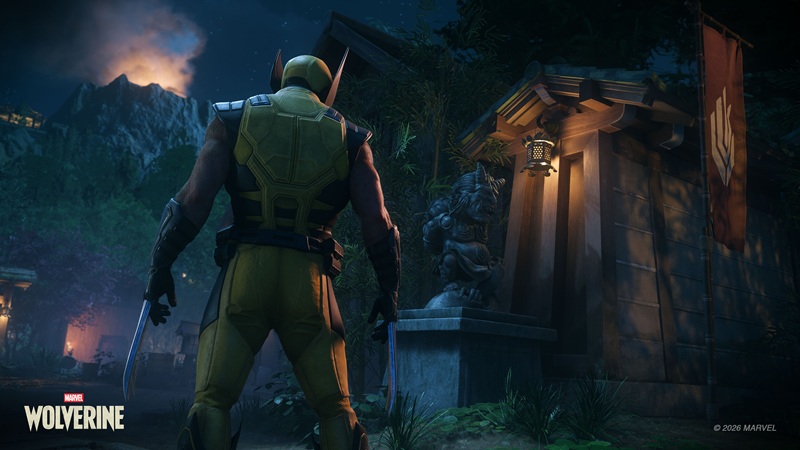
Ultimately, there is this irresistible, frenetic drive to the whole affair that is absolutely in lockstep with its headlining hero. From back to back chase scenes, to constant ambushes, relentless hyperviolent battles and with relatively few slower moments to punctuate it at all, Marvel’s Wolverine feels positively lean and mean when compared to the decidedly massive and slower paced superhero games which come before it.
Jettisoning the open-world shenanigans of its previous comic-book games, the proudly linear violence of Marvel’s Wolverine feels like a refreshing throwback in all the best ways, albeit one that has been lavishly encased in Insomniac Games’ reliably premium audiovisual presentation. Boasting some of the most satisfying, if not especially inventive, third-person combat to come along in ages and a truly propulsive narrative that feels as furious and engaging as its titular hero, this is everything you could want from a game about The Man That Says Bub A Lot.
Marvel’s Wolverine releases exclusively for PS5 on September 15, 2026.
Review code kindly provided by PR.