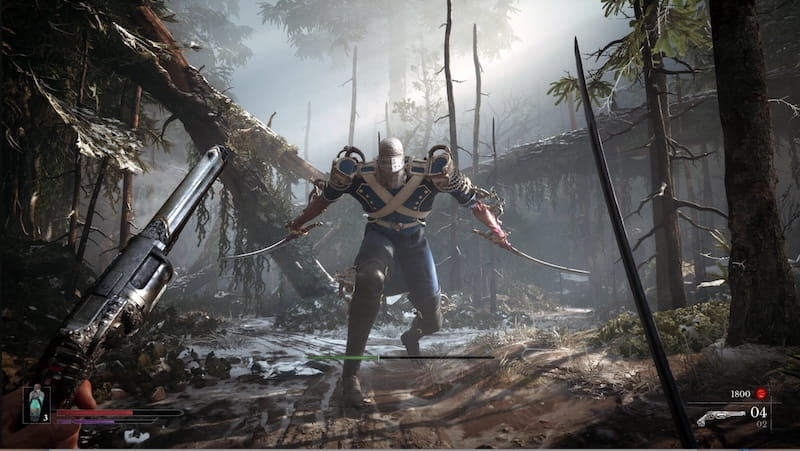
Valor Mortis Review (PS5) – One More Level, the developer of the two Ghostrunner titles, takes a stab at a new genre: soulslike. After my time with Valor Mortis, I can’t help but feel surprised at just how well the team that developed the fast-paced Ghostrunner games managed to put together such a paced and intentional, yet highly enjoyable Metroidvania.
Valor Mortis Review (PS5) – More Metroidvania Than Soulslike, and It’s Better For It
Back From the Dead
William Dowsett joined Napoleon’s Grand Armée under the intention of unifying all of Europe. However, Napoleon took his war across Europe and laid siege, with thousands and thousands of soldiers, William included, dying in its wake. After a time, William resurrects after a mysterious plague, which they named the Crimson Plague, has already taken hold across the continent, warping and corrupting the landscape and its people. With this second change, and the unique powers that came with it, William seeks out to use his second chance to thwart Napoleon once and for all.
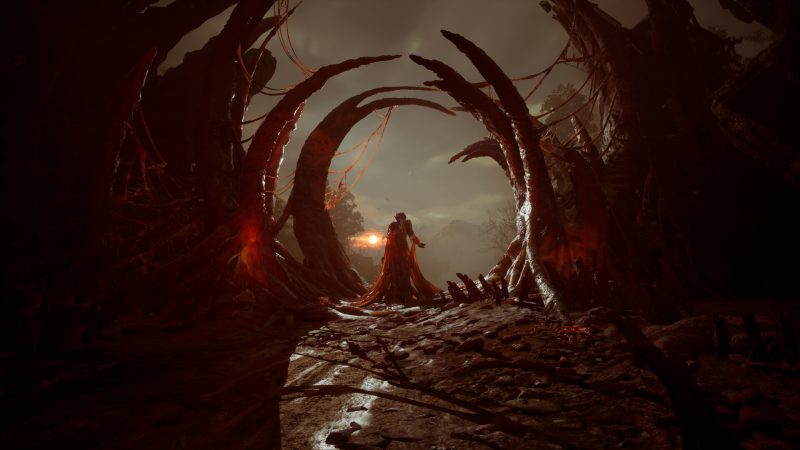
The aesthetic of Valor Mortis is absolutely striking. There’s so much character in everything just based on design and expression alone, even the landscapes and settings. When you enter a zone, you see and feel how and just how badly the plague affected your surroundings and those who once occupied it. Dead carcasses lay bulbous, filled with explosive goo, just waiting for something nearby to trip their hair trigger. Masses stand in the middle of dilapidated, inflamed buildings. It’s all just so palpable. Each new area made me stop and consider the nature of it all. Enemy design also reflects the warped nature of the Crimson Plague.

While most of your everyday enemies will look like the same humanoid affair, the bosses come in all shapes and sizes and truly stand out from the rest. The first boss is especially challenging. This serves as a very early skill check. After that, the bosses are much more approachable during the rest of the game. I don’t think that the bosses necessarily get any easier. It’s more that the early hours of the game don’t quite prepare you for the demands of the first boss fight. After you figure out that first fight, though, the rest of the bosses start to make sense. I wish there was more of a feeling of growth from the boss fights, though. The first boss was really the only one where I felt truly fulfilled once I beat it. Fights later on still feel good and fun, but they lack that same fulfilment that comes from the first fight.
19th Century Metroidvania
Going into Valor Mortis, I thought it was going to feel like a first-person Soulslike. While it has a decent amount of Soulslike in it, it honestly felt more like a 19th Century Metroid Prime game mixed with some Bioshock abilities and then a little Dishonored style sprinkled on top. The game sees you using magical abilities to open pathways and traverse large gaps on top of a more linear approach to the branching paths.
Thankfully, the paths stay fairly linear because the game offers no overhead map of any kind. The only means of quickly returning to different areas lies in using lanterns that you find along the way to fast travel between other lanterns. The linear nature of each branch means that exploring feels so much more like a natural progression than trying to complete an open zone. Elden Ring is its own entertaining beast, but I will always prefer the linear approaches to the Dark Souls franchise.
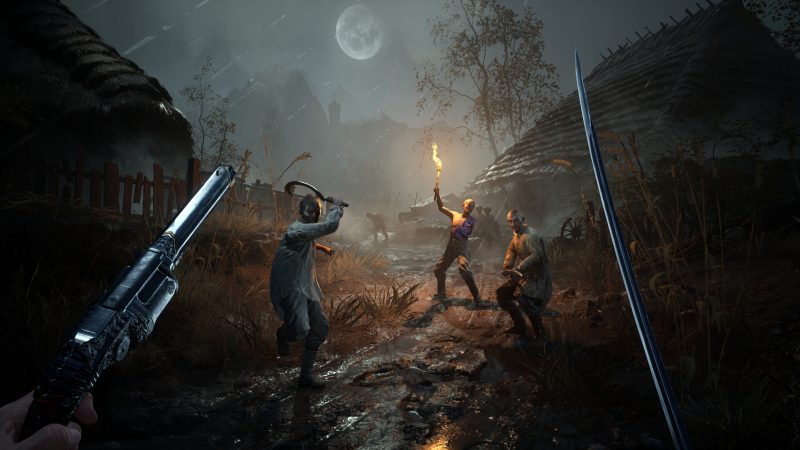
Just that constant feeling of moving forward, even through all of the different ups and downs along the way, makes it all just feel so productive without needing to track it in any way. You still get plenty of little nooks and crannies to explore and treasures to find, but the linear nature helps to make backtracking and progressing that much easier.
Stand Out Among the Rest
Outside of it being just an all-around enjoyable game, I appreciate Valor Mortis for a couple of specific reasons. The first pertains to using the saber in combat: If you try to parry too early but continue to hold the block button, you still block the attack, even though you end up taking that aforementioned temporary damage. Many games do this, like all of the Soulsborne games. Nonetheless, I always appreciate when a game rewards you for perfect timing but also provides you with a means of making due if timing proves problematic.
The second reason I appreciate Valor Mortis is how it handles dying to bosses. Instead of needing to make a long journey to a boss, the game always provides a lantern right at the entrance to each boss. There’s no need to trek back and deal with hordes of enemies or memorizing paths. You get to just focus on learning the fights.
The third reason is that there are literal tons of shortcuts you can unlock along the way. This means that you never need to go super long stretches of time or space in order to reach a lantern. The map design works so well that it often branches back into itself, making it that much easier to return to where you need to go when you die along the way.
En Garde!
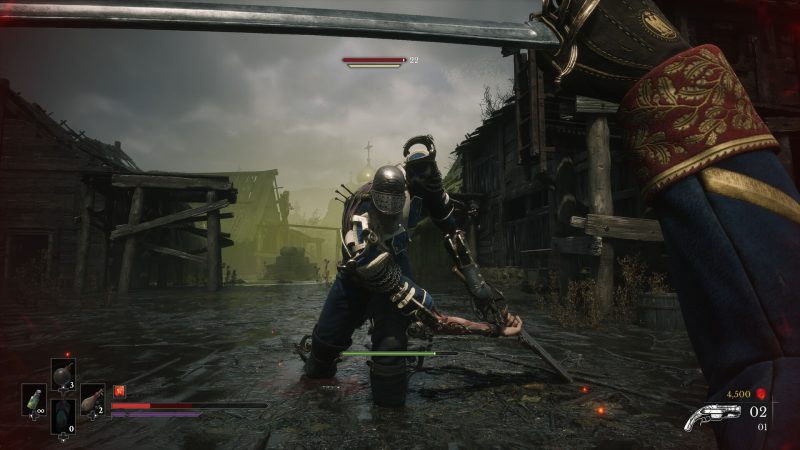
Like it or not, parrying plays a key role in combat. Timing is very specific too. You need to initiate the parry a split second before the attack animation starts in order to successfully parry. You benefit greatly from parrying enemy attacks because it builds up enemy break bars much faster than basic attacks do. There’s even a specific sword you find along the way, a rapier, that enhances parry effects at the cost of losing the ability to block.
Thankfully, you start with a saber, which allows you to block, making it a more universal weapon. To boot, blocking provides its own risk-reward. For each block, you take a portion of health damage that gets allocated as dark red on your health bar. As long as you inflict damage on an opponent before you take a direct hit, you can recover that dark red health bar. If you take a direct hit, then you lose it completely.
To make William more powerful, you use the blood that you get from fights to apply to each skill in the tree. Apply so many skills to a tier, and you unlock the next tier, and so on. This behaves much like the levelling systems in Dark Souls, but it makes you level through increasing specific attributes and skills instead of just increasing specific stats. In Valor Mortis, the bonuses you get from higher levels are things like increased melee damage, increased health and endurance, or even chances to reduce or eliminate using ammunition for your guns.
Leveling Woes
You can also apply different Ambers that you find along the way, which give you specific benefits. The only caveat to that is you can only equip up to 5 of the Ambers, with your level limiting how many you can equip. The levelling system is a bit of a mixed bag for me. In order to maximize what the tree provides for you, you need to get a lot of blood. This wouldn’t be such a big deal if the skill tree didn’t bottleneck you slightly with the different tiers.
When you reach a certain point, you need so much blood for each level that it takes tons and tons of farming to level up. This is normal in any RPG. However, the reason it works in the From Software games is because you can focus on stats necessary for what you want and then everything after that is garnish and gravy.
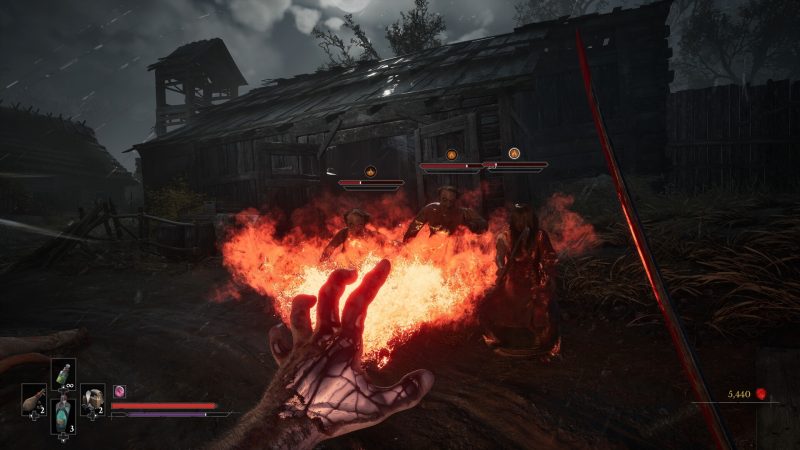
You can just farm out levels to make things that much easier-in fact, there are a couple areas where farming blood is very, very easy and doesn’t take terribly long. Either way, considering the streamlined efforts put into exploration and combat, the level system feels like a step too far. To boot, the returns you get from bosses and fighting enemies doesn’t naturally lead you to maxing out your level. It doesn’t hinder the game or your ability to play it, but it leaves a lot of potential on the table that you wouldn’t necessarily go for in other games like it.
Valor Mortis Places Itself Among Metroidvania Greats
Valor Mortis manages to combine some of the best features from Metroid, Castlevania, Dark Souls, Bioshock, and even Dishonored all into one addicting package. Combat feels great, and exploration keeps you moving forward thanks to a more linear approach with plenty of branching paths to discover. There’s a learning curve to the parry system that combat relies on, but plenty of games in these genres have demanded more of us than Valor Mortis does. Skill progression loses focus in later levels, missing a great deal of potential still in the skill tree. Boss fights also lack a great deal of challenge, with the first one proving the most challenging. Nonetheless, Valor Mortis is a slam dunk purchase at $50.
Valor Mortis is out now on PS5.
Review code kindly provided by PR.