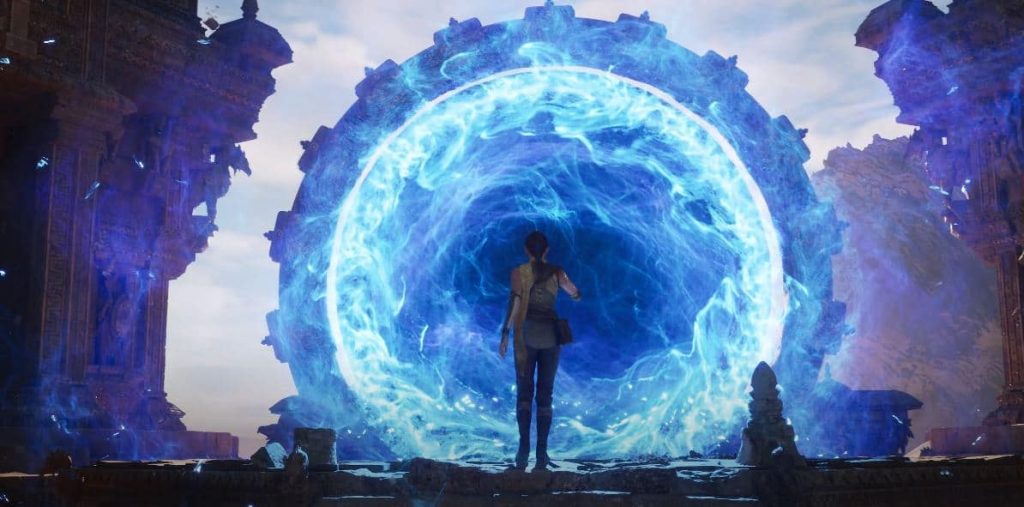
With the next generation of consoles marching ever closer to release later this year, we’re finally getting a look at what graphical feats they can accomplish. While many gamers were left wanting by some of Microsoft’s gameplay-less gameplay trailers, it’s safe to say that just as many were left breathless following the reveal of the PS5 Unreal Engine 5 demo.
Though just a demo, UE5 revealed a level of fidelity that, so far, no gaming platform has offered. Running in real-time, this demo showcased poly-counts, real-time shadows, and animation systems which set it far above anything achieved by a game engine so far. So advanced is UE, in fact, that it has been used for creating effects in shows like The Mandalorian.
Our question, however, is where do we draw the line of when graphics are good enough? There are many different components to this question, and while we would never want to imply that we should stop chasing improvement, realities of the gaming business mean that better graphics can be an increasingly dangerous or undesirable pursuit.
Production Costs
Despite inflation, video games have maintained a stable cost on the upper-tier for decades. While this is great for player’s wallets, it’s not exactly the healthiest situation for developers or publishers. Team size has ballooned on major games, per this article from complex.com, and combined with the need to ship more units to break even, this can create a difficult balancing point.
Graphics play an enormous part in this equation, as for many, the attention which goes into graphics and animation can reflect the attention put into the rest of the game. In striving to be the best, however, the constant raising of the bar can make what were moderately successful games unsafe bets for future entries.
In short, some games cannot succeed unless they ship millions of units, and publishers can see graphics as the most likely avenue to find success. As series like Dead Space experienced, noted at cinemablend.com, sometimes the answer is not to constantly swing for the fences.
Gameplay Versus Appearance
The other factor, and the one which we believe needs more attention, is that as a basis, we believe gameplay is far more important than graphics. Of course, both are great, but if we have to choose, we’d go for better gameplay over shinier reflections or higher resolution textures any day of the week.
This is hardly just a matter of personal preference either, as other elements of the gaming industry illustrate similar ideals. Take Stardew Valley, for example. Made largely by one person, this game has simple and charming graphics, yet as tweaktown.com reports, has shipped over 10 million copies so far. This is a number which most major developers with hundreds of staff couldn’t hope to match.
For a more long-standing example, we could look to the world of betting and online casino gaming, from websites such as those listed at betpal.com. While these websites also offer bonuses like deposit matches and free spins for sports bets and slots, the actual games on these sites require only minor evolution. Despite relatively simplistic graphics and displays compared to AAA gaming alternatives, interest on these fronts has still only increased.
Finding the answer on where exactly the line of graphics should be drawn is a difficult one, and exists more as a hypothetical than anything else. In reality, every developer and publisher has to find their own answer and live with the results. There is hope, however, for both those who like better graphics and those who lean on design over raw output. Photorealism is closer than ever before, and the success of the indie market means that modern gaming, in all its forms, has room enough for everyone.