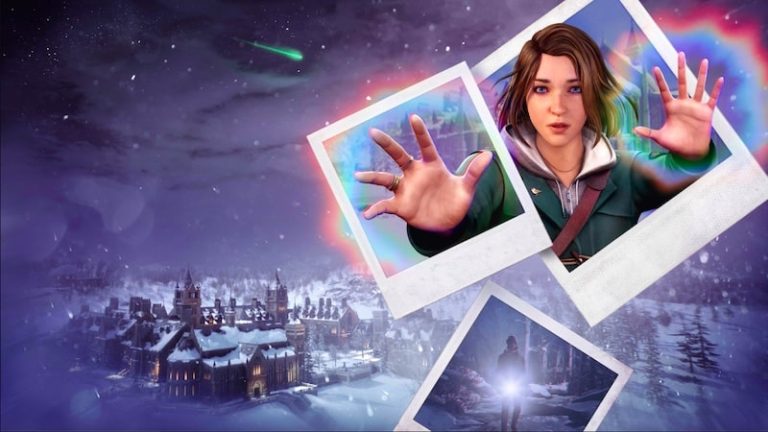
It has been roughly two weeks since I got to play and review Deck Nine‘s latest title, Life is Strange: Double Exposure. A game and series known for its diverse and interesting characters, intriguing stories, and of course, its killer music. It’s more fair to say that I thoroughly enjoyed my time with Double Exposure and experiencing Max’s return and her attempts to run from the troubles of the past, only to face new but familiar troubles in the present.
Given my love for the franchise and my curiosity regarding the creative process, it was a surprise and delight when I got the opportunity to ask game director Jonathan Stauder and narrative director Felice Kuan a few questions.
Interview With Life is Strange: Double Exposure’s Game And Narrative Directors – Discussing The Craft Behind The Beloved Adventure Series With Deck Nine Games
PSU: What was the thought process and deciding factor in bringing Max back as the main protagonist? As until now; we’ve always played as different characters.
Jonathan: These games start with a bit of a “chicken-or-egg” situation in which we explore various supernatural powers and various character arcs for the protagonist. Neither the power or the character necessarily come first, but do eventually combine to form the start of our development process. In this case, we realized that the power to shift between two timelines would allow a player to spend quite a bit of time examining the two different outcomes of a difficult choice. We then realized that it provided a wonderful gameplay hook to explore what happened to Max in the years since the first game.
PSU: I really enjoyed the parallels drawn to the first Life is Strange throughout the game. Caledon felt familiar, yet distinct. What were the inspirations for Caledon? and how did you land on Vermont as the setting for Double Exposure?
Felice: I’m glad that resonated! Both Caledon and the town of Lakeport, Vermont were created to be a sort of “opposite mirror” to Blackwell and Arcadia Bay; Max travels literally across the country, trying to avoid her past, but she still ends up at an art school in a small town near the water in the northern US. We also wanted to create a campus in winter, something beautiful yet also stagnant and silent, echoing Max’s emotional state.
PSU: With the fracturing of timelines or parallel universes, are there more than the two we experience in Double Exposure? And is that something the series might explore going forward?
Jonathan: If we find a character arc and theme that benefits from exploring multiple timelines, as we did with Double Exposure, then that is certainly a possibility. Every time the player makes a choice, they are determining their own timeline of events for Max. All of those possible timelines coexist because no single playthrough is a “correct” playthrough. If we do anything with that in the future remains to be seen.
PSU: It might be like picking a favorite child, but who are the team’s favorite characters from Double Exposure, and why is it Moses?
Felice: (lol) One of the things we’re proudest of is creating a cast of smart, driven, diverse characters that screw up and make questionable choices. It’s their flaws and desires that make these characters most interesting to us, and we’ve loved writing those moments where even Moses shows some edge. (Fun fact: Loretta was originally created as someone struggling with confidence who looked up to Lucas, but she wasn’t standing out. As soon as she became the shameless snoop that she is in Double Exposure, everyone loved her – and it made her supportive moments with Reggie even more meaningful.)
PSU: It’s such a beautiful game, and the performance capture really takes the whole experience up a notch. Did this improvement change the way you approached the development of Double Exposure?
Jonathan: On True Colors, which was our first full performance capture project, the team realized that the fidelity of the facial performances had taken such a huge leap forward that characters could now say something with simply the expression on their face, as opposed to always having to say something with a line of dialogue. Taking that lesson forward into Double Exposure, we knew we could rely on our actors and our animation team to convey as much with a character’s face as with their voice. That becomes very important in dialogue based gameplay because we rely on a character’s reaction to the player’s choices to make that gameplay feel rewarding.
PSU: Do you work closely with composers to match the tone of the games? because they’re always so spot on. How does that process work?
Jonathan: We always work closely with Feel For Music, who have sourced licensed songs and composed for the Life is Strange franchise ever since the first game. For Double Exposure, we relied on original songs and a score composed specifically for this game. We did that because we wanted the music to express specific themes for Max and Safi, then demonstrate how the two change each other to become something different by the end of the story. We write briefs to describe the scene we’re intending a song to fit into and then stay in constant contact with our partners to keep them up to date as things evolve during development. Often when a song is delivered, we will revisit the cinematic or gameplay it is meant to go with and make adjustments so that the song fits as perfectly as possible.
PSU: What were some of the challenges the team dealt with during the development of Double Exposure?
Felice: Many of the usual narrative challenges were increased by having two timelines. For example, dividing up screen time between characters is always a balancing act; if we want an additional heartfelt cinematic conversation, we have to steal those minutes from a different character, but in Double Exposure, each character was stealing minutes from their own counterpart as well! Similarly, creating consequences within budget for player choice is always a challenge, but here across two timelines we had essentially half the real estate to show the impact of the player’s actions.
Jonathan: We also had many technical challenges. Both timelines are available to the player simultaneously, so that means we always needed both versions of the a level and all of the non-player characters within loaded at the same time. We had to develop certain guidelines for how complex levels could get as a result. Bigger levels needed to have fewer unique differences, while smaller levels could have more differences. We had to share the budget for non-playable characters between both timelines, so 40 characters in the Snapping Turtle would need to be split 25 in the living timeline and 15 in the dead timeline. Otherwise, the frame rate would drop too much.
PSU: What is next for Deck Nine Games?
Jonathan: If you’ve finished Double Exposure, there might be a few hints as to what is next. Hopefully it won’t be too long before we can be less cryptic!
Lastly, I just want to say thank you and the whole team for the interview but more importantly; creating these games that mean a lot to me, and continue to resonate. Life is Strange has become one of my favorite franchises, one that I’ve grown up with, and I can’t wait to see what comes next.
Thank you so much!
Thanks again to both Jonathan Stauder and Felice Kuan for their time and their generous answers in this interview, and to Maddie Chase their help in making this interview possible.
Life is Strange: Double Exposure is available right now on PS5.