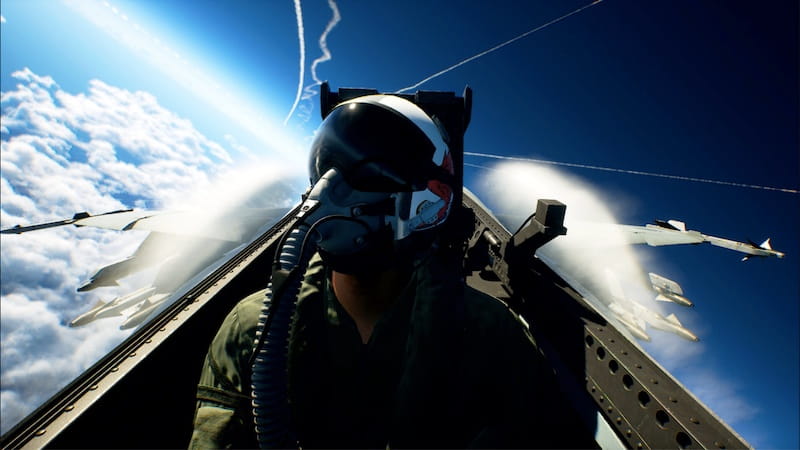
Ace Combat 8: Wings of Theve PS5 Review. Flying high from both the critical and sustained commercial success of 2019’s Skies Unknown, the Ace Combat series has never been in such rude health. Some seven years and a belated PlayStation 5 debut later, the 8th mainline entry has arrived to a newfound audience and with that comes heightened expectations.
And despite a storied history and countless spinoffs to boot, Wings of Theve is evidence more than enough that there is life in the old dog yet.
Ace Combat 8: Wings of Theve PS5 Review – The Ace In The Hole
An Expanded Narrative Ambition
One of the main ways in which Wings of Theve has deviated from the trodden path is by way of its narrative presentation, which is now replete with cutscenes, exposition, and intrigue. Set some ten years after Skies Unknown’s depiction of the Lighthouse War and against the backdrop of a fresh invasion by the Republic of Sotoa on the territory of Central Usea, you covertly take up the mantle of the ‘Wings of Theve,’ a nom de guerre of an ace pilot recently killed in action.
Aware of the name’s notoriety and its impact on the morale of the population, command issues the order to retain it as you lead your squadron into a new theatre of war. This renewed focus on narrative does work generally speaking, as it goes a way to underlining the scale of the conflict which unfurls throughout the campaign.
Some light criticism can be levelled at earlier pacing of the cutscenes, mind, which sometimes feel at odds with the kinetic nature of the pre- and post-mission briefs, not to mention the trite way in which the game introduces interactivity by making use of momentary QTE button prompts. These pop up at numerous times and often for the sake of simply reaffirming an action your character is expected to make based on the context, be it a movement or a handshake.
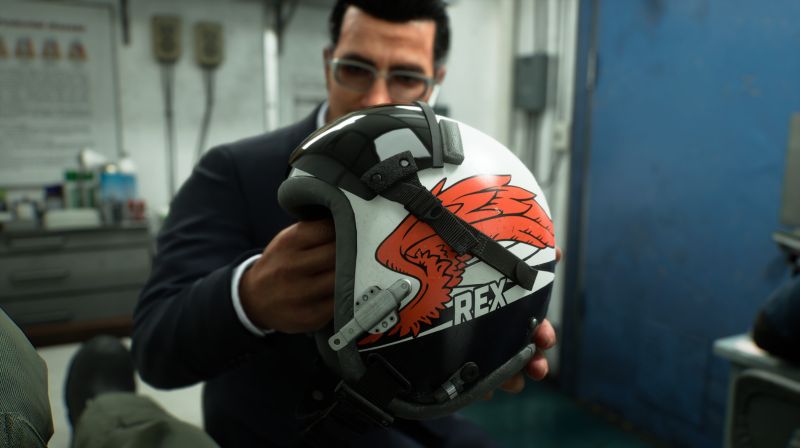
The narrative does take some swings insofar as to where the squadron ends up, some of which stretches the bounds of what you typically expect to see in an arcade flight jaunt. Alas, these elements can only ever be wedded to button prompts you could say, given Bandai Namco is naturally hamstrung by what they can reflect that in gameplay terms without it being an entirely different game where you go full James Bond. We’ll leave that to IO Interactive for the time being.
It is commendable to take a punt and break out from the confines somewhat, and if nothing else, it serves to make you care that little bit more about your teammates and the stakes at play on a more granular level. From a story perspective, there is a natural escalation and plenty of dramatics along the way, and though it veers into kitsch territory, what can be certain is that a lot of things get blown up and you’ll be doing something tantamount to ballet in the air before long.
What’s more, there is an intended throughline in gameplay terms with the returning functionality of issuing commands to your wingmen during battles, split across directional pad inputs covering forward and dispersed assaults, alongside cover formation and use of special weaponry. Your mileage will vary in terms of how effective they manage to be in the skirmishes themselves.
The other narrative inclusion of answering questions by either ‘yes’ or ‘no’ during missions also feels, at best, relatively throwaway, but at worst gives rise to some off-kilter exchanges. There’s a moment late in the game where you’re solicited to provide advice to a pilot after an incident has left them despondent and unable to heed advice from their fellow pilots. As a silent protagonist you’re somewhat limited when it comes to scenarios such as this, but she is nonetheless calmed down by whatever can be inferred to have been said.
Story Interactivity Is Hit And Miss
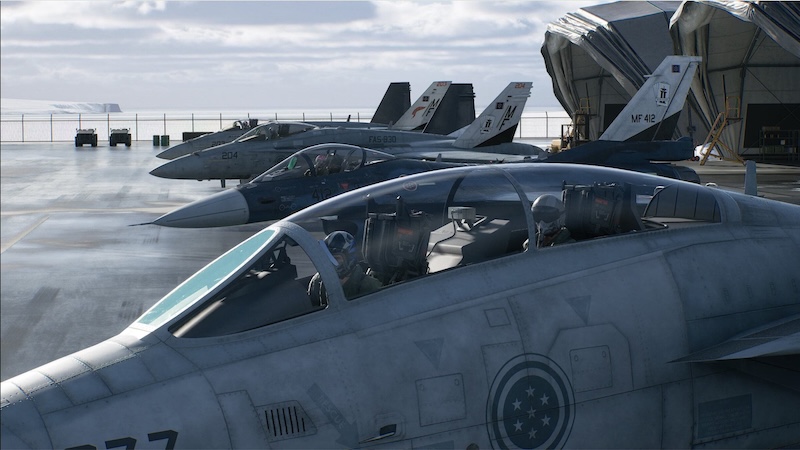
The meat and potatoes of any Ace Combat entry, however, is in its mission structure and gameplay, and this is where Wings of Theve soars with consummate ease. Retaining the series’ typical pre-mission structure of displaying WarGames-style grids which detail your aerial, ground, and naval targets and the planned attack run, the natural ebb and flow of the missions which complement the narrative are where everything truly clicks, as you’ll find a near-unrivalled balance of mechanical depth and pick-up-and-play controls.
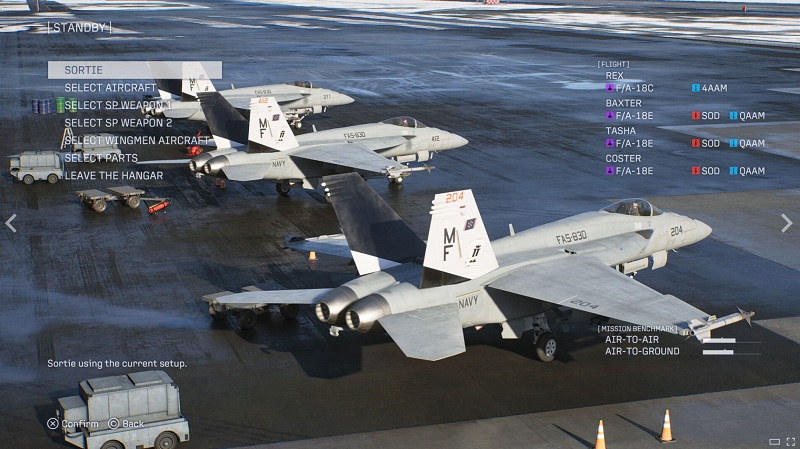
Before jumping into the cockpit, you have to first select what you’re going to fly in, the main qualifier of which is the correct ratio of air-to-air and air-to-ground capabilities for the mission at hand, which is primarily decided by the aircraft selected for your wingmen – be it manually or automatically.
In terms of types, you have blue, which are fighter aircraft that thrive in air-to-air combat; red, which focuses on ground and naval targets – perfect for those massive payloads – purple, your trusted all-rounder, and green, which was a feature of Skies Unknown’s downloadable content suite and brings electronic warfare to the table by way of passive buffs, such as improved allied missiles and countermeasures against enemy fleets.
Outside of the light mission restrictions surrounding missile capabilities, there is nothing to necessarily compel you into a choice of aircraft type for yourself outside of personal preference, particularly as your wingmen can make up the difference when required. With the increased focus on communicating orders to squad mates this time around, there is a little more incentive into putting some thought in the composition of your team loadout. Whether they listen in an effective way when out in the battlefield is another matter entirely, however.
Each aircraft type feels similar enough, with any nuance likely coming in clutch for score-chasing and high-level play on mission re-runs. Where tangible change does arrive is with the return of the aircraft tree, where the upgrades and new aircraft can really give some bang for your buck.
Customization Remains Key
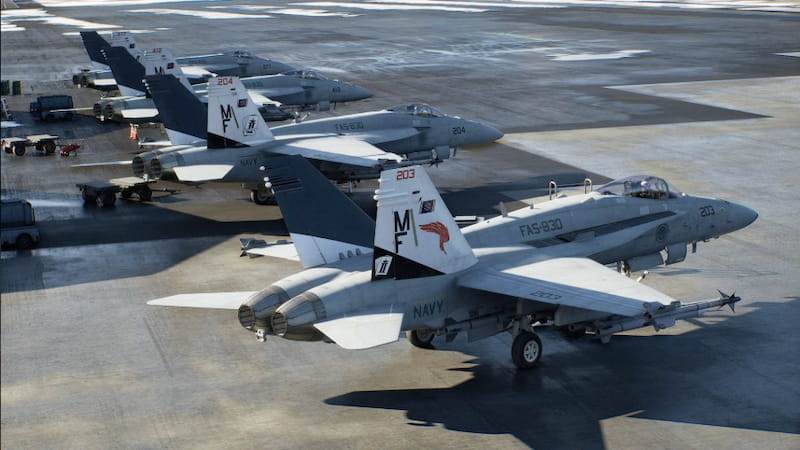
Following a similar trend of colour-coding and categorization, the game’s parts are split into three, covering body, arms, and miscellaneous. The first is more handling and manoeuvre-based while arms can reduce cooldown times and increase the potency of missiles. Lastly, the miscellaneous is reserved for outside factors, such as reduced effects from weather or terrain damage.
Each aircraft purchased has a set number of slots for each of the three upgrade types, meaning you’ll have to pick and choose what makes the most sense for your next skirmish. These unlocks – particularly the later aircraft – represent big changes in handling, manoeuvrability, and resilience, and can turn the tide in later dogfights with Shadow Squadron. All of these upgrades are paid for using MRP, which is awarded upon completion of a mission, with several bonuses available depending on how much damage you inflicted, how quickly you did the run, amongst others.
Though the campaign cycles through the usual mix of light skirmishes, dog fights, escort missions and stealth, it’s done so with a level of refinement that sets it apart from Skies Unknown. There’s also the matter of scale, with several structural targets that wouldn’t look out of place in prior Metal Gear Solids.
The difference found is in the detail more so, however, with smart choices made that have a cumulative impact on how each mission fairs. For instance, with the new debris system and chip damage, downed enemy aircraft can materially damage structures on the ground, while the introduction of chain destruction means that targeting fuel depots and such can amplify the destruction to opposing fleets. This makes sense with the reintroduction of the more expansive annihilation battle-type missions into the main game which offer flexibility in how you tackle the more open-ended affairs, the scale of which are often impressive to behold.
Annihilation Missions Come To The Fore
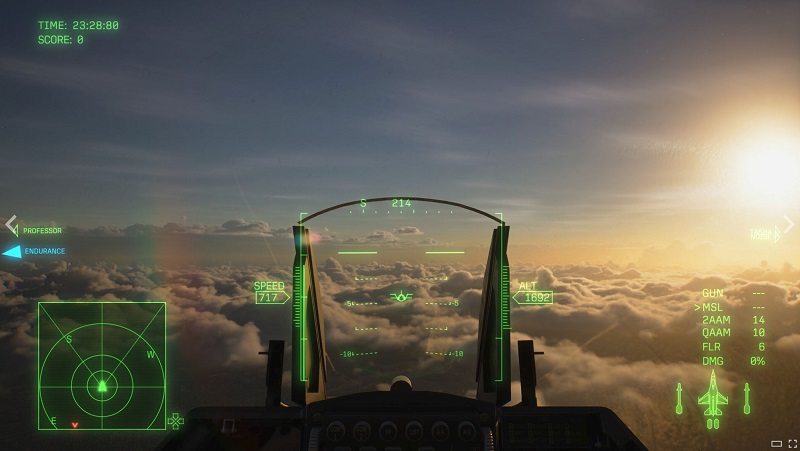
Which is to say that graphically speaking, this is a superb effort also, with tight performance and all the bells and whistles you would expect from the series’ first outing on PlayStation 5. The upgraded cloud tech and use of haptic feedback are particularly noteworthy, and with the more dynamic weather comes the trade-off of accumulating dirt on your aircraft, which you can clean prior to take-off. Does it have a material impact? Who knows, but it’s nice to see your aircraft shine.
Bookending some of the missions are both the refuelling and landing mini-games, which can still be skipped. A tacit acknowledgement – specifically for the former – that they don’t amount to much more than some slight busywork. That’s not entirely fair for the latter, as in-mission landings can provide a useful reprieve from the action and a way of restocking munitions which comes recommended when tackling some of the longer annihilation-type missions.
It’s worth noting also that this is a meaty campaign weighing in at roughly twenty hours, across 30 missions, and there’s just enough variety to justify its runtime. It knows when to switch up gameplay considerations, such as the radar use, and manages to maintain a level of quality with occasional highs to boot.
Outside of the campaign, flight aficionados can expect an array of supplemental options, with free flight versions of each mission, customization options after the fact, and a data and replay viewer that even goes as far as letting you change the hanger and time of day in which to view each of your aircraft. It’s just a shame there isn’t any PS VR2 support. Yet, at least.
The Sharpest Ace Combat To Date
As online play is not currently active we haven’t had a chance to dive into what represents big changes for the series, including the Air Base, a communal hub for up to 100 players, along with co-op PvE and PvE, and an accompanying bounty system called ‘threat level’ which increases your stature the more successful you are but makes you a more valuable target for other players as a result.
When it’s all said and done there remains little better than turning on a dime right into the sights of an onrushing enemy pilot and tapping for the release of a locked-on missile before sailing through the resulting debris. Smart additions, including the debris and chain reaction systems, coupled with the more realistic weather effects and sense of scale make it so that Ace Combat 8: Wings of Theve is one such outing that resoundingly sticks its landing.
https://youtu.be/q6XDIDXsoWo?si=C9bEiO-Q41MoybLF