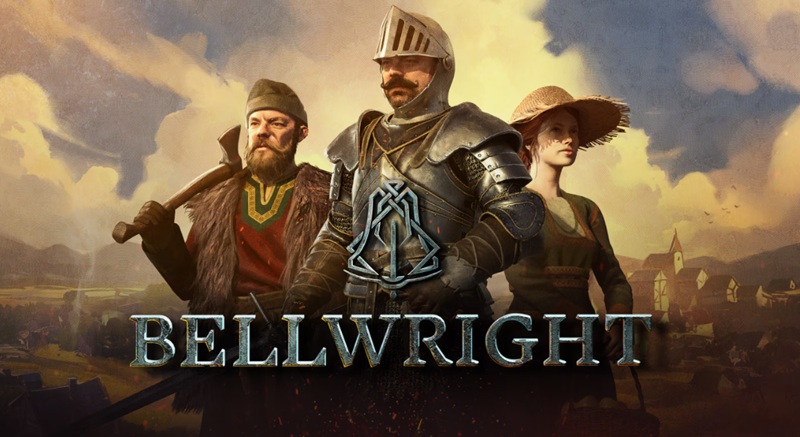
Bellwright PS5 Review. Developer Donkey Crew is kind of a cool team to learn about. This group of developers started their careers by simply creating mods for the game Mount & Blade, which led them into game development. Does this development team manage to put together a complete package with Bellwright? Read on!
Bellwright Review (PS5) – Fun Concepts Marred By Significant Limitations That Are Hard to Ignore
Starting from Scratch
The opening of the game sees you wrongly accused by the royal family of killing the prince of your kingdom. After being exiled, you eventually return to your homeland to establish yourself once again. This time, though, you are motivated to take revenge on the corruption in the kingdom. In order to do that, you must amass a following and build your own empire to strike back at the king and crown.
The game immediately gets you on task by sending you to the nearby village to build your following. Here, you find your first taste of what the game asks of you: Survive until you thrive. The neighboring village offers you quests to get you started, which help to set the tone for the rest of the game as well. In order to succeed, you need to not only survive and thrive, but you need to recruit people to your cause.
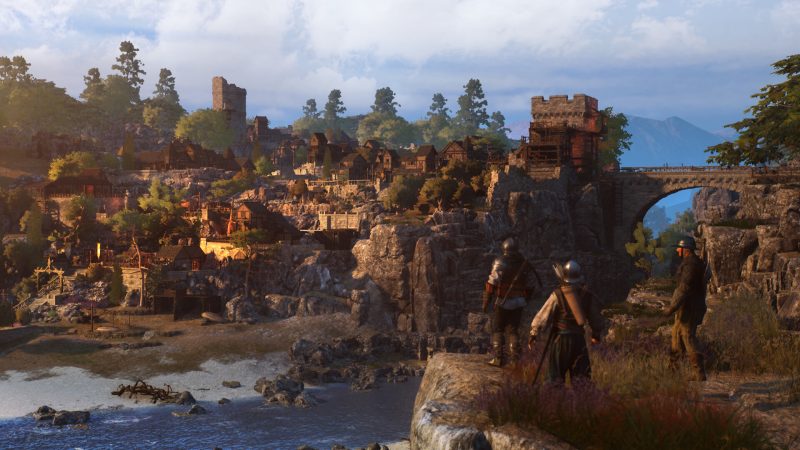
You then assign tasks to each of your recruits, such as fighting or gathering, and they go about their business on their own. This ends up as a part of the greater gameplay experience in Bellwright: maintaining systems, gathering resources, and building your camp into a city. Most of the actual development of your properties falls to you while you ask your villagers to hunt and gather for you.
Customizable Experience
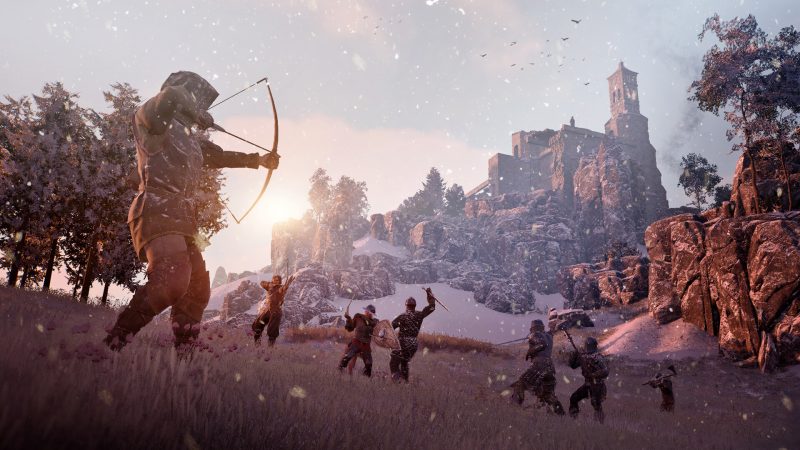
During this time, you need to worry about getting raided by enemies as well as keeping everyone fed and housed. The nice thing about Bellwright comes in two forms. First, if you don’t want to deal with raids or want to lower their frequencies (or increase them, for that matter), you can change that option in game settings. In fact, the game presents you with a series of settings before you start your campaign that let you customize it. This allows you to focus more on building and managing your properties.
The second nice thing is that you can also adjust how the survival elements affect your gameplay experience. You can raise or lower things like villager fatigue or need for food or even the amount of damage that they receive and take. You don’t really start feeling a lot of benefits of this until your village starts growing, but it pays dividends simply because you don’t need to worry about those things as much. If you want, though, you can increase those sliders and make the experience as challenging as you wish.
One of the biggest issues with Bellwright is where the game allows you to place buildings. There can be nothing in the way but the game still will not let you build anything. You also cannot build on a slope. If neighboring villages didn’t have foundations for properties built on hills, then I wouldn’t be so aggravated by this limitation. Building foundations exist in the game but not for you. Combine this with not being able to place structures reasonably wherever you want, and the game ends up limiting your potential.
Stacking Problems
Another oddity is in villager behaviors. No matter what task you set for them, they sometimes wander off for great distances and get lost. Even worse yet, they get themselves killed. What makes these situations worse is that the only way to change a villager’s assignment is to interact with the villager directly. There is no single menu for managing all of your villagers. So, if someone runs off on a random task, you face the decision of running after them or letting them face the consequences of their actions.
Early on, this can prove detrimental simply because you don’t have many recruits. What sucks even more is that named villagers involved in quests can die. This means that quests can be failed simply because the people involved in the quest can die. When this happens, the quests don’t update or fail. They just stay in your quest log, waiting perpetually for you to finish the quest.
Console optimization is also very limited. Menus require either a lot of mouse scrolling with a joystick or a lot of bouncing around with the D-Pad. There are no other ways around it. Thankfully, it’s not terribly hard to get used to, but knowing that still doesn’t diminish the tedium that comes with menu navigation. It might have also helped if there had been at least a standardization of menus across the board, but that’s not the case either.
The last thing I want to mention is the amount of time it takes to do things in Bellwright. Cutting down a tree can take upwards of nine swings of your axe. Doing this each time adds up a lot of dead play time. This animation never improves. The amount of swings on a tree or ore node depends on the integrity of the target itself and nothing to do with skills or stats (neither of which you have, by the way). Meanwhile, crafting the skeleton of a building takes seconds and applying the components to the building only takes seconds. This is still a game, but the way the game takes up your time is disingenuous to what you end up doing.
A Fun Experience With Cumbersome Controls
Bellwright works in a lot of ways. In particular, it allows you to customize your gameplay experience to better cater to your abilities. Plus, being able to just dig into a map and make it your own is a super cool idea. However, the problems embedded in the game’s core make it a rather hard pill to swallow. Villager behavior, disproportionate time management, cumbersome building limitations, and unoptimized menu systems bring the game experience down. There’s a fun game here, but you need to sift through a lot of frustrating limitations to get to that fun game.
Review code kindly provided by publisher