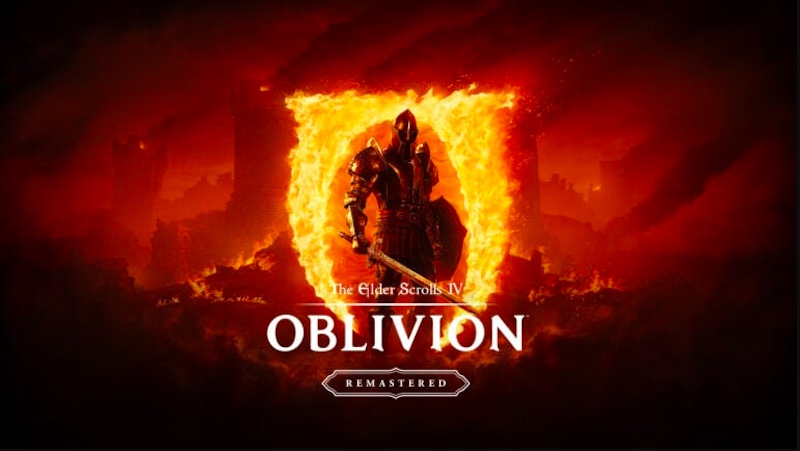
The Elder Scrolls IV: Oblivion Remastered PS5 Review. A good remastered game is like a decadent dessert: You don’t need it, but it definitely hits the spot when you crave it. That very logic definitely applies to Elder Scrolls IV: Oblivion Remastered. It brings back exactly what you want but also gives you some additional flares and upscaling that it feels both new and familiar. It’s not perfect, but you still cannot go wrong with diving into this updated version of Oblivion.
Elder Scrolls IV: Oblivion Remastered Review (PS5) – Beautifying Oblivion While Keeping Its Soul (Gem)
Going Back to Tamriel
You take control of your created character in a jail cell in Cyrodiil. In those first few moments, guards enter your cell with Emperor Uriel Septim in tow (voiced by the wonderful Sir Patrick Stewart, I might add). Suddenly, the emperor recognizes you from dreams he’s had about the upcoming events of the game. Another coincidence is that the secret exit out of the castle is located in your jail cell. This gives you a means of escape.
Through the passage, several enemies attack the emperor. In this, the emperor confides in you due to his visions. He asks that you take the Amulet of Kings from him and take it to a compatriot. With this, you can find the bastard child of the emperor, who now stands as the last option to follow the bloodline and rule the kingdom. In the last attack, the enemies succeed in slaying the emperor, leaving you with a hefty task of saving the kingdom. Off you go, then, to find the heir to the throne.
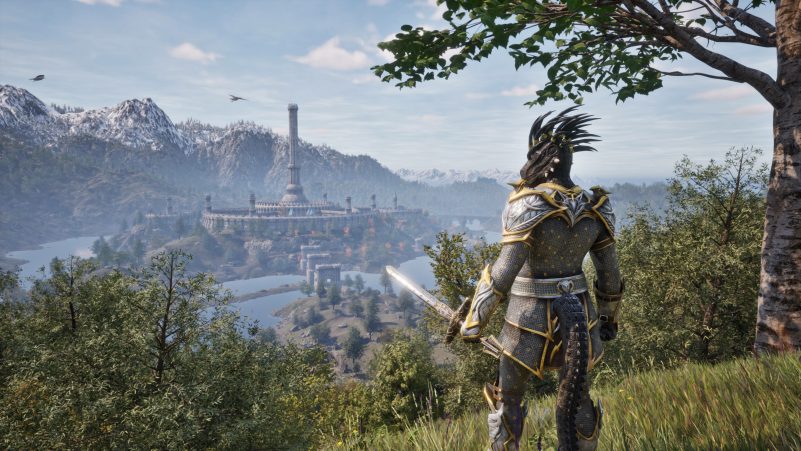
Elder Scroll IV: Oblivion Remastered reminded me of why I bounced off Skyrim so many times: Oblivion feels more enjoyable to explore. Granted, I played the original Oblivion well over a decade ago. Also, I fully realize that, at the time, the quirks of Oblivion’s combat and gameplay set the standard for me when it comes to Elder Scrolls games simply because I played Oblivion before the other Elder Scrolls games.
With that said, going back into Tamriel just feels good. The world itself is much more interesting to explore than in Skyrim. It’s not a complicated experience by any means, but it provides varied locales and dungeons that make each experience unique and digestible. Plus, this version of Tamriel is a bit smaller with more things contained within it. So, there’s less empty space to trudge through in Oblivion than there is in Skyrim. Plus, the story is much more engaging.
Quirky Leveling
Leveling in Oblivion is unique but not everyone thinks it’s unique in a good way. This is because the enemies you encounter keep levels based relatively on what character level you are when you encounter them. For instance, harder enemies stay several levels higher than your level. Essentially, while you get stronger, so do your enemies. This also means that enemies have access to more abilities and spells than they do at lower levels. This helps to maintain a sense of challenge, which means you don’t get too overpowered relative to your enemies. This part of leveling may not be everyone’s cup of tea.
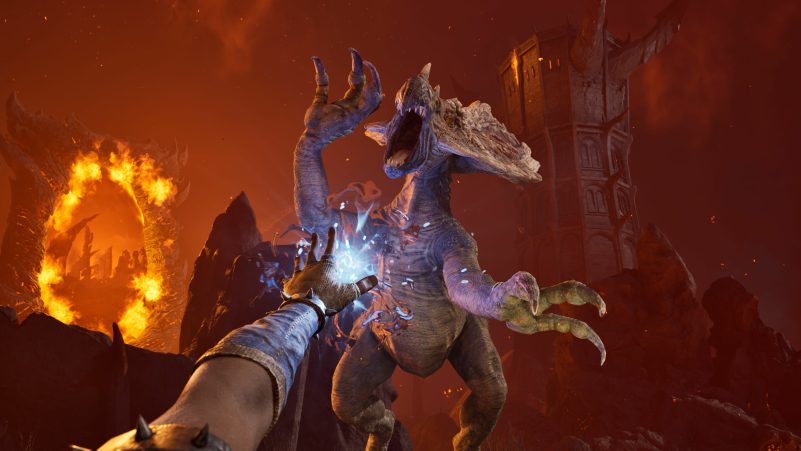
The biggest strength of any Elder Scrolls game is how you can level your attributes by doing things that attribute to them. For instance, level up your archery by just using a bow and arrow or improve your armor level by getting hit a lot. This works for everything, and these skills level up automatically when their individual experience bars fill up. Crouch and walk around someone without them seeing you, and you level up your stealth skill.
While the gained EXP contributes to your overall experience bar, all of these skills level up outside of your overall character level. With character level, you need to sleep in-game in order to officially level up. Doing so grants you points, which you then spend on raw stats, like strength and dexterity. Putting points into strength increases the damage you do with melee attacks. At the same time, using melee attacks also increases the damage you do by virtue of leveling up that skill.
Put these two leveling systems together, and you have an odd sense of control if you know how to manipulate them. If you decide to stay at a low level, you can max out your skills and practically do what you want without much resistance. To add to this, Oblivion also includes a difficulty slider, giving you even more control over your experience. If you wish, scale everything up to 11 and sleep every chance you get to keep making enemies stronger as you develop. Conversely, stay at a low level and play on Novice difficulty to feel like an unstoppable force from beginning to end.
Quality of Life Changes
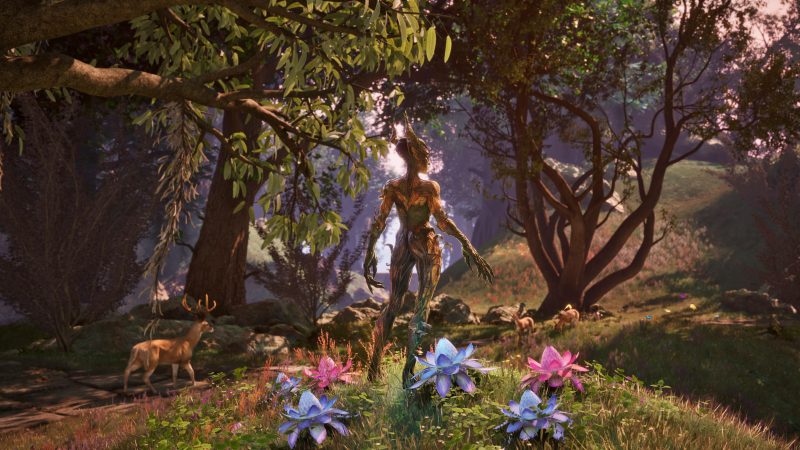
While the Oblivion Remaster is fundamentally still the same game, the changes made to it help elevate an already solid experience. Visually, animations feel far less basic. Yes, character and creature models are still rather stiff, but rather like a hundred characters being voiced by the same person, that’s just part of the charm of the Oblivion experience.
Some of the biggest things for me were the little things. Right away, I noticed the changes when gathering herbs. You don’t need to have your cursor exactly on the plant anymore. The game provides an interaction space just around the plant to make it easier to target them. Talk about a wonderful change.
Also, plants don’t just disappear anymore when you grab them. There’s a short animation where the plants swell and then shrink out of existence when you pick them up. It’s quite cool, I think, and it kept me looking for more herbs to pick. After years of picking herbs in the Elder Scrolls games just for the sake of alchemy, it’s nice to have another little visual flare, and making the actual act of picking flowers easier is a more-than-welcome addition.
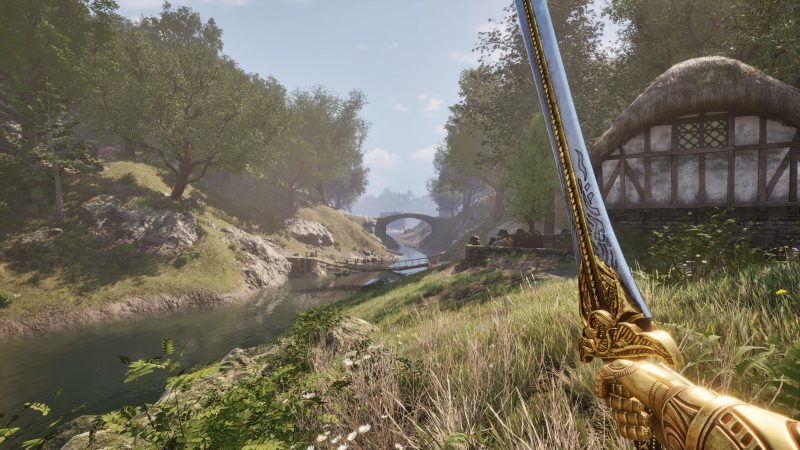
The third person experience receives a hearty upgrade as well. Instead of essentially playing as a board with limbs, you now get a character that moves a lot more. This comes down to changing body angle while strafing or leaning forward when sprinting. With that said, sprinting still looks goofy, bordering on something you find in an anime, but it still works within the quirkiness that is Oblivion. Otherwise, if you’re not a fan, just use R3 to switch the camera type back to first person.
Two Steps Forward, One Step Back
Then there are general physics changes. For instance, when you go up a steep hill, you move slower. Then, when you jump into a body of water, you don’t just drop into it. You first break the surface of the water like you do in real life. Little things, yes, but they add to the experience.
It’s weird to say, but Skyrim brings a couple small influences to Oblivion. The first to appear is the Clairvoyance spell. This spell acts as a tracker for you, showing the path to take to progress. The other revolves around encumbrance. In the original Oblivion, you could not move if you carried too much weight. In the Remaster, you may not be able to run while overencumbered, but you can still walk. So, if you find some great loot that weighs a lot, then you can still take it home (or to a vendor) in one trip. It just takes a while.
Another benefit that comes over from Skyrim is a welcome touch for looting. When you mouse over a lootable object, the popup indicates directly below it if the object is empty. This kind of addition cuts down on time spent looting – and, if you’re anything like me, forgetting what you looted.
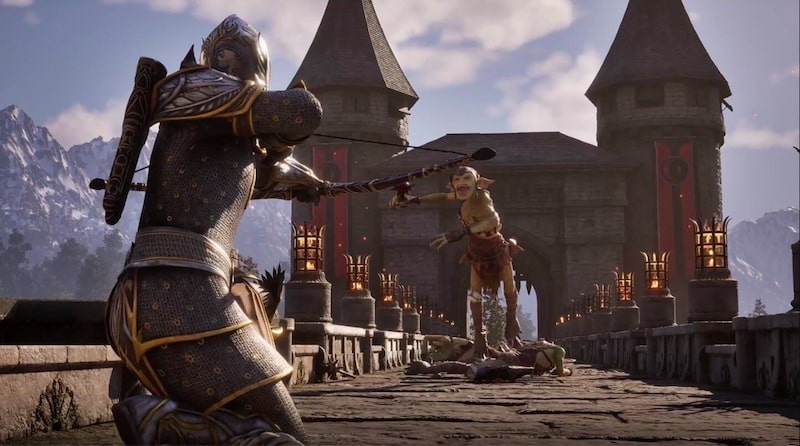
The last thing to mention is that, despite the improvements in this remastered version, one aspect still shines through the new coat of paint: glitches. Before going too far, these glitches are absolutely nowhere near the extent of the original game or even the state that Skyrim released in. These are more subtle and matter-of-fact, like enemies twitching when they die or fall. The big one, though, is pop-in, particularly in the overworld. When you move quickly, assets start to pop in from far away as you go. Frame rate drops a little bit, but the experience doesn’t get slowed down enough to truly matter. It just helps to make this remastered version of Oblivion still feel like an Elder Scrolls game– and I say that lovingly, mind you.
A Model Example of A Great Remaster
Overall, The Elder Scrolls IV: Oblivion Remastered brings plenty of welcome changes to the original formula while still maintaining the quirkiness of the original game. This is a prime example of a loving remaster: improve the original concept without veering away from it completely. It’s not completely perfect, since it still features some of the glitchy nature of the original game, like asset pop-in. Nonetheless, “perfect” isn’t what fans want out of Elder Scrolls. They want exploration and fun, and that’s exactly what you get from The Elder Scrolls IV: Oblivion Remastered.
Review code kindly provided by publisher.
The Elder Scrolls IV: Oblivion Remastered is out now for PS5, PC, and Xbox Series X/S.