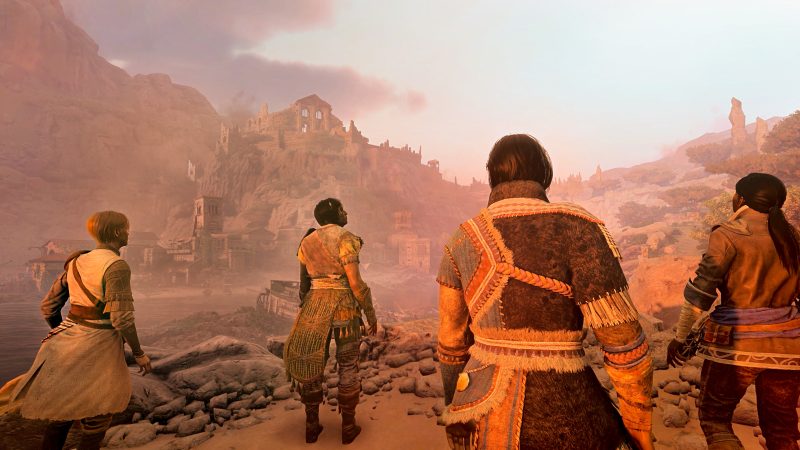
Greedfall 2: The Dying World PS5 Review. All Spider Interactive games have their fair share of problems – that’s just part of the package. However, the team’s games traditionally have enough heart and soul in them to make up for their shortcomings. This time around, however, there might not be enough to keep people hooked long enough to find the parts that make this dev team special.
Greedfall 2: The Dying World Review (PS5) – Odd Creative Choices Leave The Flawed Final Product Mostly Enjoyable With The Right Settings
I touched on some of the systems in my preview of Greedfall 2 in October of 2024, which you can read here. To avoid repeating myself, I will cite some of the points that remain the same to start off the review.
As I mentioned in my preview:
“You start the game getting your portrait painted, introducing you to the character creation screen. This time, though, you do not play as someone from the colonizing population. Instead, you take on the role of a person (your choice of gender expression) who is native to Teer Fradee, the location you explored in the first GreedFall.
“A couple differences here, though: The Dying World takes place three years prior to the events in the first GreedFall. The other caveat is that you, a native to Teer Fradee, have already been seized by colonists and brought back to Gacane, the continent where the original GreedFall started.”
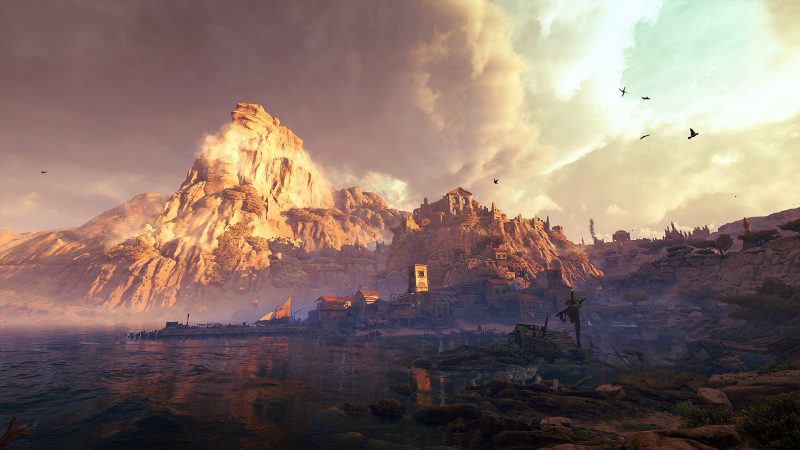
Troublesome Beginnings
The prologue of the game has some peculiarities to it that I could not put my finger on when I played the preview build. I didn’t mention it at the time because I didn’t have the words or perspective to convey my concerns with it. Thankfully, playing through the beginning hours of the game for a second time allowed me to reconsider what didn’t feel right the first time around.
The Greedfall team reuses the fictional language here that it created for the Greedfall native people. In the first game, the language was smattered throughout the game, so it never got overused. However, most of the five-hour prologue is in this fictional language. The problem here is not that the language is spoken for most of the time. Instead, it’s that the statements feel more recited rather than felt by the voice actors. The results of this leave the prologue feeling very dry and lifeless.
Still, there’s a lot in the opening hours to take in during the prologue, such as the toxic interactions between your native people and the colonists who have taken you and your people as “workers,” complete with the bias you would expect from a scenario like that. To finalize my point, the intention behind a prologue filled with a different language makes perfect sense. However, it just didn’t seem like the voice actors had the time and resources necessary to build a natural delivery into its fictional language.
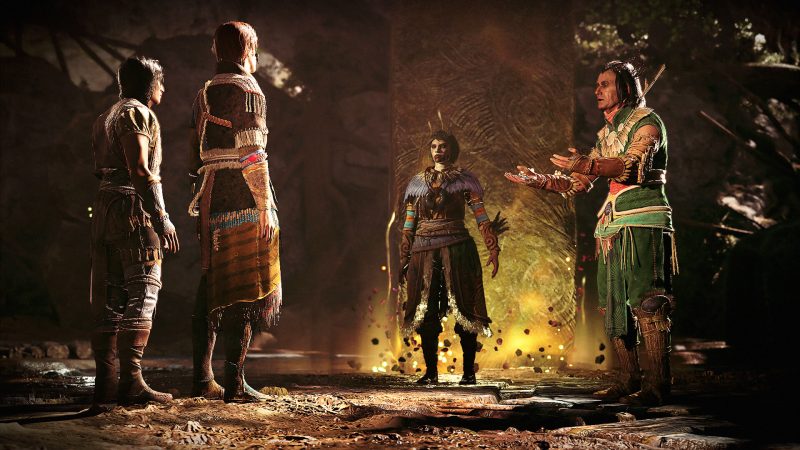
Another consequence to a dry beginning to a game is that you quickly see other oddities that could otherwise be easy to ignore. For instance, character running looks so stiff and unnatural, like the characters are toys held in place at the waist. Imagine what character running looked like in Star Wars: Knights of the Old Republic. Then, your custom character looks less like it belongs in the same game as the other characters in the game.
Many games are like this, so this is not a unique oddity to Greedfall 2. I only bring it up because something that would normally be ignored or overlooked in other games, even the first Greedfall, draws your focus more simply because of how humdrum the prologue experience is. Thankfully, once you finish the prologue, the game starts to feel more like a Spider Interactive game. Systems are still a bit clunky, but the overall experience ramps up to levels that fans of this dev team have come to expect from them.
Dealing With Obstacles
“One significant addition I truly love seeing in Dying World is the ability to find other ways to traverse certain stop gaps in the map. What I mean is that the first GreedFall required that you have a certain level of agility to jump larger gaps. Here, if you don’t level up to accommodate jumping gaps, you instead can find kits and objects to get through the stop gap. In this case, you build a plank bridge to get across.”
You have the same flexibility in the final game as well. With that said, you can craft these items as well as find them. I love this kind of flexibility because it means you can kind of build your characters however you want and still experience all of the game that the team created. I had a similar experience while playing The Outer Worlds 2, and Spider Interactive does a similarly great job of providing options without bottlenecking the player too much.
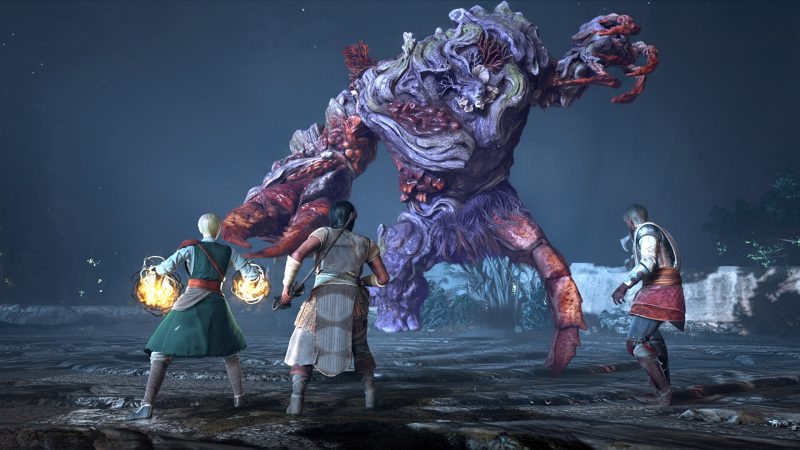
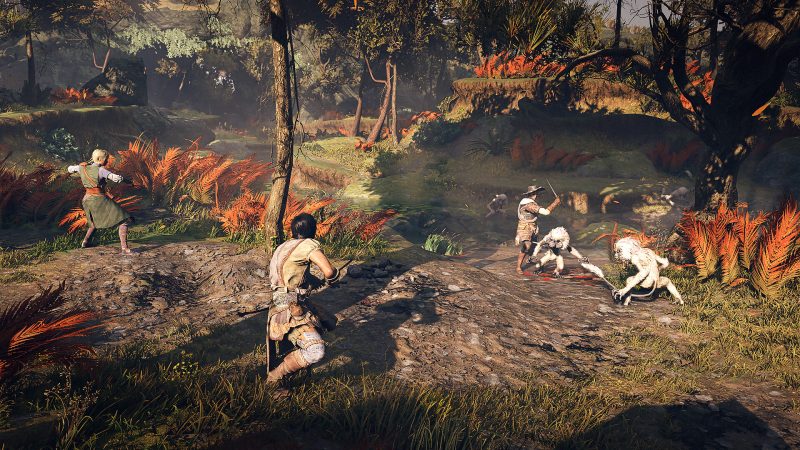
In my preview, I compared the combat in Greedfall 2 to that of the Gambit System from Final Fantasy XII. I’m not sure why I did that. If anything, it’s more like the aforementioned Star Wars: Knights of the Old Republic. You can pause combat to enter in inputs for each of your party members, or you can just let the computer manage your other players while you play as one.
With that said, controlling everyone is more challenging than it should be. When combat starts, you either need to set the target for each player or you just let them go after whomever the computer picks for them. What makes this worse is that most fights can include upwards of six enemies. Getting automatically split up in those odds often results in a quick death. So, there’s a lot of room for strategy here, but it also requires a lot of manual stat and gear management.
Still Not Great, But Hear Me Out
To give players options, Spider Interactive provides you with sliders at the beginning of the game where you can choose how much damage your party does and how much damage your enemies do. In fact, you can set it so that your party doesn’t take any damage while you do extra damage. This makes combat a breeze and generally mindless. Depending on how you look at it, this might deter you from wanting to play at all.
On the other hand, while I have always loved games from Spider Interactive, combat has always been one of the biggest problem areas in this team’s games. They never broke the game or made things impossible, but you often find yourself in frustrating situations where you need specific outcomes to take place in order to succeed, like bosses only doing certain attacks in a certain order or needing to cheese the fights somehow.
Here, with the proper settings, you can just jump into combat and mash buttons if you like. Considering some of the preamble that came out of players during early access, I wonder if this was the dev team’s way to make things more accessible without needing to completely overhaul the game itself. Either way, I like the option simply because I enjoy the narrative ride that Spider Interactive always puts together in its games. Being able to focus on that is a welcome option. These settings don’t completely fix the inherent oddities with combat, but they do keep the combat from ruining the overall experience.
It Eventually Gets There
A humdrum start to Greedfall 2: The Dying Planet brings down the experience quite drastically. However, once you scale the prologue, the rest of the game feels like you would expect a Spider Interactive RPG to play: likeable characters, political storylines, and straightforward exploration. Combat is its own thing, with the game giving you options to go elbows deep into a clunky but serviceable tactical system or toggle settings so that combat is mindless. The team took too big of a bite this time, and the overall quality paid for it. Still, there is a good Spider Interactive game here, but it might take you a while to find it.
Review code kindly provided by publisher.