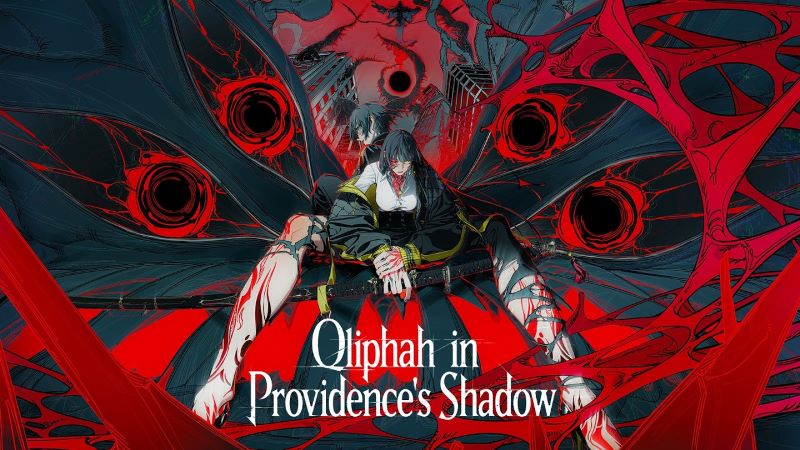
Qliphah in Providence’s Shadow PS5 Review. Arc System Works is best known for its fantastic 2D fighting games, but lately it’s been expanding into different genres, and sadly the results have been hit or miss. Qliphah in Providence’s Shadow is one of the misses, and it misses by a country mile.
Qliphah in Providence’s Shadow PS5 Review
A Good Story That Takes Too Much Effort To Understand
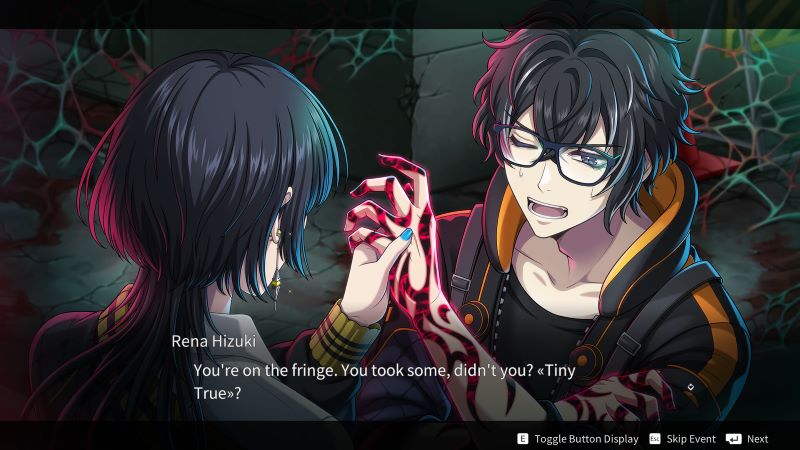
Qliphah is set in a world slowly overrun by mysterious supernatural monsters, and a team created specifically to fight this threat. As Rena, you are an investigator who, while investigating an outbreak, encounters Soma, who, like her, has a unique power that lets him fight these monsters by using their power against them.
Rena and Soma, through their investigation, learn of a drug called “Tiny True” that seems to turn human citizens into monsters. The story moves around a lot, from the drug to a cult and then people getting magical tattoos. It’s all over the place, and it jumps around a lot.
There is a good story here if you can really understand it. It’s a shame that the game is so barebones in its presentation. With so many cool ideas, you are left moving around a map and selecting icons around the city. These icons drop you into a visual-novel dialogue where Soma is always confused about everything, and Rena has to explain it to him in the vaguest way possible.
The story has a lot of interesting concepts, but it’s hard to understand. The game expects you to know already all the terms and what’s going on in the world. To understand the full story, you must read many documents as part of your investigation.
Investigations Unlock Automatically and Require No Effort
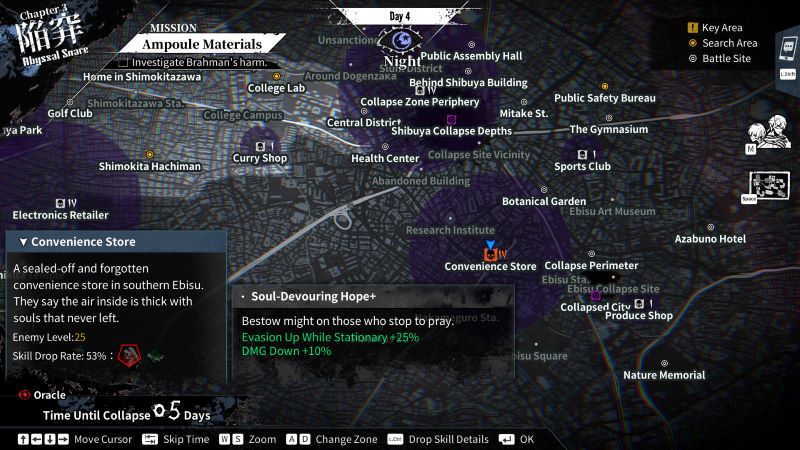
As you progress in the game, you’ll unlock investigations, which are documents that explain a lot of what’s going on in the story. I like the idea, but I wish they were actual investigations you do—some kind of mini-game. Instead, you need Investigation Points you unlock through the story, and you hover over an investigation and complete it.
Some of these investigations take more steps, like learning a passcode or a password phrase. These are a little more interesting, since you have to read a lot of documents or use the game’s fictional social media app to see what people are saying and find clues.
I enjoyed these investigations, but there are few of them, and some are so vague you think you can solve them. Still, you actually can’t until later in the game, when the information becomes available, so you may waste a lot of time trying to figure something out that you simply can’t at the time.
Complete investigations unlock skills and passive abilities. The game features a ton of skills and passive abilities that let you mix up the gameplay. These act as your equipment and allow for a lot of customization, and believe me, you’re going to need it. These skills offer a wide range of effects, like increasing your HP, while others can have mixed results, such as increasing your attack and defense by 50% while decreasing your speed and skill damage by 20%.
A Unique Combat System That’s More Complicated Than Needed
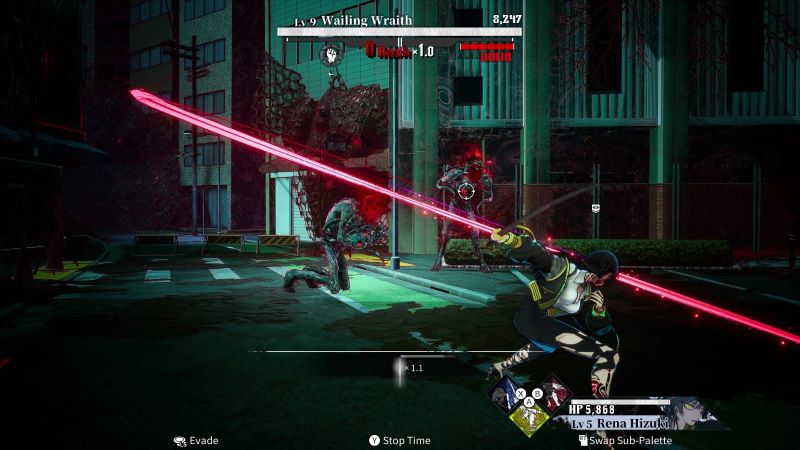
All of this comes together in the game’s bread and butter, the combat system. The combat system is an absolute mess, with plenty of great ideas that just aren’t realized the way Arc System Works may have wanted. The game uses a turn-based system that emphasizes counterattacks.
You have six skills you can equip: three offense skills and three support skills. The support skills are healing, buffs, and debuffs. The offensive skills are separated into Blue, Yellow, and Red attacks.
Combat has a lot to follow: when enemies attack, they attack in four different colors. Blue, Yellow, Red, and White. The point of the game is to counter your enemy’s attack by timing your attack to match it. If an enemy attacks with a Yellow attack, it has a ring around it and another ring that begins to expand within it. The key is to counter the attack right as the two rings converge, using the same color as the enemy’s attack.
This is a great concept if it actually works as intended. A lot of the time, I can counter these attacks just fine, but in boss battles, the idea falls apart. I used the same counter strategy, but it just doesn’t work, and I take a lot of damage. At some point, I ignored the counter system and focus on dodging attacks and trying to break the enemy’s guard.
Sensory Overload
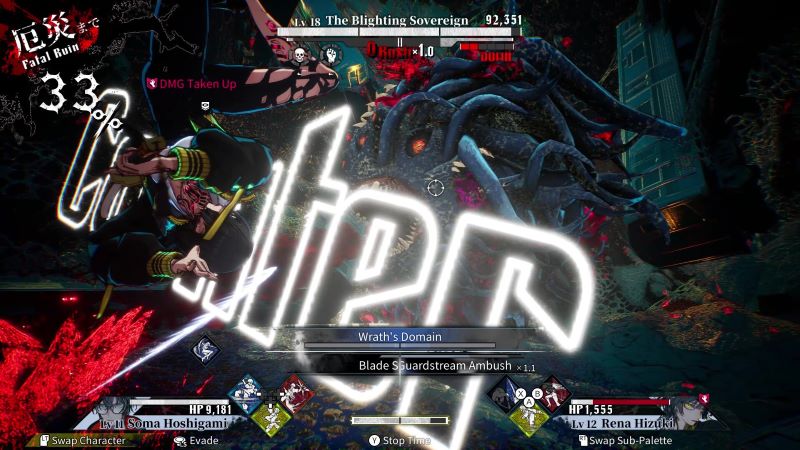
Each enemy has a break gauge that fills with counters and damage taken. Once broken, you can unleash a plethora of attacks before unleashing a powerful Vision attack with a cool animation.
The combat gets even more convoluted when you have to take on multiple enemies and switch targets. Most of the time, I had no idea which enemy I had selected because there’s no indicator to tell you. Multiple enemies attack simultaneously, and you get overwhelmed by visual cues coming from all directions.
What’s worse is you also have Soma to control as well. Using the D-Pad, you can issue Soma the same commands you have to worry about with the various colors.
Also watch out for pressing the same attack button multiple times. The game registers the attack you press and follows it with predetermined combo attacks. If you have a lot of combo presses placed on enemies, they will attack you, and you won’t be able to counter them.
Combo attacks are meant to punish downed enemies or those sent flying into the air so you can pummel them. The good news is you can cancel out these attacks by stopping time, which is also a good way to get your bearings and plan your next moves. With time stopped, you can cancel all your set attacks, but you can’t do it consistently and have to wait for the cancel bar to fill up during combat.
There is a lot more to talk about combat, but honestly, there is so much going on that most people won’t even remember it or care. The game is extremely difficult. If you master the combat system and really understand everything that goes into it, it can be fun, and the difficulty may be exactly what people want.
Clashing Visual Styles
As someone who enjoys a nice challenge, I found myself playing through every battle in frustration. Even after lowering the difficulty, I still died a lot.
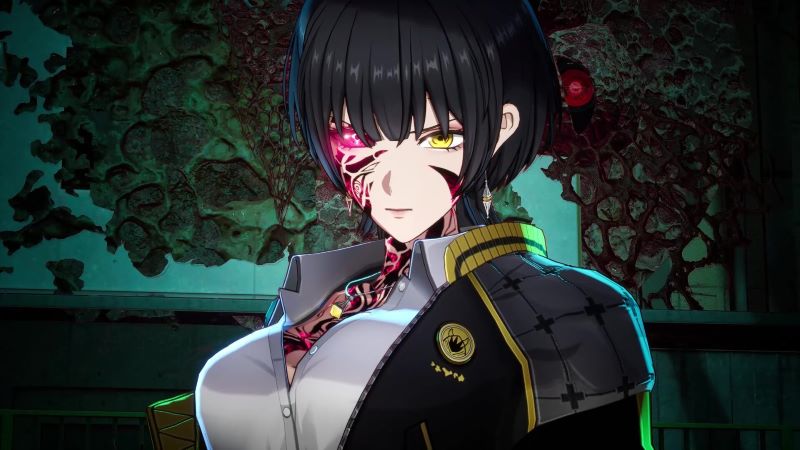
Visually, the game is also all over the place, particularly the art direction, which is not something you’d expect from Arc System Works. It’s almost as if three different artists are working at once. The character art in the visual-novel-style cutscenes, in-game character models, and status-screen art are all completely different. There isn’t any consistency.
Most of the game is just looking at a map and reading text, while the background art during story beats repeats over and over and is as bland and empty as possible.
The saving grace is the unique art and flashy combat animations. However, it’s overstimulating at times; the attacks all look really cool, and the monster designs, especially the bosses, look really cool.
The audio design is solid for the most part; the battle music is catchy, and the Japanese dub sounds good. Despite this, the tracks lack variety, and you’ll probably hear the same few songs throughout the game.
Qliphah in Providence’s Shadow has a lot of great ideas, but none of them have the execution the game probably deserves. It’s clear this was a passion project, and I’m always a champion for new IPs and new ideas. It’s just a shame that Qliphah in Providence’s Shadow doesn’t execute these new ideas in any meaningful way.
Qliphah in Providence’s Shadow is out now on PlayStation 5, Nintendo Switch, and PC.
Review code kindly provided by publisher.