The Caligula Effect 2 PS5 Review – The RPG scene has been saturated with titles for a long time. This makes it hard for developers to push their games to the front of the line. Some benefit from an established brand while others try to bring something new to the table. The Caligula Effect 2 is the latter. It doesn’t revolutionize anything with its overcomplicated ideas, but there might be something here for RPG fans looking for something they may not have seen before.
The Caligula Effect 2 PS5 Review – Lighthearted Story and Characters Caught In Overly Complicated Gameplay Mechanics
You begin to see literal cracks in the world around you. Naturally, you’re not sure why. Soon, a floating young girl, named Redo, appears before you and tells you the world you live in isn’t real. You then find yourself among fellow students who see what you see to build your team
This world formed thanks to a group that calls itself Obbligato, a gathering of musicians and pop idols that control the masses through this false world. Your group (the Go-Home Group) then pursues all of the members in hopes of finding a way to break out of this false world and return to reality. When it comes to concept, consider the Caligula Effect universe a more lighthearted, high school version of the Matrix.

As you can already see, the naming conventions used throughout share a similar blunt style like that from the Neptunia franchise, but Caligula Effect takes itself more seriously. Narratively, it’s a somewhat goofy game with some serious points along the way. To elaborate a bit, the game touches plenty of different social topics for each character, but they never explore very deeply.
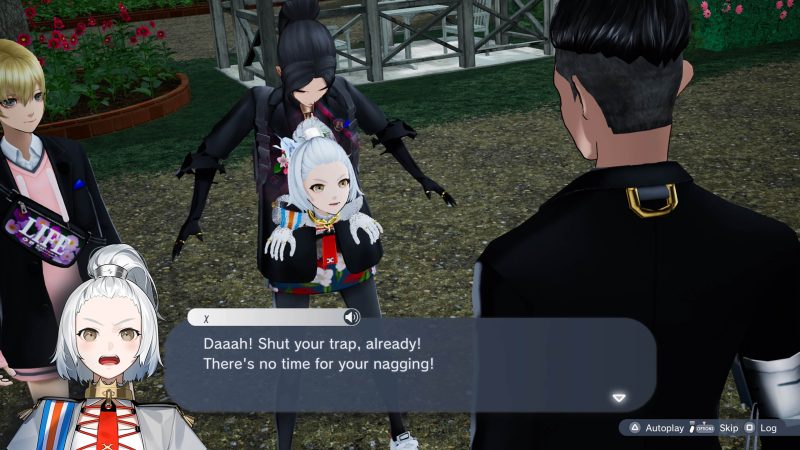
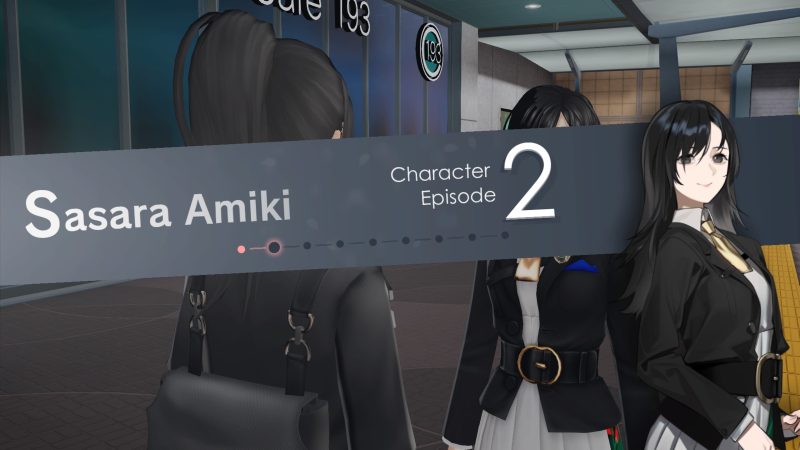
With that said, the characters follow several tropes found in anime, like the impatient plot mover, the blindly kind person, or the one that lives and dies by the rules. Still, they’re likeable enough to keep hold while not taxing your attention span. As you progress, these characters grow more and more engaging and entertaining. While not profound, they make progressing in the story much easier.
Definitely See It Coming
With this being a sequel, Caligula Effect 2 references the first game quite a bit. However, it’s either referenced matter-of-factly or gives an opportunity for a brief explanation. It’s not quite the same as having played the first game, but you don’t miss out on anything substantial if you haven’t.
As you progress and meet new party members, you gain opportunities to learn more about them and strengthen your relationships with them. This blatantly mimics the Social Link system found in the Persona franchise.
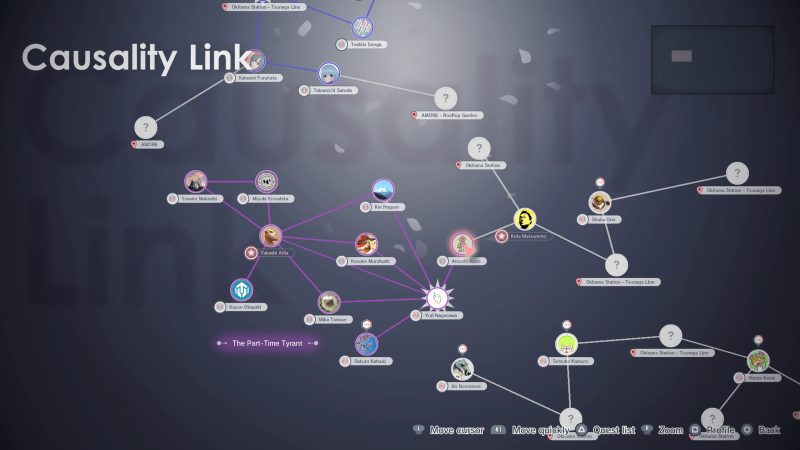
As you wander around, you meet random people who also offer you social links by completing their side quests. While this is conceptually rather straightforward, the execution of managing these quests. Instead of a grid with submenus, you instead get something that mimics a criminal grid from those detective shows. This layout does show you where to find the quest-giver, since the majority of them just wander around the map. However, like many points mentioned later, this part of the game would benefit from something more straightforward and simplified.
Give and Take of Older Visuals
The visuals leave a lot to be desired. Apart from the modern day resolution, this looks like an early PS3 game. Considering the overall easy going nature of the game, the visuals pair well with the concept. While far from impressive, it gets the job done.
Audio is very much the same as visuals. Japanese voice work matches the trope of the character, like a tense and excitable male actor who plays the guy who follows all rules and projects that onto others. Sound effects follow the same pattern, offering emphasis on their own but doing enough to convincing sell what’s happening on-screen.
The soundtrack is an up and down affair and likely comes down to preference. With each Musician comes its own poppy track. Generally, the default songs repeat short loops constantly, making the more aggravating songs that much worse. Thankfully, each track has another version, which usually changes up the tempo and makes the rough songs tolerable.
Complicatedly Simple
In hindsight, combat makes sense. However, getting to hindsight takes more effort than it should. The way that the game explains itself reminds me a great deal of the bad explanations from the combat in Final Fantasy XIII: They over complicate the simple stuff and oversimplify the complicated stuff.
First, the game describes your types of attacks and how to use them, going into further detail of your resources and how to use them; though they basically behave like mana in practically every game.
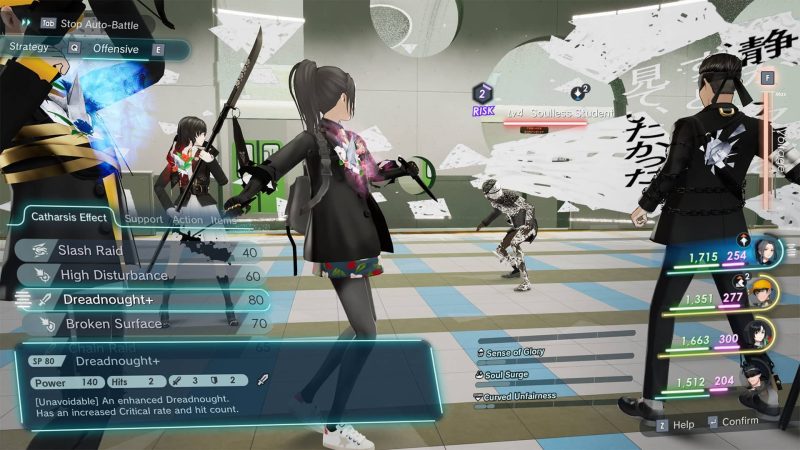
Then, the game tells you that you can mess with the order of your party’s attacks and gives you a time slider that shows you when each character’s attacks begin. Before activating your attacks, you can see how they play out, showing the effects on the enemy as well as the resulting combo you string together.
However, the direction to managing the attack order is limited to that, not truly showing you how. What you end up doing is picking the attack for each character, then adjusting their respective time slider to time the attack. Once you have all three characters prepped, their attacks play out as you enter them. Looking back, this could have been explained much more cohesively.
Cumbersome Combat
Furthermore, what makes this combat style cumbersome is how much effort it takes to make adjustments. For instance, you begin inputting the third character’s attacks and realize that the combo screws up positioning.
Instead of just adjusting one of them, you cancel what you put in for each character until you reach the one that needs adjusting. Then you have to go through and input them again. What would make this side of combat infinitely more enjoyable is if we could just swap between sliders on the fly and make adjustments. To boot, the animation previews run in real time, so you spend at least double the time in combat than you normally would.
Most of the time, this mechanic isn’t needed. In fact, I beat 95% of fights by holding Cross for the entire duration of combat. For a mechanic with so much effort put into it, the gameplay itself doesn’t demand or encourage you to use it.
Granted, harder difficulties benefit more from this level of control. Still, you ultimately need to grind more levels anyway, which sees you strong enough to power through most fights anyway. Ultimately, combat in Caligula Effect 2 has a unique system that would benefit from some refinement.
Cool Ideas With Room for Improvement
Caligula Effect 2 combines some unique ideas with a simplistic yet oddly entertaining narrative. Many of the systems would benefit from refinement, such as speed increases and more control over mid-combat adjustments. This game isn’t meant for everyone, but it does offer some things you won’t find in many other RPGs. Fans of the genre should at least give it a shot, even if it ends up not being their cup of tea.
Review code kindly provided by publisher