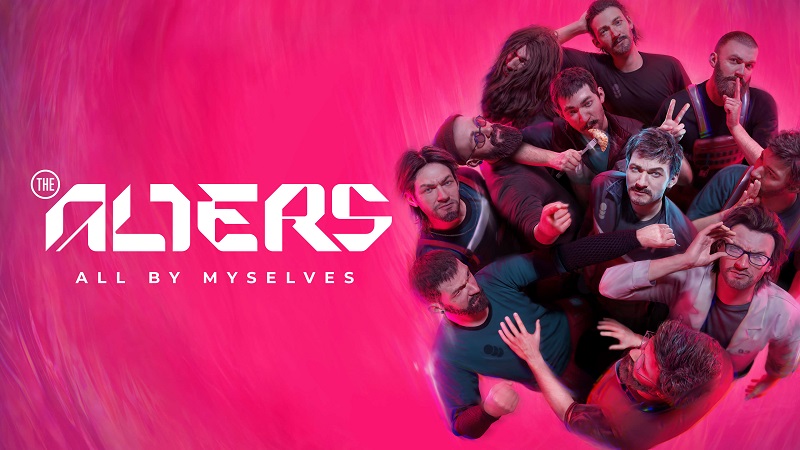
The Alters PS5 Review. 11 bit studios is a Polish development team founded in 2010. This group put together such dandies as This War of Mine, Children of Morta, and The Invincible, which makes for a notable spread of titles across several genres. In a way, all of that experience and exposure culminates into this team’s next game, The Alters. The concept behind The Alters is an ambitious one, what with trying to balance a narrative-heavy experience with a building sim.
As someone who generally avoids building survival games, I say with enthusiasm that this particular offering is designed with newcomers in mind.
The Alters Review (PS5) – Getting By With A Little Help from Myself
Beware the Sun
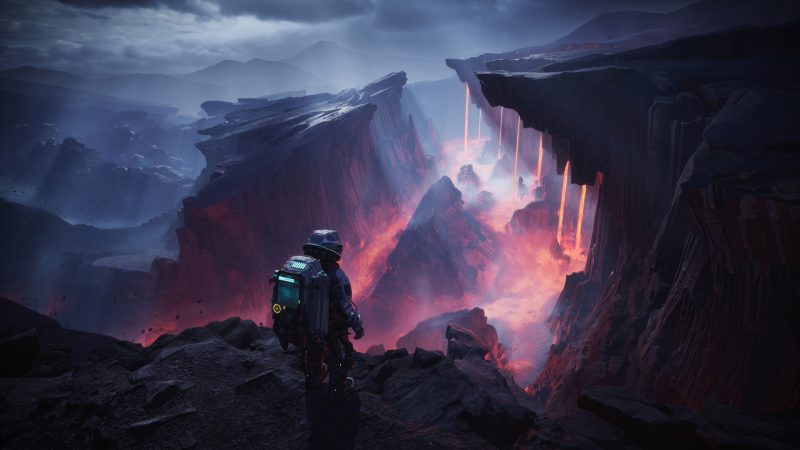
Imagine you work as a miner on an interstellar mission to collect new and rare resources from different planets. Next, imagine that your entire crew dies in their respective shuttles while approaching the planet, leaving only you to fend for yourself and manage the mobile base. Then, your communications with home base are spotty, and you have no idea who’s giving you direction to deal with the situation. Then, your home base informs you that the Sun will rise in a few days, and the heat of said Sun will scorch you and your mobile base out of existence. Finally, you learn that your only chance for rescue is to collect a bunch of a very rare material called Rapidium to motivate the corporation behind the mission to come to your aid.
This is the situation that Jan Dolski finds himself in. Thankfully, the base he works in also houses a very special Quantum Computer that also allows him to create something called The Womb. The Womb acts as a cloning chamber that the corporation never told the crew about-or at least didn’t tell Jan. Home base directs Jan to use the Rapidium to create clones of himself in order to properly maintain the base and increase the odds of his rescue.
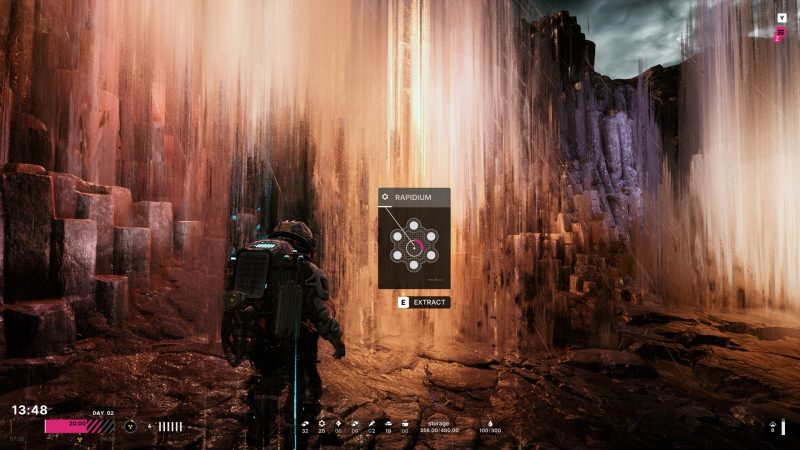
This game mechanic is what sets The Alters part from other resource games out there. Cloning makes this type of game that much more accessible to people like me who do not succeed in and thus enjoy resource games. The requirements to succeed are cut and dry, with only a handful of different resources needed to build anything you need along the way. This makes managing the resources easier to juggle. Plus, the game limits your progression early on while you get a feel for how the game plays. As you reach certain milestones, your base moves to different places on the planet, getting you ever closer to the extraction point.
Alter Egos
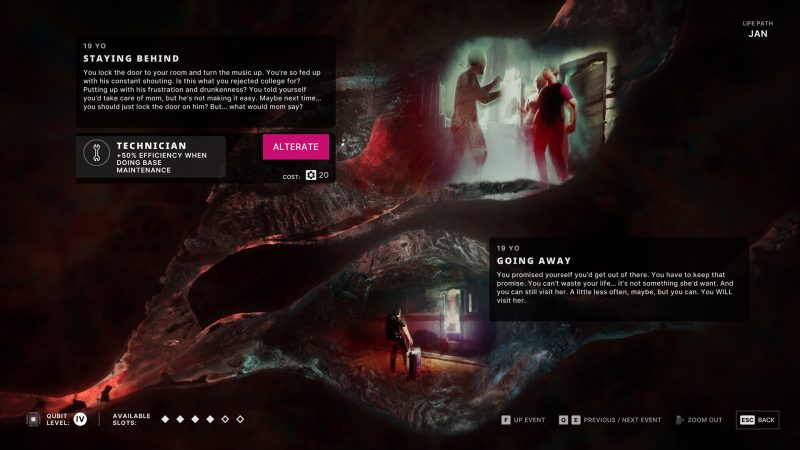
In order to progress, however, you need to make more and more clones, or Alters, of yourself. Why this matters is not just because more bodies is better. Thanks to the Quantum Computer, Jan creates these clones by changing the major choices he made during his life. With changing one key decision, the history of that Alter changes from becoming a miner to becoming a scientist or a botanist or an engineer.
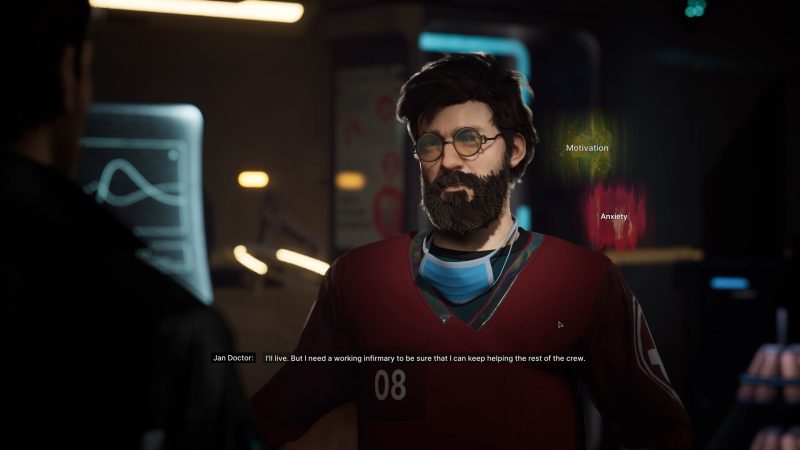
Eventually, you end up with a base housing several copies of what could have been you in different lives. They all react differently to how you talk to them, too, so you need to find common ground to make things easier. This is the prime motivation to play the game: You need to know about yourself before you interact with your other selves. The game doesn’t just make learning about Jan Dolski a nice thing to include in the story but essentially requires you to research Jan’s past in order to work with his Alters. It’s just so damn cool how they made your interactions feel when, in a gross understatement, you are still talking to yourself.
While in the base, you occupy a 2.5-dimensional plane as you move between sections of the base. You also get to customize the layout of your base, turning each section into a plug-and-play sort of situation. Naturally, you need to connect every section by using elevators and corridors. Still, that’s about the extent of making the base work. Early on, you need to maintain the different systems until you assign an Alter to that system. What’s even cooler is that one of your available Alters will offer to fix an issue if they’re qualified to fix it. This is yet another reason why this game is so friendly to people who don’t play games like this. The game gives you an idea of what needs to be done and then later offers suggestions to automate those needs.
Outside the base, you simply run around looking for resources and setting up automations for harvesting materials. The way these menus and mechanics work remind me specifically of Death Stranding but without any of the convoluted nuances attached to them. While using the L1 utility menu, you first probe for a deposit, then place a drill on said deposit, and finally place pylons between the drill and the base to automatically send the product to the base. There are some nodes that you can gather on your own, but those are usually to find Rapidium or just the occasional chunk of rock.
To Like or Not Like
Something I don’t like about the game is also something that made the experience more enjoyable to me. Different tutorial menus appear as new tasks and capabilities unlock. However, how you go about doing those things is up to you. For instance, it tells you that you need to get along with your other alters so that you work together more efficiently, but the game doesn’t tell you what you need to say or how to say it. Like I mentioned earlier, you need to figure out how to talk to the other alters, and the dialogue choices make or break that possibility. After a couple of failed attempts to connect with one, I went to the Quantum Computer to figure out what we had in common. You can’t just tell him any old memory either. If you recall a memory he didn’t have, you won’t connect with him. The same goes if you don’t respond in a way he likes.
The reason I didn’t like this at first is because I was guilty of wanting to just get through a game instead of playing it and enjoying it. Instead, the game forced me to take a step back and appreciate what the devs put together by applying myself to the game. With that said, it’s titles like The Alters that perpetuates my belief in good games being good no matter the genre. Again, I don’t generally like games like this, but The Alters makes itself just accessible enough to a new audience while still giving the type of experience that fans of the genre love.
This helps to push the narrative experience forward now, which benefits people like me. On the other hand, genre fans may not appreciate just how simplistic the gameplay experience presents itself. The demand for success is quite low, with the game leaning more on its narrative to push the experience forward. Plus, considering how intricate the Alter system is, an argument can be made that there’s an influence between the complexity of the Alter system and the simplicity of the gameplay loop.
Finally, there’s the impending doom of the Sun. While the Sun can reach you and destroy any hope of rescue, the degree of freedom is quite high. The story presents itself in phases, where each phase sees you moving the base to a fixed location on the planet. While you start with only seven days to survive, you end up with essentially weeks thanks to living in a moving base. So, as long as you meet the requirements for each phase, you automatically move to the next area and delay your relative doomsday. Personally, I appreciate this approach just because I enjoy the narrative aspect of the game so much. However, the looming threat ultimately becomes rather unimposing in the grand scheme of things. The characters talk about it a lot, but unless you do little to nothing, you will not see the Sun.
Working Together By Yourself
The Alters is a unique narrative experience all its own, asking you to survive by manipulating your own history to create clones and escape from a fiery fate. As far as the genre goes, The Alters makes for a very accessible survival experience. With that said, hardcore fans of the genre may see gameplay in The Alters as far too simplistic. The other potential issue is that the Sun’s looming danger isn’t quite as looming as it initially feels, with most of the game progressing naturally without much actual danger.
Either way, the combination of strong narrative and accessible gameplay makes this the perfect game for anyone who even remotely interested in trying survival-builder games. The Alters is a definite recommend title, even at its $40 launch price.
Review code kindly provided by publisher.